
UN warns Sudan women face attacks while seeking water
 3 Min Read
UN Women warns women and girls in Sudan's al-Obeid face drone attacks and sexual violence while accessing water amid worsening humanitarian conditions.
-
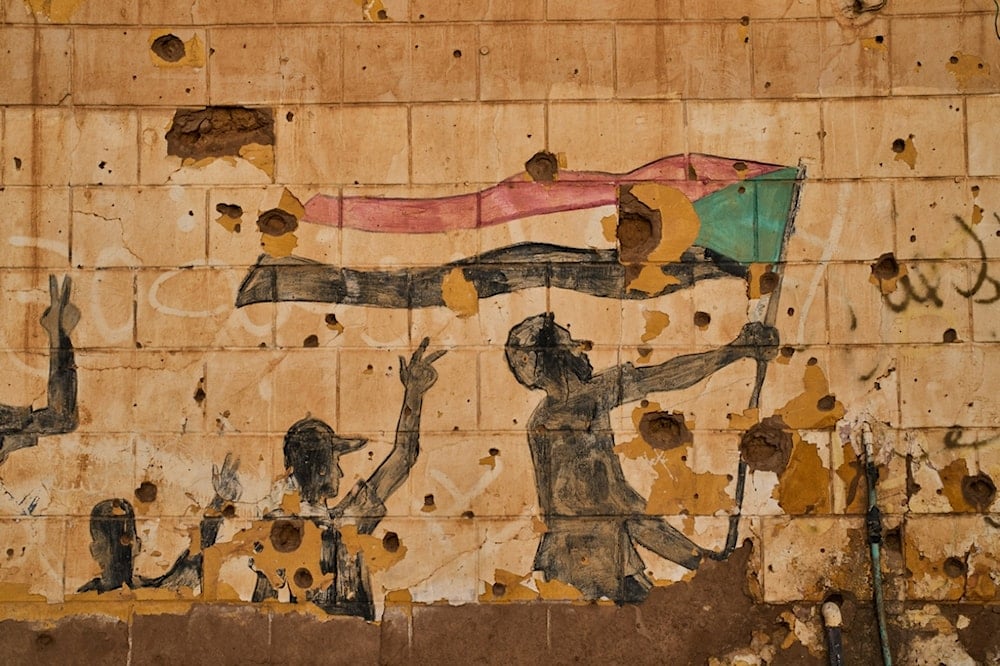
A painting depicting people holding the Sudanese flag is seen on a wall damaged by bullets and shrapnel in Omdurman, on the outskirts of Khartoum, Sudan, on April 23, 2026. (AP Photo/Bernat Armangue)
Women and girls in Sudan's El-Obeid are facing a devastating choice between the threat of drone attacks during the day and sexual violence at night while attempting to collect water, according to UN Women.
The UN agency said on Friday that civilians in the besieged city are experiencing worsening humanitarian conditions as fighting between the Sudanese army and the paramilitary Rapid Support Forces (RSF) intensifies.
El-Obeid, the capital of North Kordofan, has faced severe shortages of food, healthcare, and clean water, with UN officials warning that a major humanitarian crisis is unfolding.
Read more: Sudanese fear army-backed militias could trigger new war: AFP
Women in El-Obeid face impossible choices for basic needs
Anna Mutavati, UN Women Regional Director for East and Southern Africa, said women and girls in El-Obeid have been subjected to harassment, rape, and other forms of sexual violence while trying to access water.
"These women and girls have been harassed. They've been raped, and they've been subjected to other forms of sexual violence, all while trying to access water, one of life's most fundamental necessities in human rights," Mutavati told reporters in Geneva via video link from Nairobi.
According to UN Women, there is no safe time for women and girls to collect water in the city. Drone strikes targeting water sources during the day have forced many residents to seek water after dark, exposing them to further risks of abuse.
The agency said the situation has left women and girls trapped between multiple threats while attempting to obtain one of the most basic necessities for survival.
Read more: UN probe concludes 'hallmarks of genocide' in Sudan's El Fasher
Water shortages deepen humanitarian crisis
UN High Commissioner for Human Rights Volker Türk said civilians in El-Obeid have endured siege-like conditions for 18 months, marked by severe shortages of clean water and continued drone attacks.
Türk warned that the situation risked repeating atrocities witnessed in El Fashir in North Darfur last year.
The war in Sudan, now entering its fourth year, created one of the world's largest humanitarian crises, with widespread reports of sexual violence and other abuses affecting civilians.
UN Women said approximately 12.7 million women and girls across Sudan are expected to require gender-based violence services this year, representing a fourfold increase since the beginning of the war.
While the agency did not provide figures specifically for El-Obeid, it highlighted that the city is home to around 500,000 people, approximately 70% of whom are women and children.
Support services face funding shortages
UN Women warned that funding reductions for women-led organizations are further limiting access to critical support services.
The agency said two-thirds of women's organizations surveyed by UN Women in Sudan reported that safe spaces and gender-based violence services had either closed or been significantly reduced.
The decline in available assistance comes as humanitarian needs continue to expand, leaving survivors of sexual violence and communities affected by the conflict with fewer resources for protection and recovery.
Read more: Sudan army demands full RSF withdrawal under US peace plan


