
UNSC reaffirms commitment to Lebanon’s stability amid Israeli attacks
 3 Min Read
The UN Security Council reaffirmed its commitment to Lebanon’s stability and Resolution 1701, with Ambassador Žbogar noting future discussions on UNIFIL’s withdrawal and regional security concerns.
-
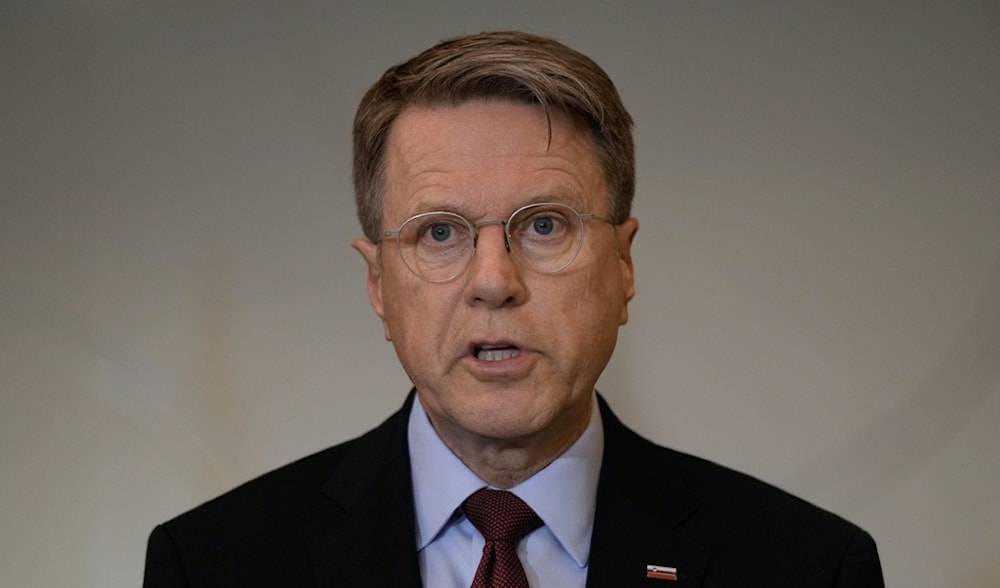
Samuel Zbogar, Slovenia's permanent representative to the United Nations and president of the Security Council, delivers a statement with his delegation in Beirut, Lebanon, Saturday, Dec. 6, 2025. (AP)
The rotating president of the UN Security Council, Slovenian Ambassador Samuel Žbogar, reaffirmed the Council’s commitment to supporting Lebanon’s stability and territorial integrity during an official visit to Beirut on Saturday.
Žbogar, who headed a delegation of representatives from Security Council missions, emphasized the Council’s support for the full implementation of UN Resolution 1701, which calls for a cessation of hostilities between Lebanon and "Israel".
Amid ongoing regional tensions and continued Israeli violations in Lebanon, Žbogar underlined the importance of maintaining stability in Lebanon and the broader region. He praised “the progress Lebanon has made over the past year” and acknowledged the ongoing efforts of the United Nations Interim Force in Lebanon (UNIFIL).
He also stated that the Security Council is currently evaluating various options for the future implementation of Resolution 1701, especially in light of UNIFIL’s anticipated withdrawal from Lebanese territory. This issue, he noted, will be addressed more comprehensively in the upcoming year.
This came after Lebanese President Joseph Aoun reaffirmed on Friday Lebanon's commitment to implementing international resolutions and called on the UN Security Council to press "Israel" to uphold the 2024 ceasefire agreement during a meeting in Baabda with the delegation. He also emphasized the importance of increased support for the Lebanese Army as it fulfills its national mandate.
Ceaseless Israeli violations
Since the November 2024 ceasefire, "Israel" has carried out a total of 669 airstrikes across Lebanon, with an average of roughly two strikes per day, according to data released on November 28 by the Israeli Alma Research and Education Center.
47% of the strikes hit areas south of the Litani River, while 38.4% hit areas north of it. Eastern Bekaa accounted for 13% of the attacks, while 11 strikes targeted Beirut and its outskirts.
The report highlighted that the frequency of attacks was at its peak during the initial months of the truce, averaging 51 strikes per month, with December 2024 and March 2025 seeing the highest concentration of airstrikes according to the data.
New data covering the period from November 27, 2024, to November 3, 2025, thoroughly documented thousands of Israeli violations in Lebanon by air, land, and sea; all unfolding under total impunity.
The total number of violations recorded stood at 5,163, divided as follows;
- Aerial: 2,850 attacks
- Ground: 2,150 attacks
- Maritime: 163 attacks
309 Lebanese citizens were martyred, and 598 others were injured in these attacks.
Read more: Israeli occupation escalates attacks on South Lebanon border villages


