
US House backs resolution to halt Trump’s war on Iran
 2 Min Read
The US House approved a resolution seeking to halt the war on Iran without congressional authorization, marking a setback for President Donald Trump.
-
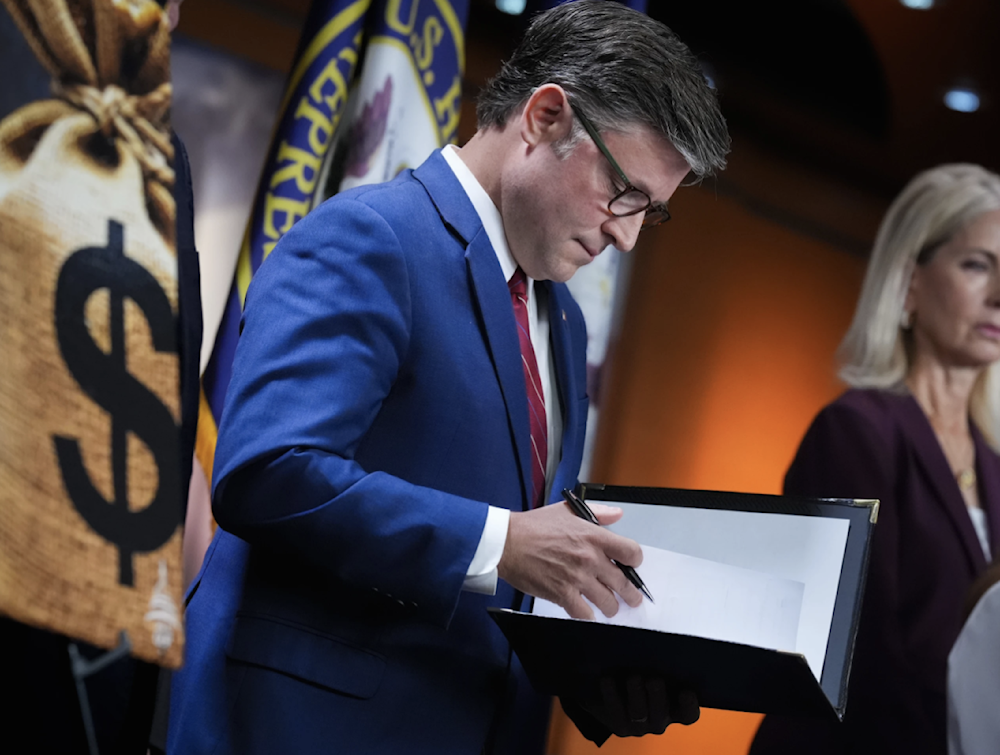
Speaker of the House Mike Johnson, R-La., joined by GOP leaders, prepares to talk to reporters at the Capitol in Washington on June 3, 2026. (AP)
The US House of Representatives voted on Wednesday to approve a resolution aimed at ending military aggression on Iran unless Congress formally authorizes further action, delivering a political setback to President Donald Trump amid growing opposition to the war.
The measure passed by a vote of 215 to 208, with four Republican lawmakers joining Democrats in support of the resolution, reflecting increasing concern in Congress over the expansion of the war.
Resolution seeks to limit presidential war powers
The Democratic-led War Powers Resolution would require congressional authorization for continued US military involvement against Iran, reinforcing lawmakers' constitutional role in decisions related to war.
Although largely symbolic at this stage, the vote marks the first time such a measure has cleared the House after several previous attempts failed by narrow margins.
Any resolution would still need Senate approval and would likely face a presidential veto, requiring a two-thirds majority in both chambers to become law.
Growing opposition to Iran war
The vote underscores rising unease within Congress, including among some Republicans, regarding the trajectory of the war and the administration's military strategy.
It also represents the latest congressional challenge to Trump's foreign policy agenda despite Republican control of both the House and Senate.
Momentum behind efforts to limit the war has grown in recent months. Last month, the Senate advanced a similar resolution in a procedural vote after several previous attempts had failed.
Supporters of the measure argue that any prolonged aggression requires explicit authorization from Congress, while opponents maintain that the president retains broad authority to respond to security threats.


