
US House rejects measure to limit Trump's war powers on Iran
 2 Min Read
The US House narrowly rejected a resolution seeking to limit Trump’s authority to continue military attacks against Iran without congressional approval.
-
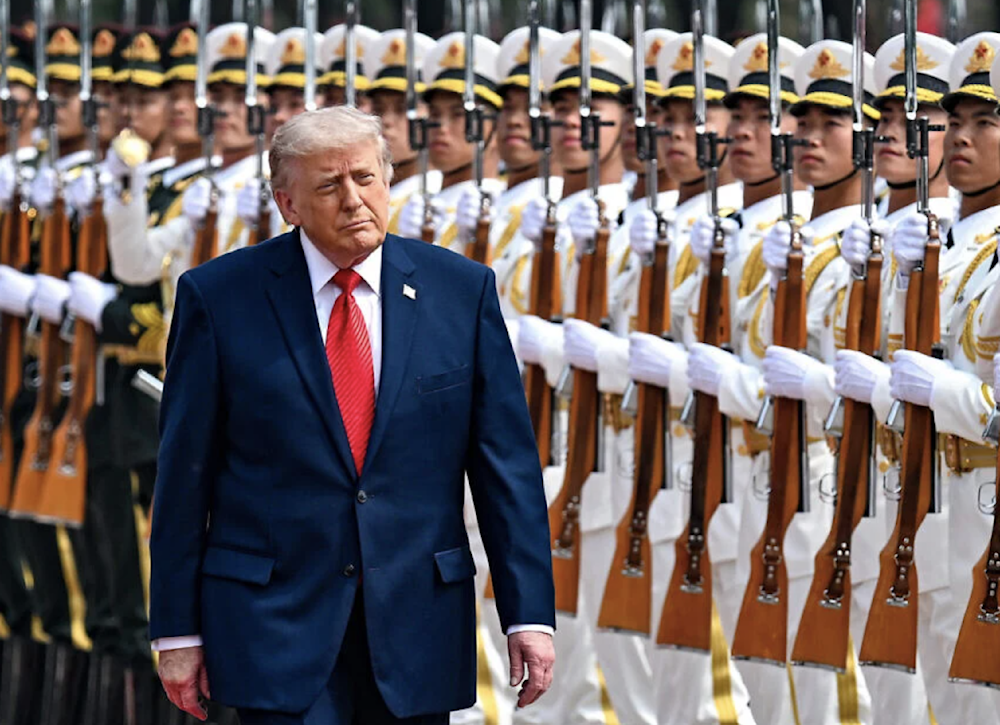
United States President Donald Trump reviews troops at the Great Hall of the People, Beijing, China, on May 14, 2026. (AP)
The United States House of Representatives narrowly rejected a resolution aimed at limiting President Donald Trump’s authority to continue war on Iran without congressional approval, highlighting deepening political divisions in Washington over the ongoing war.
The resolution, introduced by Democratic lawmakers under the War Powers Act, failed in a 212-212 vote on Thursday after falling short of the majority needed for passage. Despite its defeat, the measure received support from three Republican representatives, signaling growing unease within Trump’s party over the expanding the aggression.
Republican Representatives Tom Barrett of Michigan, Brian Fitzpatrick of Pennsylvania, and Thomas Massie of Kentucky joined Democrats in backing the proposal, while Democratic Representative Jared Golden voted against it.
The vote marked the third attempt this year to curb Trump’s war powers regarding Iran and the first since the expiration of a 60-day deadline requiring the administration to seek congressional authorization for military action.
Democrats accuse Trump of bypassing Congress
Democratic lawmakers argued that the US Constitution grants Congress, not the president, the authority to declare war, warning that the administration had drawn the United States into a prolonged regional war without a clear strategy or public mandate.
They also pointed to mounting economic repercussions since the launch of the joint US-Israeli aggression on Iran on February 28, including rising fuel prices and broader inflationary pressures affecting American consumers ahead of November’s midterm elections.
Representative Gregory Meeks, the leading Democrat on the House Foreign Affairs Committee, said during congressional debate that it was time for the administration to seek authorization from lawmakers and move toward ending the war.
Recent economic data showed US producer prices recording their sharpest increase in four years, driven partly by soaring costs linked to the war and disruptions in global energy markets.
Republican leaders and the White House defended the president’s actions as constitutional, arguing that Trump possesses the authority as commander-in-chief to order limited military operations when facing what they described as imminent threats to US interests.


