
US-Iran deal '80% complete': Pakistan
 3 Min Read
Pakistan says a US–Iran agreement is over 80% complete and urges both sides to show flexibility as mediation efforts continue in Tehran and Ankara.
-
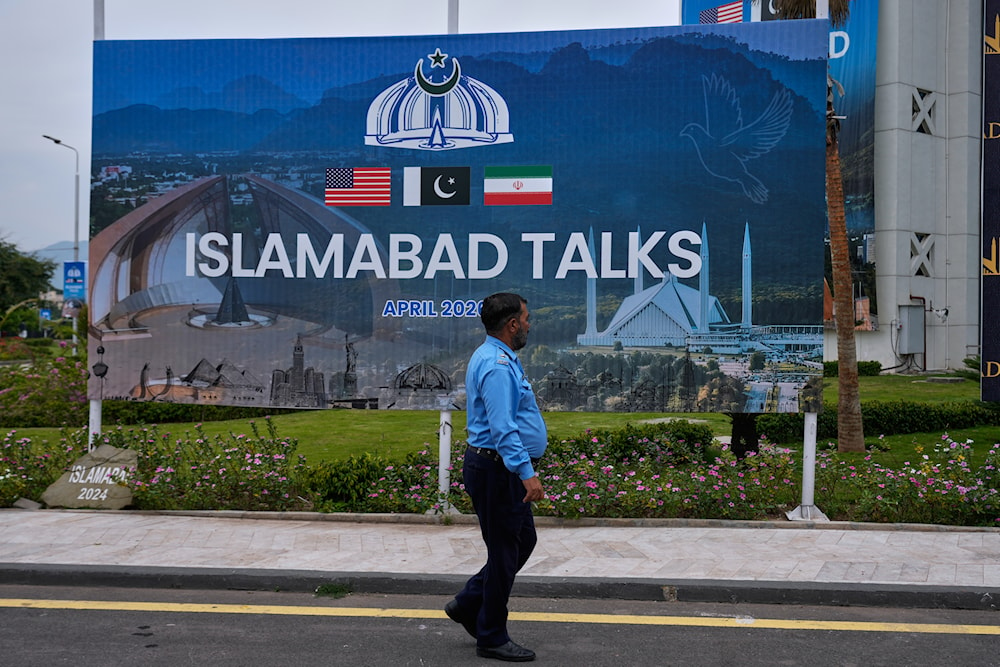
A police officer walks past a billboard regarding US and Iran negotiations, outside a media facilitation center in Islamabad, Pakistan on April 11, 2026 (AP)
A US–Iran agreement is close to being completed, but both sides must show flexibility to finalize it, Pakistan’s Foreign Minister Ishaq Dar said on Friday.
Speaking at the Antalya Diplomacy Forum in Türkiye, Dar said Pakistan “will leave no stone unturned” in its efforts to achieve peace, emphasizing that “what Pakistan wants to see is not the extension of the ceasefire, it’s permanent end of the war."
Dar added that “we have already crossed more than 80 percent of the work done,” but stressed that “both sides need to show flexibility.”
According to Dar, Pakistan’s Prime Minister Shehbaz Sharif and military chief Asim Munir have been involved in mediating discussions between the two sides, including talks held in Islamabad last week, which did not produce a final agreement, though negotiations have continued.
A Pakistani negotiating team led by Munir is currently on its third day of a visit to Tehran, where it is meeting senior Iranian officials to advance efforts toward a deal with the United States.
Sharif is also attending the Antalya forum, concluding a series of regional visits that included stops in Saudi Arabia and Qatar, where he and Dar held meetings with senior leadership on Pakistan-brokered talks.
Regional leaders meet in Antalya
Leaders of Türkiye, Pakistan, and Qatar convened in Antalya for a closed-door meeting focused on rising regional tensions linked to US-Israeli threats against Iran and possible pathways toward de-escalation.
The meeting brought together Turkish President Recep Tayyip Erdogan, Pakistani Prime Minister Shehbaz Sharif, and Qatari Emir Sheikh Tamim bin Hamad Al Thani on the sidelines of the Antalya Diplomacy Forum, highlighting increased diplomatic coordination among regional powers.
According to the Turkish presidency, Erdoğan warned that attacks targeting Iran could further destabilize the region. “During the meeting, our president said that illegal attacks on Iran increase security risks in our region, that we are satisfied with the ceasefire, and that Turkey would step up its efforts to maintain the ceasefire and ensure lasting peace,” the statement read.
A two-week ceasefire was announced on April 7 following indirect understandings between Washington and Tehran. However, subsequent talks held in Islamabad failed to produce a lasting agreement.
Despite the absence of renewed large-scale hostilities, tensions persist, particularly as Washington continues its Strait of Hormuz blockade targeting Iranian vessels, raising concerns about the durability of the ceasefire.
"Israel" acts as another factor in the potential collapse of the ceasefire, as it negates the ceasefire signed on April 7 by continuing to attack Lebanon, despite the cessation of hostilities across all fronts, which was strictly mentioned in the ceasefire plan and was also agreed upon by Israeli officials in Washington.
A temporary ceasefire between Lebanon and "Israel" has since been put into effect, but remains shaky as Tel Aviv has a history of violating non-aggression deals.


