
US-Israeli aggression on Iran puts US embassies under growing threat
 6 Min Read
The war, sparked by US-Israeli aggression on Iranian territory and infrastructure, has triggered a wave of regional resistance, with retaliatory actions targeting US assets in West Asia.
-
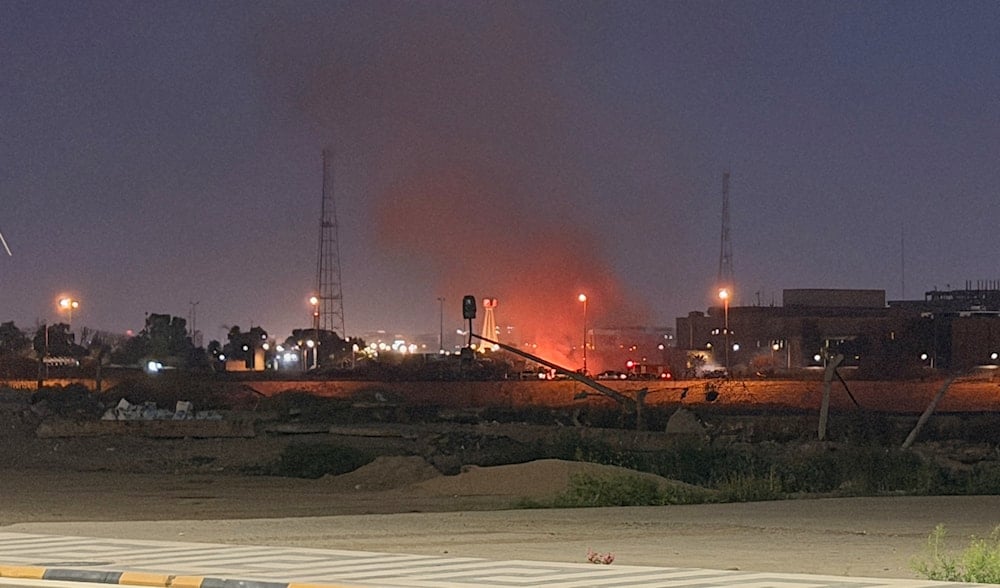
Flames appear to engulf a structure inside the compound of the US Embassy in Baghdad, March 17, 2026 (AP)
The ongoing US-Israeli aggression on Iran has sparked the most extensive and rapid series of attacks targeting American embassies and consulates since the aftermath of 9/11, The Wall Street Journal reported, citing both current and former officials. As threats to US diplomatic missions abroad persist, the Trump administration is struggling to respond effectively.
Officials noted that while the series of missile and drone attacks has not resulted in injuries to US personnel and has caused only minor structural damage, the broader implications are significant.
Collectively, these attacks have disrupted embassy operations and forced reductions in staffing across several Middle Eastern posts. The situation, as per the report, risks further diminishing the US diplomatic footprint as the State Department attempts to manage both security concerns and the wider diplomatic consequences of the war.
The US–Israeli aggression launched against Iran on February 28 rapidly escalated, with airstrikes hitting multiple cities, military sites, and critical infrastructure across the country. The aggression has resulted in significant destruction and mounting civilian hardship, not to mention a rising civilian death toll contributing to a broader regional crisis.
In response to the brutal aggression, Iran initiated a wave of defensive retaliatory operations targeting US assets across the region. These included missile and drone strikes on bases and facilities linked to US operations, as well as attacks near compounds.
Baghdad embassy faces continued threats
On Friday, officials confirmed that additional personnel were evacuated from the US embassy compound in Baghdad following repeated rocket and drone attacks. While the compound is equipped with advanced counter-rocket, artillery, and mortar systems (C-RAMs) capable of intercepting drones, officials told The Wall Street Journal that such systems are too costly and complex to deploy widely across other embassies.
Following the latest evacuation, only a minimal “skeleton crew” remains at the Baghdad embassy, once one of the largest and most strategically important US diplomatic missions in the region.
“Attacks on diplomatic facilities, including outside the conflict zone, are becoming normalized,” said Jen Gavito, a former senior US career diplomat. “The scale and scope of these attacks are unprecedented.”
Although the Pentagon claims that US and Israeli aggression has significantly weakened Iran’s missile and drone capabilities, State Department officials remain highly alert. They continue to monitor risks, "including additional drone strikes, terrorist plots, and Iran-inspired lone wolf attacks targeting US diplomatic facilities worldwide," as per the report.
It is worth noting that the Islamic Resistance in Iraq is defending its people and attacking “enemy bases in Iraq and the region,” carried out in response to ongoing aggression and as part of a commitment to its stated objectives.
The Resistance movements said their operations are part of a broader response to recent developments, framing them as retaliation and deterrence against continued aggressions that have resulted in the martyrdom of several Iraqi Resistance fighters.
Rise of low-cost drone warfare
A key challenge for US security officials is the increasing use of inexpensive one-way drones by Iran and the Axis of Resistance. These weapons present a highly effective and low-cost method of targeting embassies, which are otherwise heavily fortified with reinforced walls, bulletproof glass, and strict security measures, as per the report.
The threat posed by drones is not new. State Department officials have been raising alarms since late 2022, particularly as the war in Ukraine demonstrated how widely available and central unmanned aerial systems have become in modern warfare.
The State Department has condemned the attacks and emphasized that embassies are continuously reassessing their security posture. “Our highest priority is the safety and security of Americans, including our diplomats,” said State Department spokesman Tommy Pigott.
Criticism over preparedness
Former senior State Department officials have criticized the Trump administration for failing to quickly reduce staff levels across more regional embassies and for not advising US citizens to leave West Asia ahead of the US-Israeli war on Iran.
According to a letter signed by more than 240 foreign service officers affected by layoffs, significant reductions within the State Department have eliminated critical expertise in Iran policy, energy, and consular operations.
The cuts reportedly removed the entire rapid-response consular team, senior officials experienced in Middle East evacuations, and specialists in energy and language, roles typically essential during crises of this scale.
“The expertise required to manage the current crisis has been systematically removed,” the group wrote in a 28-page memo to Sen. Elizabeth Warren, (D., Mass.), responding to the questions she sent to Secretary of State Marco Rubio earlier this month. “The U.S. Government is not trimming fat. It amputated capability, and Americans are now paying the price.”
Administration pushes back
Tommy Pigott rejected the criticism, stating that the layoffs did not affect overseas operations. He dismissed concerns raised by “failed former officials” as politically motivated and noted that more than 50,000 US citizens have been assisted in leaving West Asia since the war began.
“Experienced professionals at the State Department are actively working to anticipate and prevent threats against our diplomatic missions,” he stressed.
In response to the recent developments, the State Department has reduced nonessential staff at 10 diplomatic posts across the region and fully suspended operations at the US Embassy in Kuwait and the consulate in Karachi, Pakistan. Additionally, all US diplomatic missions worldwide have been ordered to review their security posture.
Warning of prolonged war
“We’re potentially at the front end of a pretty long, persistent effort [by Tehran] which is going to look a lot more like the challenges we experienced...,” said John Bass, a former senior career diplomat.
“I unfortunately will not be surprised if their focus on diplomatic facilities extends well beyond the Gulf region, and I anticipate they are going to be looking to conduct attacks against us as they see opportunities to do so,” he told WSJ.
Read next: NATO evacuates Iraq mission due to 'regional escalatation'


