
US launches fresh attacks on southern Iran
 5 Min Read
New US strikes target Iran as explosions are reported across its southern coast, intensifying the confrontation over the strategic Strait of Hormuz.
-
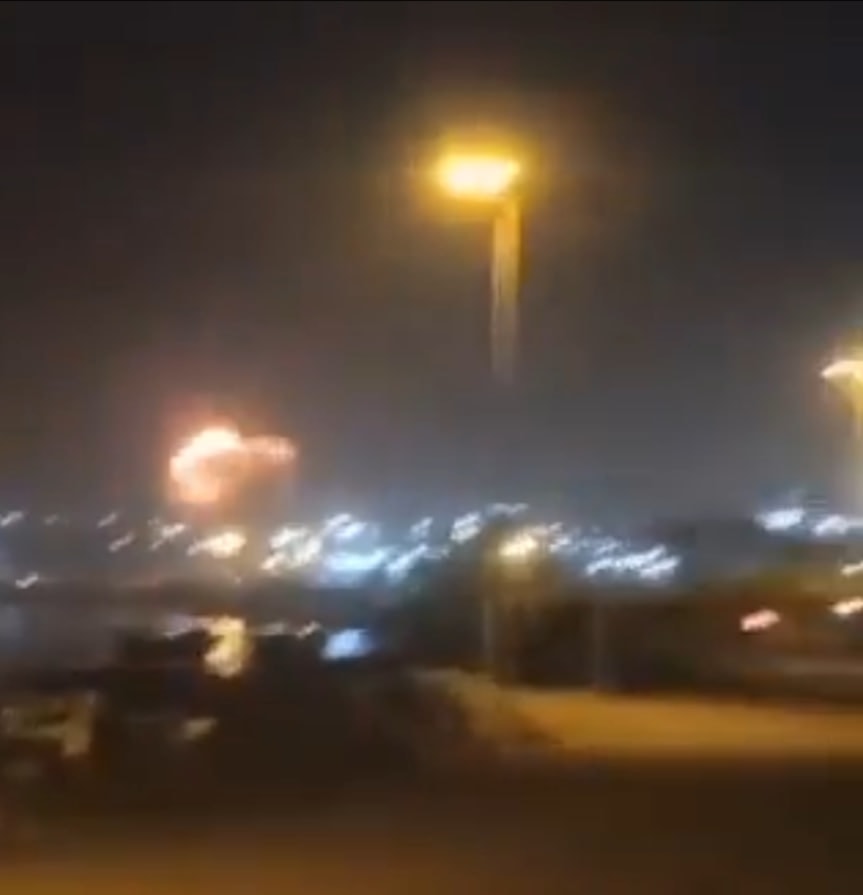
One of the US attacks on Bandar Abbas, Iran, September 2026 (Social Media)
The United States has launched a fresh wave of attacks against Iran, with explosions reported across several strategic locations along the country’s southern coast, including Bandar Abbas, Qeshm Island, Konarak, Jask, Sirik, and Minab.
US Central Command (CENTCOM) said the attacks began at 12 p.m. Eastern Time on Tuesday, claiming that US forces were targeting Iran's Islamic Revolution Guard Corps (IRGC) positions.
CENTCOM claims that the attacks followed what Washington described as attempted IRGC attacks against commercial shipping in the Strait of Hormuz and US military personnel deployed in the region. The statement represents the US justification for the latest escalation.
Iranian media reported a series of explosions across #Hormozgan Province in southern Iran, with blasts heard east of Bandar Abbas, in the port of Jask, and in the city of #Minab.
— Al Mayadeen English (@MayadeenEnglish) September 1, 2026
Iranian state television said four explosions were heard near the village of Masan on Qeshm Island,… pic.twitter.com/MM4V2J2Klz
The renewed attacks come only days after US forces struck two launchers on Iran’s Larak Island, prompting an Iranian response against US military facilities in Jordan and the UAE.
Read more: Gulf economies face new era of uncertainty after six months of war: RS
Explosions reported across southern Iran
Iranian media reported explosions in multiple locations as the US attacks unfolded.
Iranian television reported explosions in eastern Bandar Abbas, while four explosions were heard near Masen village on Qeshm Island. Further blasts were reported in the port city of Jask and in Minab, both in Hormozgan province.
Tasnim News Agency reported six explosions in Konarak and eight on Qeshm Island.
The reported locations are significant because they span a large section of Iran’s southern maritime infrastructure, extending from the Strait of Hormuz toward the Gulf of Oman. Bandar Abbas and Qeshm sit adjacent to one of the world's most strategically important maritime chokepoints, while Jask and Chabahar provide Iran with access to waters beyond the Strait.
The scale and precise targets of Tuesday's attacks remain unclear, and Iranian authorities have not yet provided a comprehensive assessment of damage or casualties.
Iran responds to US aggression
Iran's Khatam al-Anbiya Central Headquarters announced that Iran will deliver a "crushing" blow after the US aggression on various sites along the nation's southern coast.
"In response to the US military's aerial aggression against points in Sistan and Baluchistan and Hormozgan, the armed forces of the Islamic Republic of Iran will deliver devastating and crushing blows to the cowardly and evil American enemy," the statement read.
The headquarters further added that it will face heavier consequences and its troops will bear greater losses if it continues attacking Iran and the region.
"The more the American terrorist army insists on continuing its evil actions in the region, the greater the losses and heavier the consequences it will bear," it said. "We have repeatedly declared and are determined that we will not compromise under any circumstances on the rights of the heroic Iranian people, and we will impose heavy costs on the American enemy."
Read more: Baghaei: Pressure, diktats will not work with Iran
Hormuz remains at the center of escalation
The latest US operation comes amid an intensifying confrontation over the Strait of Hormuz, where Washington has sought to constrain Iran’s military and maritime capabilities.
The geography of the reported attacks underscores the strategic stakes. Iran has developed coastal defenses, missile capabilities, surveillance systems, and alternative maritime infrastructure along its southern coastline, strengthening its ability to operate beyond a single point of access.
Previous US operations have also targeted Iranian military and coastal capabilities. The repeated focus on these areas highlights Washington’s efforts to weaken Iran’s ability to exert military pressure around Hormuz.
At the same time, Iran’s missile and air-defense capabilities have remained a central factor in the confrontation, complicating US efforts to establish uncontested military control over the strategic waterway.
The renewed attacks therefore mark more than another exchange of fire: they deepen the confrontation over Iran’s sovereignty, maritime access and ability to deter further US military pressure.
Read more: Iran's missile strategy exposes mounting strain on US Patriot defenses
Trump warns of greater response
US President Donald Trump stated in a Truth Social post following the US attack on Iran that if Tehran retaliates to the American aggression, Washington will increase its ferocity.
"If the failed Nation of Iran retaliates for this very justified attack, they will be hit again at a much harder and higher level," he wrote, adding that "it will not be the biggest attack of them all, that is waiting in the wings and, when it is over, there will be very little left of the Islamic Republic of Iran!"
Trump said that the US attacks were in retaliation for alleged Iranian attempts to install mines in the Strait of Hormuz and the Islamic Republic's retaliation to US attacks by targeting its bases in Jordan.
Read more: Unknown projectiles hit tanker during Hormuz Strait transit: UKMTO


