
US mulls redirecting Ukraine-bound weapons amid war on Iran strain: WP
 3 Min Read
The United States is considering rerouting air defense systems intended for Ukraine to the Middle East as the war on Iran strains its ammunition reserves and raises concerns among allies.
-
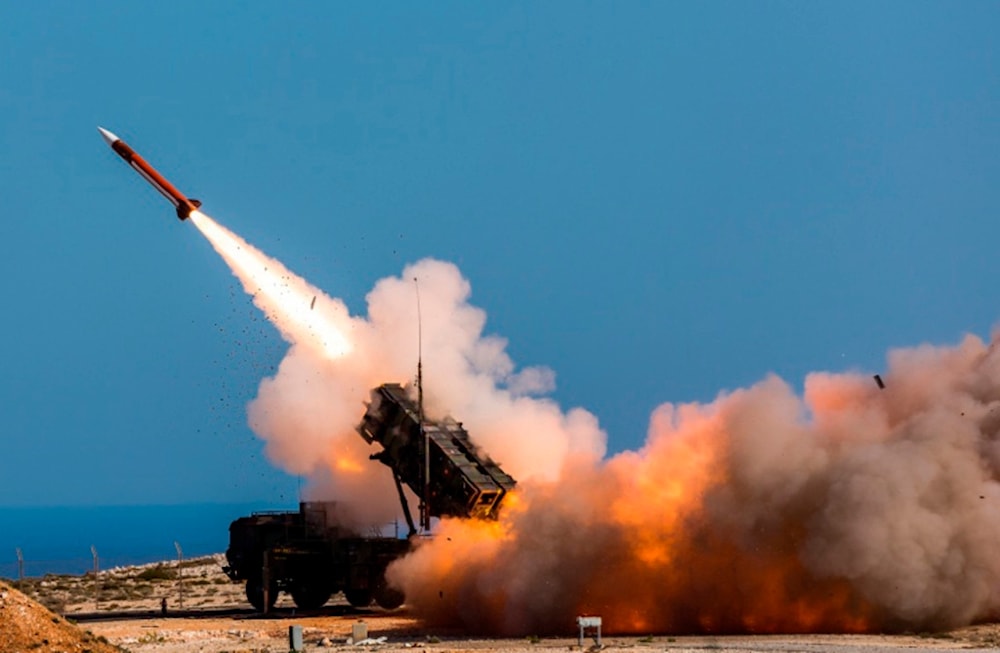
In this image released by the US Department of Defense, German soldiers assigned to Surface Air and Missile Defense Wing 1, fire the Patriot weapons system at the NATO Missile Firing Installation, in Chania, Greece, on Nov. 8, 2017 (AP)
The Washington Post on Thursday reported that the United States is reviewing the possibility of diverting weapons originally designated for Ukraine to the Middle East, as the ongoing war on Iran continues to drain key ammunition reserves.
Citing three sources familiar with the matter, the report said no final decision has been taken. However, the move under consideration could involve reallocating interceptor missiles that NATO countries had ordered for Kiev under the Prioritized Ukraine Requirements List (PURL) framework.
"[DoW will] ensure that US forces and those of our allies and partners have what they need to fight and win," the department said as, cited by the report, adding that other comments on the matter were not provided.
The discussions come as concerns mount over the pace at which US stockpiles are being depleted amid sustained operations in West Asia, in particular, the aggression on Iran.
According to the report, European officials are increasingly uneasy about Washington’s ability to maintain long-term commitments under the PURL initiative, particularly as demand for air defense systems intensifies.
One European diplomat cited in the report raised questions about how far the US can continue supplying Ukraine if current consumption rates persist.
While deliveries to Kiev are expected to continue, the report noted that future shipments may be scaled back in terms of defensive capabilities, reflecting shifting priorities within the Pentagon.
Interceptor shortages spread
The strain is not limited to Europe. Earlier in March, CBS News reported that US allies in the Gulf are also facing critical shortages of air defense interceptors amid ongoing Iranian retaliation against US bases and facilities. Several Gulf states were described as running "dangerously low" on such systems and have urged Washington to accelerate resupply efforts.
Despite assurances from US officials, including Under Secretary of War for Acquisition and Sustainment Michael Duffey, who said sufficient stockpiles remain, logistical pressures appear to be mounting as the war continues.
The developments follow the aggression on Iran that began on February 28, when the United States and "Israel" launched attacks on the country, targeting sites in Tehran and beyond. Iran has since responded with strikes on Israeli-occupied territories and US military positions across the region.
As the war unfolds, the growing strain on US military resources is beginning to reverberate across multiple theaters, raising broader questions about Washington’s capacity to sustain simultaneous engagements.
Earlier today, Bloomberg reported that the Pentagon is seeking to redirect approximately $1.5 billion in previously approved funding to replenish depleted interceptor missile stockpiles, including Patriot, THAAD, and Standard Missile systems, following their extensive use during the war on Iran and Tehran’s retaliatory operations.
According to the report, the funding shift includes $352 million for additional Patriot-3 interceptors, $771 million for THAAD systems, and $373 million for Standard Missile-3 interceptors, reflecting the scale of consumption and the urgency of replenishment.
Read more: Iran refines missile strategy as strikes grow more effective: Reports


