
US pushes proposal to halt resistance in Lebanon, embolden 'Israel'
 4 Min Read
US advances a phased ceasefire proposal between Lebanon and "Israel", involving Hezbollah, diplomatic talks, and conditions for de-escalation.
-
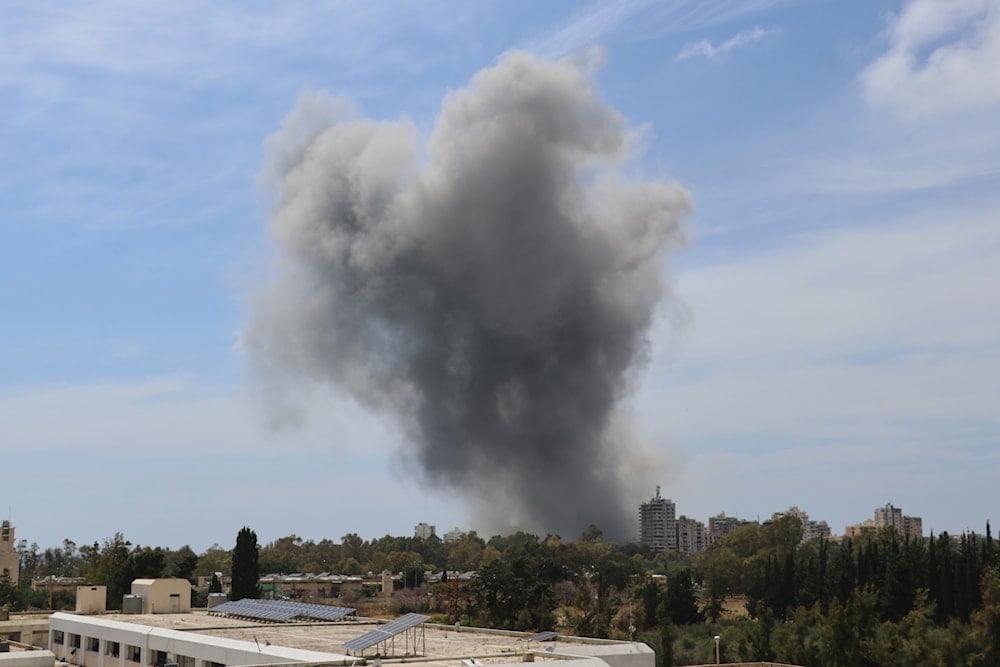
Smoke rises following an Israeli airstrike in the southern port city of Tyre, Lebanon, Sunday, May 31, 2026 (AP)
The United States has put forward a diplomatic proposal aimed at gradually reducing hostilities between "Israel" and Lebanon, involving direct talks between the pair.
US Secretary of State Marco Rubio held separate calls with Lebanese President Joseph Aoun and Israeli Prime Minister Benjamin Netanyahu on May 31 to advance the plan, according to a US official.
Hezbollah halts ops in exchange for 'Israel' not bombing Beirut
The official stated that the proposal’s initial step would require Hezbollah to halt all operations against "Israel", and "Israel" would refrain from escalating military actions only in the Lebanese capital, Beirut. “This would create space for gradual de-escalation and an effective cessation of hostilities,” the official said.
This effectively means that "Israel" maintains the ability to strike anywhere else in Lebanon, like it has been doing for the past few weeks, despite the ceasefire announced in April, all while the Resistance is forced to completely halt its defensive operations against "Israel".
The official added that President Aoun has been working to advance the proposal and secure a formal agreement, while Lebanese Parliament Speaker Nabih Berri, who has guaranteed Hezbollah’s commitment to a ceasefire, has placed the onus on "Israel" to stop “shooting first”.
The Israeli military announced on May 31 that its forces operating in southern Lebanon had advanced north of the Litani River and reached the al-Shaqif Fortress, a strategic position located south of the city of Nabatieh.
This also comes amid reports that Israeli officials have sought US approval to expand strikes on Beirut as part of a broader escalation of military operations against Lebanon.
Also on May 31, Israeli military spokesperson Avichay Adraee issued an evacuation threat for residents in the entirety of South Lebanon.
During the 15-month ceasefire period between November 27, 2024, and March 2, 2026, "Israel" sustained its attacks on Lebanon with over 10,000 documented violations recorded by the United Nations Interim Force in Lebanon (UNIFIL), including land, sea, and air incursions that killed approximately 500 people. Hezbollah, on the other hand, fully adhered to the truce and did not fire a single shot during this period.
'Who will oblige 'Israel' to halt aggression?': Berri
Meanwhile, Lebanon's Parliament Speaker Nabih Berri said on May 31 that he can guarantee a full and immediate commitment to a ceasefire by the Resistance, while questioning who would compel "Israel" to halt its aggression.
"I guarantee a full and immediate commitment to a ceasefire by the resistance, but who will oblige Israel to stop its aggression by land, sea and air, and its destruction of villages?" Berri asked.
Earlier this month, the Asharq Al-Awsat newspaper quoted Berri as questioning, "Where is the truce, and has Israel stopped bulldozing and demolishing homes and shedding the blood of civilians and paramedics?"
He added, according to the report, that the "so-called truce has allowed Israel to escalate its aggression in an unprecedented manner without intervention from Washington, which sponsored it."
Berri further asked, "What is the point of negotiations under Israeli fire, and what will we tell the families of those killed by Israeli treachery?"
Death toll on the rise
The death toll from the Israeli war on Lebanon has risen to 3,412 people, with 10,269 others injured since March 2, Lebanon's Ministry of Public Health announced on May 31.
In a statement, the Ministry said 127 healthcare workers are among those killed during the ongoing Israeli aggression, highlighting the growing toll on Lebanon's medical sector amid continued attacks across the country.
The updated figures come as Israeli occupation forces expand their operations in southern Lebanon despite a ceasefire agreement announced in April following US-mediated talks between Lebanon and Israel.


