
US quits anti-violent extremism organization, draws backlash
 4 Min Read
The US exits GCERF and other global agencies, weakening multilateral efforts to prevent violent extremism in the Middle East and Africa’s Sahel.
-
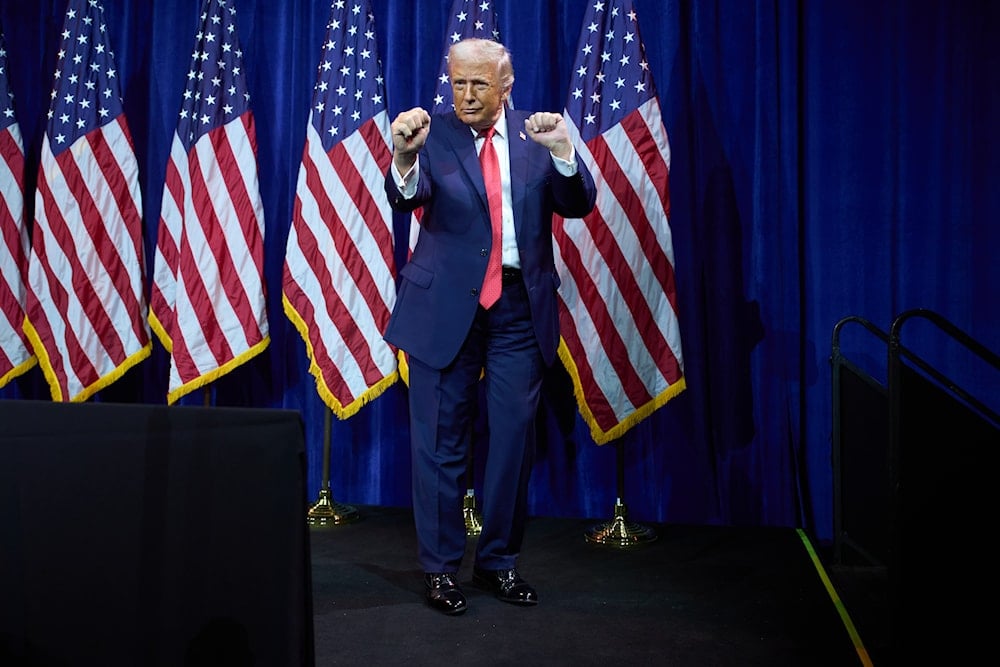
US President Donald Trump dances as he walks off stage after speaking to House Republican lawmakers during their annual policy retreat, Tuesday, Jan. 6, 2026, in Washington (AP)
A global organization dedicated to preventing violent extremism warned on January 9 that the United States had made a mistake in withdrawing its support while the risk of militant attacks surges in the Middle East and Africa’s Sahel region.
The Global Community Engagement and Resilience Fund (GCERF), which supports prevention programmes across dozens of countries with communities vulnerable to extremism, was listed on January 7 in a White House memo announcing a US pullout from 35 international agencies and 31 UN entities it said rejected US interests.
Khalid Koser, head of the Geneva-based GCERF, said the decision came as a surprise and without explanation, reflecting a deeper ideological shift under US President Donald Trump’s administration away from multilateral prevention programmes toward security-focused counterterrorism measures.
“I think it’s a mistake to take out that fundamental piece of prevention. But I don’t think this administration believes in prevention,” Koser told Reuters.
Koser said risks of extremist violence were higher than at any point since the 2011 so-called "Arab Spring", citing as examples Afghanistan, the Sahel, and camps in north-east Syria that hold tens of thousands of Islamic State family members.
“If you don’t work on prevention, then in 10 years time, you’re going to have lots of terrorists and lots of problems.”
US decision goes against its national interests
Further underlining a US repudiation of multilateral cooperation bodies under Trump’s “America First” policy, the White House also announced it was quitting the 30-nation Global Counterterrorism Forum.
The US helped establish GCERF’s programme in north-east Syria, which assists in reintegrating families from former Islamic State militant circles. Koser said that while GCERF’s work would continue, it was losing a major player in the US, and that Washington’s decision was perplexing, given that GCERF’s agenda remained relevant to US national interests.
With other international agencies scaling back following mass US foreign aid cuts in 2025, GCERF said it now carries much of the global prevention burden alone, and that its US$50 million (S$64 million) annual budget had not risen to fill the growing gaps.
The 2025 Global Terrorism Index, issued by the Institute for Economics and Peace, showed the number of countries recording a terrorist attack increased from 58 to 66 in 2024, reversing nearly a decade of improvements.
What is the GCERF?
The Global Community Engagement and Resilience Fund (GCERF) is an international organization focused on preventing violent extremism through community-based initiatives. It works with local actors in fragile and conflict-affected settings to address the root causes that can make communities vulnerable to radicalization.
GCERF was founded in 2014 following discussions among governments, civil society groups, and international organizations on the need for prevention-focused approaches to extremism. It was established as an independent, multilateral fund headquartered in Geneva, Switzerland.
The organization supports projects that strengthen social cohesion, improve access to education and livelihoods, and empower women and youth. Its programmes are designed to complement security measures by addressing grievances and structural risks before they escalate into violence.
GCERF operates across dozens of countries in regions including the Middle East, Africa, and Asia, working with local partners and governments. It is funded by a mix of state donors and institutional contributors and positions itself as a bridge between global policy goals and community-level action.


