
US revokes Brazilian ambassador's visa as diplomatic row deepens
 5 Min Read
The United States revoked Brazil's ambassador's visa as tensions escalated over Brasília's refusal to approve Washington's nominee and accusations of US interference in Brazil's election.
-
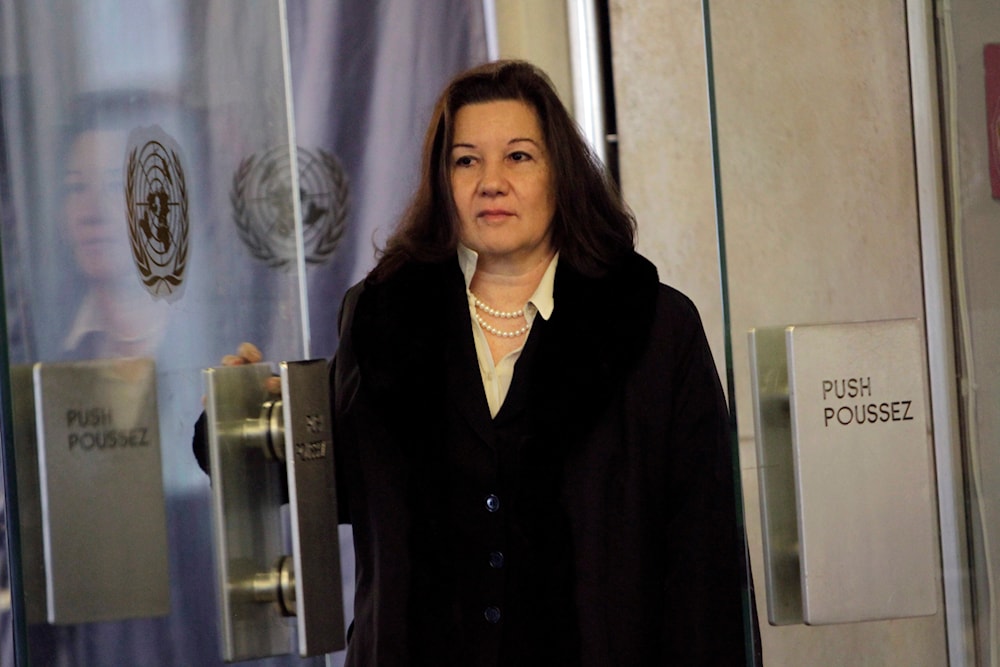
Brazilian Ambassador to the United Nations Maria Luiza Ribeiro Viotti arrives for Security Council consultations on peace and security in Africa, Saturday, Feb. 26, 2011, at United Nations headquarters (AP)
The United States has cancelled the visa of Brazil’s ambassador to Washington, escalating tensions with President Luiz Inácio Lula da Silva’s government amid accusations of US interference in Brazil’s upcoming election, The Guardian reported on Wednesday.
Brazilian Ambassador Maria Luiza Ribeiro Viotti will not be immediately expelled from the United States, but she would be required to apply for a new visa if she leaves the country and seeks to return.
Washington described the decision as retaliation for Brazil’s refusal to approve Daniel Perez, US President Donald Trump’s nominee for ambassador to Brasília, as well as its denial of entry visas to two US officials who had planned to visit Brazil before the October presidential election.
The State Department indicated that Viotti’s visa could be reinstated if Brasília approves Perez’s appointment.
“This is a reciprocal action,” a State Department spokesperson said. “Should the ambassador leave the country, she would need to reapply for a visa.”
The spokesperson accused Brazilian authorities of deliberately delaying the ambassadorial appointment.
“We communicated continually with the Brazilian government for weeks and have given the Brazilian government every opportunity to do the right thing, yet they have continually delayed and obfuscated,” the spokesperson said.
Brazil denounces pressure ahead of election
Lula’s government condemned Washington’s move, arguing that it formed part of a broader effort to apply political pressure on Brazil before voters head to the polls on October 4.
“Today’s decision is not an isolated incident. It is part of a deliberate escalation of hostile measures against Brazil, motivated by ideological reasons,” Lula’s office said.
Brazil has also objected to Washington publicly announcing Perez’s nomination before formally securing Brasília’s consent, as required under established diplomatic practice.
Brazilian officials said the nomination remained under consideration but stressed that no decision would be made before the first round of the presidential election.
Trump’s administration rejected Brazil’s position and accused Brasília of attempting to interfere with the US president’s authority to select American representatives abroad.
“President Trump has the right to determine who represents the American people and interests around the world,” the State Department said. “We reject any effort by foreign countries to interfere in our domestic processes.”
Disputed US visit fuels interference concerns
The confrontation intensified after Brazil denied visas to Riley Barnes, the US assistant secretary of state for democracy, human rights and labour, and one of his senior aides.
The officials had intended to travel to Brasília between July 27 and 30 to discuss election integrity, freedom of expression and religious freedom with officials and civil society figures.
Brazilian authorities said the visit risked being used to question the reliability of the country’s electronic voting system and described it as an unacceptable intervention in Brazil’s domestic political affairs.
Washington denied that the proposed visit had any political purpose.
“Any insinuation of a ‘ploy’ to undermine a democratic nation’s election is a baseless lie,” the State Department said at the time.
The issue is especially sensitive because former Brazilian President Jair Bolsonaro and his allies have repeatedly challenged the integrity of electronic voting without providing evidence. Bolsonaro has been barred from contesting elections and convicted over a scheme to overturn the result of the 2022 presidential vote.
Lula is seeking a fourth, non-consecutive presidential term and is expected to face Senator Flávio Bolsonaro, the former president’s son and a political ally of Trump.
Trade and regional disputes widen rift
The visa dispute follows several confrontations between Washington and Brasília over Venezuela, Cuba and US policy in Latin America.
Economic measures have further strained relations, with the Trump administration imposing tariffs of up to 37.5% on thousands of Brazilian products. Washington has cited alleged unfair trading practices and failures to combat forced labour, accusations rejected by Lula’s government.
Brasília has accused the United States of using economic and diplomatic pressure to support the Bolsonaro family’s political interests.
The Trump administration has also designated Brazil’s two largest drug-trafficking groups as foreign terrorist organizations, despite objections from Lula’s government.
Despite the escalation, US officials maintained that Washington remained interested in repairing relations.
“We want to be back in a situation where we have a normal, productive, transparent relationship with our colleagues,” a senior US official said.
Read more: Rubio strips 8 Brazilian judges of US visa amid Bolsonaro coup trial


