
US sanctions ICC president, lawyer involved in Netanyahu warrant
 5 Min Read
The US imposed sanctions on ICC President Tomoko Akane and senior trial lawyer Abdoulaye Seye, escalating pressure on the court over its pursuit of Israeli officials for crimes in Gaza.
-
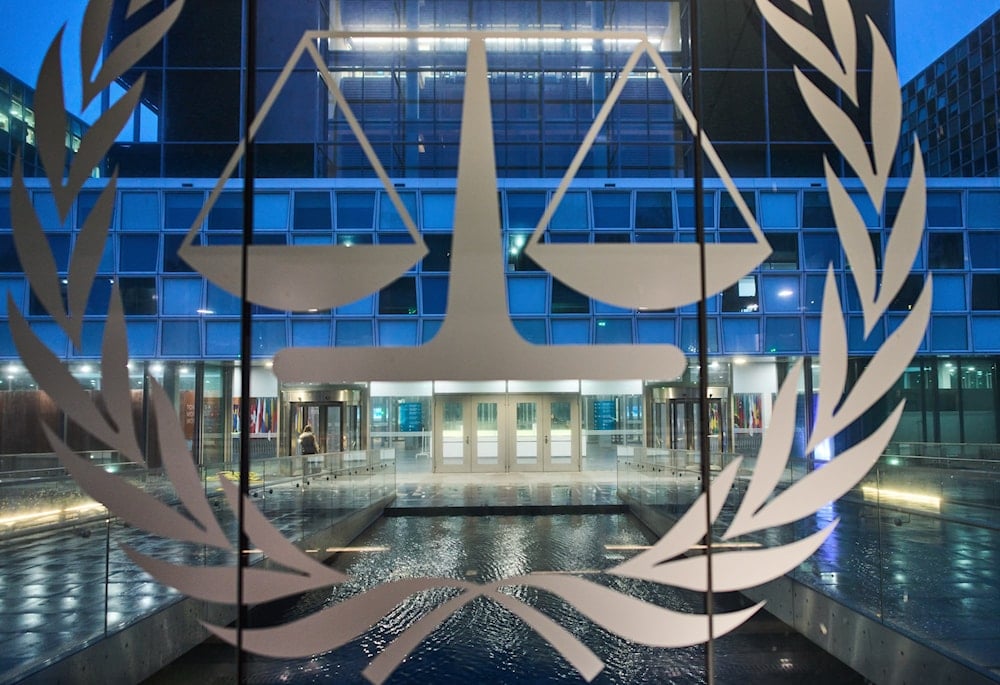
FILE - The International Criminal Court (ICC) is seen in The Hague, Netherlands, on December 9, 2025. (AP)
The United States has imposed sanctions on two senior officials at the International Criminal Court as Washington intensifies its confrontation with the tribunal over investigations involving crimes committed by US and Israeli forces and officials.
The State Department announced on Tuesday that ICC President Tomoko Akane of Japan and senior trial lawyer Abdoulaye Seye of Senegal had been placed under US sanctions.
The measures allow Washington to freeze any assets belonging to the two officials that fall under US jurisdiction and largely shut them out of the US financial system, with which most internationally operating banks maintain links.
Secretary of State Marco Rubio defended the decision by accusing the Hague-based court of exceeding its authority and targeting countries that do not recognize its jurisdiction. "The Trump Administration has been clear: the International Criminal Court is a corrupt and fatally politicized supranational court that has maliciously abused its authority and exceeded its mandate", Rubio said in a statement. "We will not tolerate its assault on state sovereignty".
Broader campaign against the court
The latest sanctions form part of a wider campaign by the Trump administration against the ICC, which has pursued investigations linked to crimes in Afghanistan, Iraq and Gaza.
Washington has repeatedly argued that the court should not investigate or prosecute nationals of countries that are not parties to the Rome Statute, including the United States and “Israel”. Critics, however, dispute the suggestion that non-membership alone places US or Israeli nationals beyond the court's reach.
Under the Rome Statute, the ICC can exercise jurisdiction over crimes committed on the territory of a member state even when the alleged perpetrator is a national of a country that has not joined the court. In the Palestine situation, an ICC chamber ruled in 2021 that the court's territorial jurisdiction extends to Gaza and the occupied West Bank, including East al-Quds.
Palestine became a party to the Rome Statute in 2015.
Gaza case at center of escalating dispute
The dispute has intensified over the ICC's pursuit of Israeli political and military officials in connection with the war on Gaza, alongside Washington's longstanding opposition to scrutiny of US personnel over documented abuses in Afghanistan.
Seye, one of the two officials targeted in the latest round of sanctions, served on the prosecution team that sought an arrest warrant for Israeli Prime Minister Benjamin Netanyahu.
The ICC previously issued arrest warrants for Netanyahu and former Israeli Security Minister Yoav Gallant over crimes committed during the war on Gaza, a development that prompted fierce opposition from Washington.
The Trump administration has also made clear that its campaign extends beyond individual sanctions. Rubio said last month that Washington would intensify diplomatic efforts against the court, including attempting to persuade other states to leave the institution.
Rights groups accuse US of shielding officials
Human rights organizations have sharply criticized the latest measures, arguing that Washington is using the reach of its financial system to obstruct accountability for international crimes.
Human Rights Watch Middle East and North Africa Director Balkees Jarrah described the sanctions as a “naked attempt to shield American and Israeli officials implicated in serious crimes from justice.” The organization urged ICC member states to condemn the measures and protect the court's ability to continue investigations involving Palestine, Afghanistan, Sudan and Ukraine.
The sanctions campaign is also facing challenges inside the United States. Three ICC judges sued the Trump administration in June, arguing that sanctions imposed against them were unlawful, while rights organizations have launched separate cases contending that the measures interfere with their ability to cooperate with the court.
ICC warns sanctions threaten court's independence
The court rejected Washington's latest measures, warning that targeting judicial officials for carrying out their duties threatens the independence of international justice.
The sanctions “undermine the rule of law,” the ICC said. “When judicial actors are threatened for applying the law, it is the international legal order itself that is placed at risk,” it added.
In a further response on Wednesday, the court described the measures as a “flagrant attack” against the independence of the judicial institution, warning that coercive action against its personnel also affects victims seeking recourse through the ICC.
The latest designations bring the number of sanctioned ICC staff members to 13, including nine of the court's 18 judges, its two deputy prosecutors, a former prosecutor and a trial lawyer. Akane had previously warned that the US measures could undermine the court's operations across its cases and potentially threaten the institution's continued existence.
US allies push back against sanctions
The latest action has also generated criticism from some of Washington's allies.
Japan, whose national Akane serves as ICC president, said on Wednesday that the decision was “very unfortunate” and reiterated its support for the court's work prosecuting the most serious crimes of concern to the international community. Japan has been an ICC member since 2007.
The Netherlands, which hosts the court in The Hague, also opposed the sanctions and reaffirmed that international courts must be able to perform their mandates independently.
The growing international criticism reflects concerns that the US campaign is moving beyond a legal dispute over jurisdiction toward measures capable of disrupting the ICC's operations by targeting judges, prosecutors and other officials through the global reach of the US financial system.
Read more: US launches sweeping campaign to isolate, undermine ICC


