
US Senate fails to ban Trump's $1.8bln 'anti-weaponization' fund
 5 Min Read
The US Senate also approved a $70 billion immigration enforcement package backed by President Donald Trump, advancing funding for deportation operations.
-
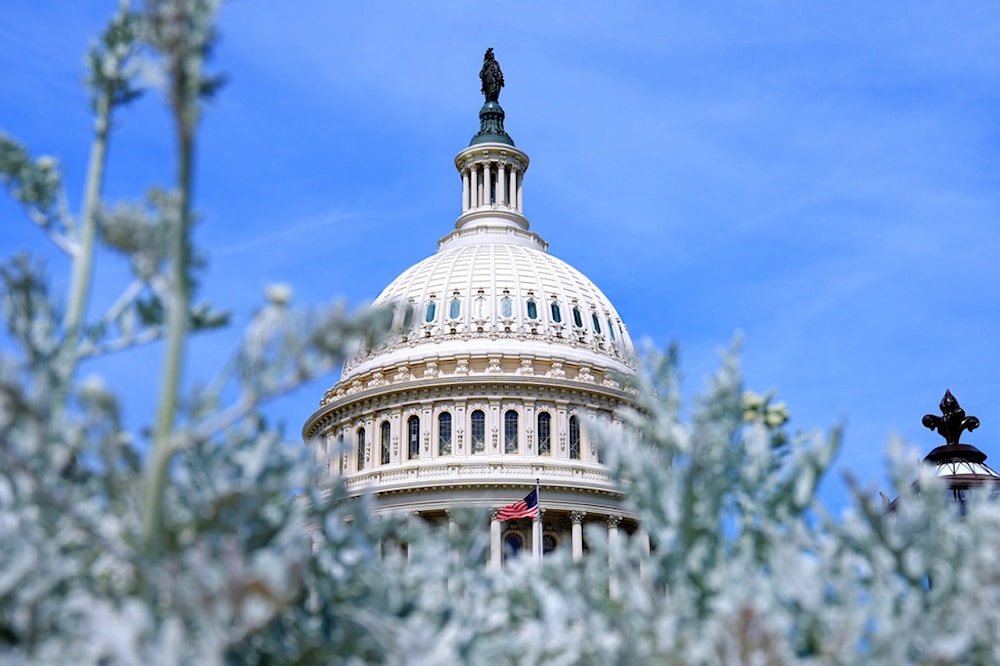
The US Capitol is seen Friday, June 5, 2026, in Washington (AP)
The US Senate approved legislation early Friday that would allocate an additional $70 billion to the Department of Homeland Security (DHS) for immigration enforcement operations, delivering a political victory for President Donald Trump and setting up a final battle in the House of Representatives, Reuters reported.
The measure passed by a 52-47 vote, with Republicans largely united behind the proposal and Democrats voting in opposition. Republican Senator Lisa Murkowski was the only member of her party to vote against the bill.
The legislation is intended to bolster immigration enforcement efforts over the next three years, with most of the funding directed toward Immigration and Customs Enforcement (ICE) and Border Patrol operations as the administration continues its nationwide deportation campaign.
Debate centers on controversial fund
Much of the Senate debate focused on a controversial $1.8 billion "anti-weaponization" fund that Democrats have criticized as a potential vehicle for compensating Trump's political allies over claims of government misconduct.
Republican leaders rejected efforts to include language permanently blocking the fund.
Senate Republican Leader John Thune defended the decision, pointing to testimony delivered this week by acting Attorney General Todd Blanche, who told lawmakers that the Justice Department would not move forward with the initiative.
The fund was a "settled issue", Thune said.
Trump has since indicated that he intends to nominate Blanche to lead the Justice Department permanently, a move that would require Senate confirmation.
While acknowledging that Blanche could face a difficult confirmation process, Thune expressed confidence in the nominee's position.
"I find it very hard to believe that they're going to submit somebody who sat in front of a committee in the House and made definitive statements about this and then somehow all of a sudden turn around and go back on them," Thune told reporters.
Despite those assurances, Trump appeared to signal continued support for the fund earlier this week.
"I love it. I think it's so important," the president told reporters on Wednesday.
Amendment efforts fail
Democratic lawmakers repeatedly sought to remove the fund from the legislation, arguing that Congress should not rely solely on executive branch promises.
An amendment introduced by Senate Democratic Leader Chuck Schumer to eliminate the fund narrowly failed in a 50-49 vote after attracting support from several Republicans, including Susan Collins. Republican Senators Jon Husted and Dan Sullivan also backed the proposal.
Following the final vote, Schumer criticized Republicans for declining to codify Blanche's commitment into law.
"Republicans refused to permanently outlaw Trump's $2 billion slush fund, leaving taxpayers to rely on nothing more than a promise from Donald Trump's personal fixer," Schumer said in a statement, referring to Blanche.
Although the White House and the Justice Department have reportedly paused implementation of the fund, questions remain over whether it has been formally abandoned.
Republican concerns emerge
The debate exposed divisions within Republican ranks as some lawmakers worried the issue could become a political liability ahead of the November midterm elections.
Senator Thom Tillis initially argued that congressional Republicans needed statutory guarantees preventing the fund from being used, warning that the controversy could create difficulties for incumbents facing reelection campaigns.
Tillis later proposed redirecting the fund's resources toward fraud enforcement activities, but his amendment was rejected by an 84-15 vote despite support from a dozen Republicans.
Senator Bill Cassidy offered a separate proposal to eliminate the fund altogether. Cassidy also joined Democratic Senator Cory Booker in filing a friend-of-the-court brief supporting a federal court order blocking the initiative.
The two senators argued that the fund "presents an immediate and dire threat to our constitutional order and the authority of Congress."
Immigration funding moves forward
Beyond the dispute over the fund, the legislation would significantly expand resources available to federal immigration agencies responsible for carrying out the administration's enforcement priorities.
Republicans have framed the measure as necessary to strengthen border security and support deportation operations, while Democrats argue that immigration agencies already possess substantial unspent resources from previous DHS appropriations.
Lawmakers also considered a series of unrelated amendments during the lengthy debate, including proposals aimed at preventing federal funds from being used for the construction of a planned 90,000-square-foot ballroom on White House grounds. None of those measures were adopted.
The bill now heads to the House of Representatives, where lawmakers are expected to take it up next week.
Read more: EU backs deportation powers likened to ICE practices


