
WFP warns El Fasher siege has become Sudan’s worst humanitarian crisis
 4 Min Read
The WFP warns that up to 100,000 people remain trapped in Sudan’s besieged El Fasher amid mass killings, famine, aid shortages, and collapsing services.
-
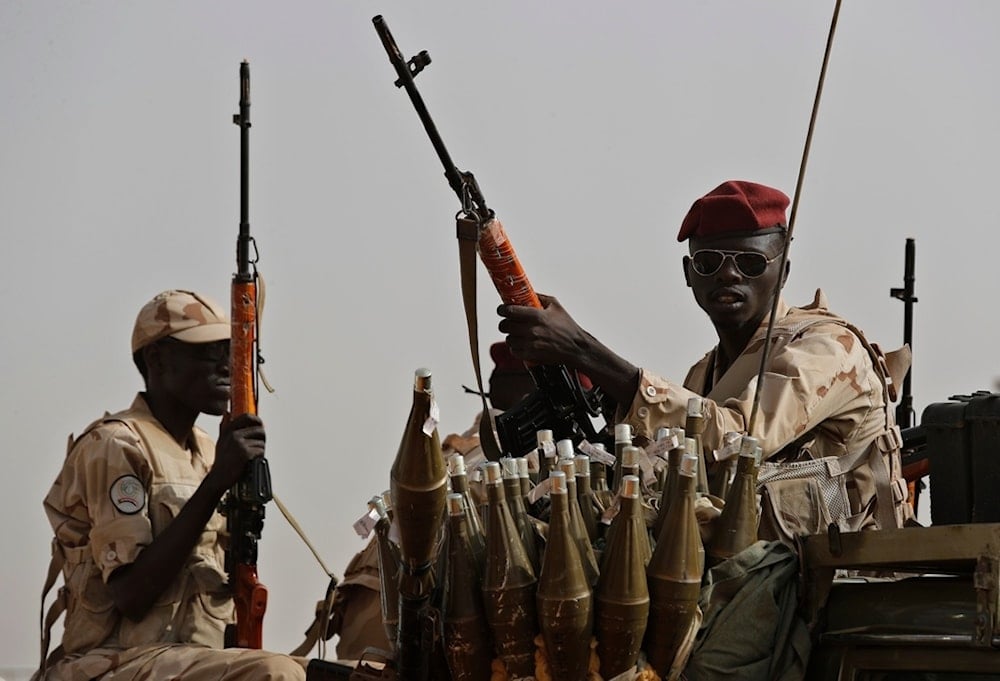
Sudanese soldiers from the Rapid Support Forces unit, secure the area where their leader, General Mohammed Hamdan Dagalo, attends a military-backed tribe's rally, in the East Nile province, Sudan, June 22, 2019. (AP)
The World Food Programme (WFP) warned on Friday that conditions in Sudan’s besieged city of El Fasher have deteriorated to levels “beyond horrific,” with between 70,000 and 100,000 people believed to remain trapped amid mass killings, famine, and the collapse of basic services.
Speaking to journalists in Geneva, Ross Smith, WFP’s director of emergency preparedness and response, said widespread network outages have largely cut off communications with the North Darfur city, leaving humanitarian agencies with only limited information about the situation on the ground.
Smith said satellite imagery and survivor testimonies describe El Fasher as “a crime scene,” citing reports of mass killings, burned bodies, abandoned markets, and the complete absence of commercial activity. He added that there are no signs of trade routes reopening or supplies reaching the city, and confirmed that the WFP no longer has humanitarian partners operating inside El Fasher.
“There are no confirmed reports of any community kitchens functioning,” Smith said, underscoring the scale of food insecurity facing civilians still trapped in the city.
He warned that fleeing El Fasher is “extremely dangerous,” pointing to widespread looting, armed robbery, gender-based violence, and roads contaminated with landmines and unexploded ordnance. Those who have managed to escape, he said, paid exorbitant transportation fees only to arrive in areas suffering from severe aid shortages.
Aid access blocked as food supplies run out
The WFP renewed calls for unrestricted humanitarian access to El Fasher in order to assess urgent needs. Smith said Rapid Support Forces authorities have given preliminary approval to minimum UN conditions for entry, stressing that the agency is ready to move immediately if a safe corridor is secured.
“Food supplies and trucks are available to reach all civilians without delay if safe passage is guaranteed,” he said.
Smith also highlighted the situation in Tawila, where more than 650,000 displaced people are living in overcrowded, temporary conditions amid a cholera outbreak and severe shortages of basic services. He warned that without urgent funding, the WFP will be forced to reduce food rations in 2026, further worsening the humanitarian crisis.
To maintain current assistance levels, Smith said the agency has already begun rationing supplies. Starting in January, food rations will be reduced to 70% for communities experiencing famine and 50% for those at risk, which he described as “the absolute minimum needed to survive.”
Even with these measures, Smith warned that WFP resources are sufficient to sustain current operations for only four months. “If another mass displacement occurs, the WFP will have no choice but to cut assistance elsewhere in Sudan,” he said, calling the situation “catastrophic” as the agency struggles to respond to what it describes as the world’s largest humanitarian crisis.
UN says Sudan must address ethnic violence
UN anti-racism experts have raised alarm over a surge in dehumanizing language, hate speech, and ethnically motivated human rights violations in Sudan, particularly against the Fur, Masalit, and Zaghawa communities.
The abuses committed by the Rapid Support Forces (RSF) and affiliated groups have been especially severe in El Fasher, North Darfur, the UN Committee on the Elimination of Racial Discrimination said on Tuesday.
Issuing a decision under its early warning and urgent action procedures, the Committee highlighted that Sudan is facing one of the world's most severe displacement crises, with over 7.2 million internally displaced persons (IDPs) and more than 3 million refugees in neighboring countries. This crisis is compounded by widespread famine and the breakdown of humanitarian access.
The committee noted that following the fall of El Fasher on October 26, 2025, after a 540-day siege, RSF and allied forces reportedly committed atrocities and ethnically motivated violations, including:
- Killings, torture, and summary executions
- Arbitrary detention of civilians
- Widespread and systematic use of rape and sexual violence as weapons of war
- Attacks on healthcare facilities, including the killing of patients and the denial of medical care
- Direct assaults on humanitarian workers and aid blockades
- Violence Expands in Kordofan Region


