
White House bars CNN, MS NOW, and Politico reporters
 4 Min Read
The White House blocks CNN, MS NOW, and Politico reporters after Trump revoked their access, prompting First Amendment challenges from the news outlets.
-
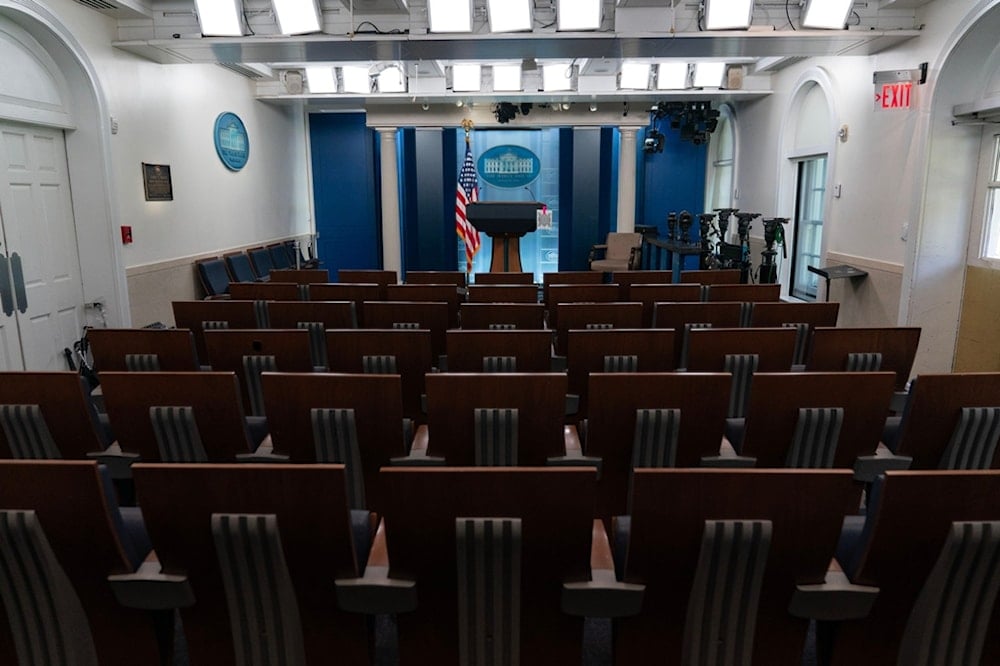
The James Brady Press Briefing Room is seen at the White House, Saturday, Sept. 19, 2026, in Washington. (AP Photo/Jose Luis Magana)
The White House on Saturday denied access to journalists from CNN, MS NOW, and Politico, enforcing US President Donald Trump’s decision to bar the three news organizations from the presidential complex.
Reporters from all three outlets were turned away after arriving at the White House, with their press credentials either confiscated or deactivated.
The move followed Trump’s announcement on Friday that he was banning the organizations from the White House, accusing them of what he called “FAKE NEWS.”
The White House has not indicated that the ban is limited to specific journalists or events, raising broader questions about the scope of the administration’s restrictions on press access.
Read more: US free speech crackdown extends far beyond the press: The Intercept
News organizations challenge White House restrictions
CNN described the action as “an illegal assault” on its constitutional right to conduct journalism without government interference.
“Early today, CNN journalists were denied access to the White House grounds. CNN’s mission to report on the US government will continue regardless of any attempts to restrict physical access to the White House and other government buildings, or any other attempts to impede our journalism,” CNN said in its statement. “We have a right under the US Constitution to do our reporting without hindrance or interference from the government, and this ban is an illegal assault on this fundamental right.”
MS NOW said it would take “any and all steps necessary” to defend its First Amendment rights and the role of independent journalism, while Politico said it would defend its reporters and constitutional protections.
All three organizations have said they will continue covering the Trump administration despite the restrictions.
The Committee to Protect Journalists also condemned the ban, arguing that the administration’s action raises serious First Amendment concerns.
The dispute is likely to face legal scrutiny over whether the government can exclude news organizations from White House access on the basis of their coverage.
Trump threatens further media restrictions
Trump defended the ban in a social media post, saying the outlets should not be able to report what he characterized as “FICTION and LIES” while covering the president and his administration.
"Media Outlets shouldn’t be able to constantly write or report FICTION and LIES when they’re covering the President of the United States, the Trump Administration, or the United States of America," he wrote, threatening that "Other Fake News Media Outlets" will soon meet the same fate.
I am proud to announce that, effective immediately, I am banning Fake News CNN, MSNOW (who recently changed their name from MSNBC due to lack of viewership and credibility!), and Politico (The recipients of an illegal and ridiculous $8 Million Dollar subscription, an All Time…
— Donald J. Trump (@realDonaldTrump) September 19, 2026
During an Oval Office appearance on Friday, Trump cited The New York Times and The Washington Post when asked which other media organizations could potentially be targeted, although he did not explicitly announce bans against either newspaper.
The New York Times described the move as a retaliatory and unconstitutional threat, while The Washington Post said access to the White House was a constitutional right and characterized the action as an attempt to intimidate the press.
White House press access has faced repeated disputes
The latest restrictions follow earlier confrontations between the Trump administration and news organizations over access to the White House.
In 2025, the administration excluded Associated Press journalists from the presidential press pool after the news agency declined to adopt Trump’s preferred name for the Gulf of Mexico. The AP challenged the restriction in court.
During Trump’s first presidency, the White House also sought to suspend or revoke the credentials of CNN reporter Jim Acosta and Playboy correspondent Brian Karem. Federal judges ordered their access restored.
Read more: US military faces a new reality: Wars that cannot be won quickly


