
WP: China gains strategic ground amid US war on Iran
 3 Min Read
From arms sales to Gulf states and energy assistance to US allies, to studying American combat operations in real time, Beijing is emerging in a stronger global position.
-
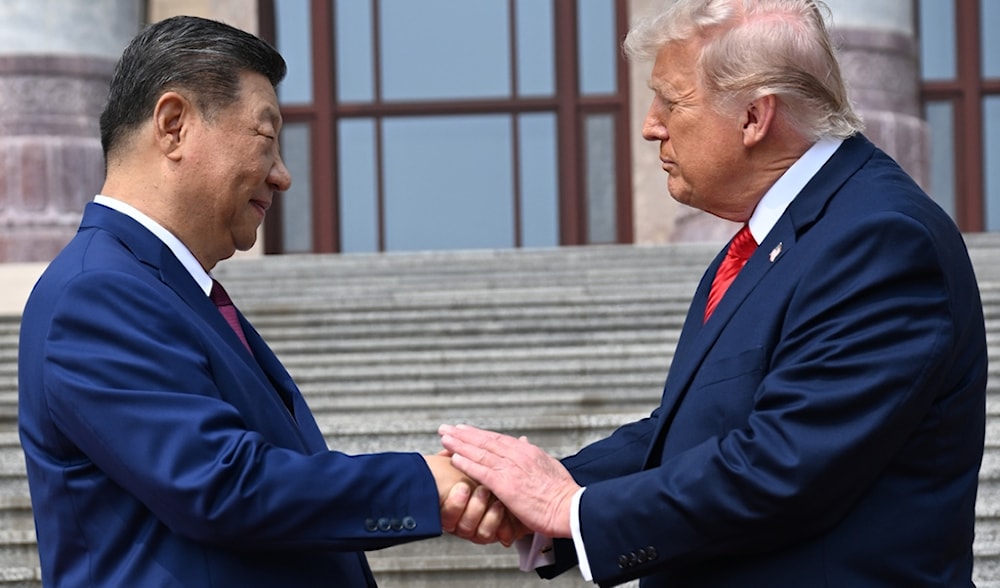
Chinese President Xi Jinping, left, shakes hands with US President Donald Trump at the Great Hall of the People in Beijing, Thursday, May 14, 2026. (Kenny Holston/Pool Photo via AP)
A confidential United States intelligence assessment has concluded that China is advancing its position across military, economic, diplomatic, and informational fronts as Washington's war against Iran continues, two US officials familiar with the document told the Washington Post.
The report, produced this week by the Joint Staff's intelligence directorate for the chairman of the Joint Chiefs of Staff, General Dan Caine, has triggered serious concern within the Pentagon, particularly as US President Donald Trump arrives in Beijing for high-stakes talks with Chinese President Xi Jinping.
According to the Post, the assessment reveals that since the US and "Israel" launched the aggression on February 28, Beijing has been selling weapons to Gulf states that are US allies, as those countries scrambled to defend their bases from Iranian missile and drone strikes.
Beyond arms sales, China has been closely observing how the US conducts military operations in real time. Intelligence analysts warn that Beijing is incorporating those observations into planning for future conflicts, including a potential move on Taiwan.
The report also notes that the war has dramatically drawn down US stockpiles of critical munitions, including Patriot interceptors, Terminal High Altitude Area Defense systems, and Tomahawk cruise missiles; hardware that would be indispensable in any confrontation over Taiwan.
Energy crisis creates new dynamics
The closure of the Strait of Hormuz, the corridor through which roughly one-fifth of global oil and gas passes, has sent shockwaves through energy markets worldwide. China has remained largely insulated from the fallout, owing to its substantial oil reserves and rapid development of renewable energy, leaving it as the second-most energy-secure country in the world after the United States, according to Brookings Institution China expert Ryan Hass, cited by the Post.
Beijing has responded to the crisis by supplying jet fuel and other scarce energy products to countries including Thailand, Australia, and the Philippines, while offering Chinese green energy technology as a longer-term solution.
"China is presenting itself as a solutions provider," Hass told the Post, noting that Washington, by contrast, has shown little interest in the kind of emergency diplomatic outreach it has historically mounted during energy crises, an absence Beijing has moved to fill.
Narrative, messaging
China has also been active on the information front, branding the US-Israeli war on Iran as "illegal" and amplifying global criticism of Washington. The war hands Beijing a counter-narrative against US claims to uphold a rules-based international order, analysts say.
The intelligence report arrives at a particularly delicate moment. Trump's summit with Xi, delayed in March due to the war, comes as his negotiators struggle to secure a deal that would reopen the strait and curtail Iran's nuclear programme. His domestic standing has been weakened by public dissatisfaction with the war and its toll on the global economy, analysts told the Post.


