
Xi Jinping to visit DPRK for first time since 2019
 4 Min Read
The Chinese president will visit the DPRK on June 8-9 for his first trip to Pyongyang since 2019, signaling continued close ties between Beijing and Pyongyang.
-
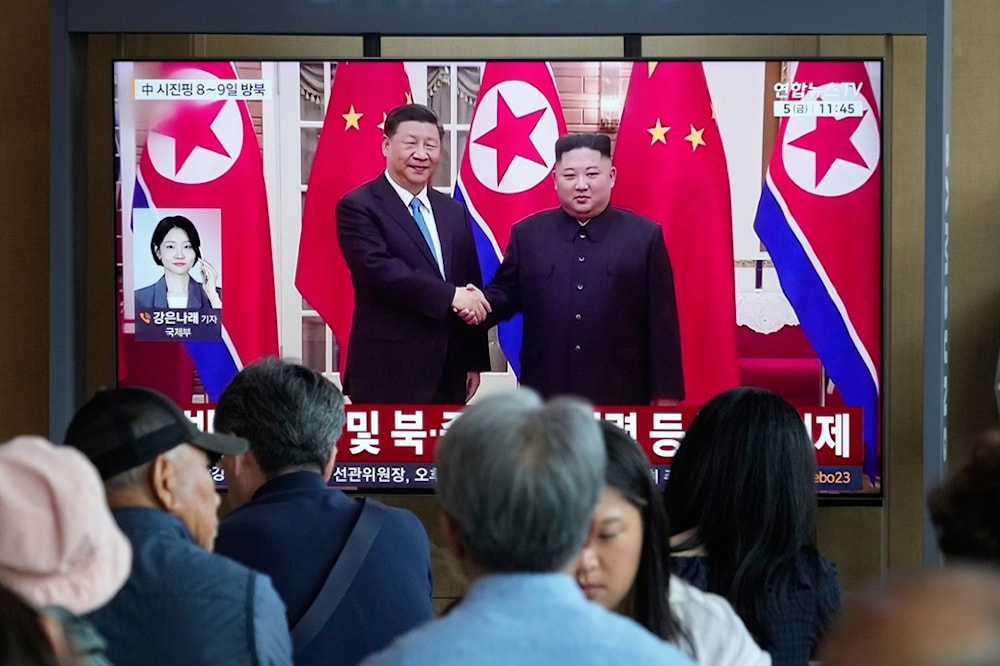
People watch a TV screen showing a file image of DPRK leader Kim Jong Un, right, and Chinese President Xi Jinping, at the Seoul Railway Station in Seoul, South Korea, Friday, June 5, 2026 (AP)
Chinese President Xi Jinping is set to travel to the Democratic People's Republic of Korea (DPRK) next week in a move that underscores the enduring relationship between Beijing and Pyongyang amid ongoing regional and international tensions.
China Central Television (CCTV) reported Friday that Xi will visit the DPRK from June 8 to 9 at the invitation of DPRK leader Kim Jong Un.
The trip will mark Xi's first visit to the DPRK in seven years and his first since a landmark 2019 visit that made him the first Chinese leader to travel to Pyongyang in more than a decade.
Longstanding partnership
China remains the DPRK's closest diplomatic and economic partner, maintaining ties with Pyongyang despite international sanctions imposed on the country over its weapons programs.
The two neighboring states have traditionally maintained close political relations, with Beijing often serving as a key source of economic support and diplomatic backing for the DPRK on the international stage.
Although exchanges between officials from both countries are frequent, visits by Chinese heads of state to the DPRK have been relatively uncommon in recent decades.
The upcoming trip comes as both countries seek to further strengthen ties following years of disruptions caused by the COVID-19 pandemic, which significantly reduced cross-border exchanges and high-level diplomatic contacts.
Recent high-level contacts
Xi's visit follows a series of senior-level exchanges that have accelerated over the past year.
In September, Kim Jong Un traveled to Beijing, where he joined Russian President Vladimir Putin and other foreign leaders during ceremonies commemorating the 80th anniversary of the victory over Japan in World War II.
In April, Chinese Foreign Minister Wang Yi met Kim in Pyongyang, where both sides pledged to expand cooperation and strengthen coordination on major international and regional issues. During the meeting, Wang said China and the DPRK should "further strengthen communication and coordination on major international and regional affairs," while expressing Beijing's willingness to expand exchanges and practical cooperation with Pyongyang.
Kim, for his part, stressed the importance of increasing contacts and exchanges at various levels, describing closer relations between the two countries as essential to safeguarding their shared interests.
The DPRK's state-run Korean Central News Agency (KCNA) also announced Xi's planned visit but did not disclose details regarding the schedule or subjects expected to be discussed during the trip.
Focus on regional issues
Observers are expected to closely examine the outcome of the visit for indications of deeper cooperation between Beijing and Pyongyang on economic matters and security issues.
The visit comes as the DPRK continues to deepen its ties with Russia, prompting analysts to view Beijing's recent diplomatic outreach as part of a broader effort to reinforce its longstanding partnership with Pyongyang and maintain its influence on the Korean Peninsula.
The trip also takes place amid shifting geopolitical dynamics in East Asia, with China and the DPRK facing growing strategic pressure from the United States and its regional allies. Analysts say discussions could include regional security developments, economic cooperation, and broader international issues affecting both governments.
Particular attention is expected to focus on coordination regarding developments on the Korean Peninsula, where tensions have remained elevated amid expanding military cooperation between the United States, South Korea, and Japan.
Xi's visit is widely seen as the highest-level step yet in the recent revival of China-DPRK relations and a signal that both countries remain committed to strengthening strategic coordination as they navigate an increasingly complex regional environment.
Read more: China affirms commitment to UN sanctions against the DPRK


