
Yemen crisis deepens as aid cuts, blockade reverse health gains: UN
 4 Min Read
The UN warns that Yemen’s humanitarian crisis is set to worsen as funding cuts, access constraints, and the blockade drive renewed malnutrition, disease risks, and preventable deaths.
-
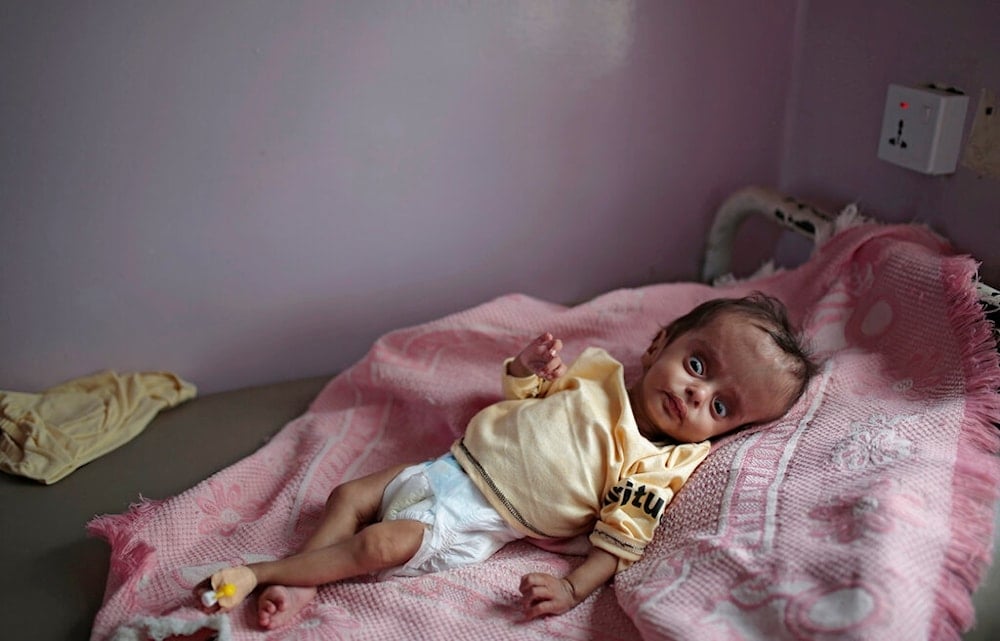
In this June 27, 2020 file photo, a malnourished boy lies in a bed waiting to receive treatment at a feeding center at Al-Sabeen hospital in Sanaa, Yemen (AP)
The United Nations has warned that Yemen’s humanitarian situation is set to deteriorate sharply, with gains made over the past decade in reducing mortality and malnutrition at risk of being reversed as funding declines and access constraints persist.
“We are expecting things to be much worse in 2026,” Julien Harneis, the UN Resident and Humanitarian Coordinator for Yemen, told reporters in Geneva on Monday.
According to UN figures, around 21 million people will require humanitarian assistance this year, up from 19.5 million previously. Harneis said economic collapse, the erosion of public services including health and education, and ongoing political uncertainty are driving the worsening outlook.
Aid Collapse
The warning comes amid a sharp contraction in humanitarian funding. Aid traditionally provided by Western states has been scaled back, as donor governments redirect spending toward defence and military priorities. The United States has cut its humanitarian budget, while other Western donors have followed suit, creating what UN officials describe as a funding crisis.
In 2025, the UN received $680 million for operations in Yemen, about 28 percent of the amount required. Harneis said the shortfall is already forcing cuts to programmes that support food security, disease prevention, and basic healthcare.
“Children are dying and it's going to get worse,” he said.
“For 10 years, the UN and humanitarian organisations were able to improve mortality and improve morbidity...this year, that's not going to be the case,” Harneis added.
Sanctions Fuel Epidemics
The funding squeeze has placed Yemen’s fragile health system under severe strain. The system, which has relied heavily on UN agencies and support from the World Bank for years, is expected to lose further backing, increasing vulnerability to disease outbreaks.
“YEMEN GROWS MORE VULNERABLE TO EPIDEMICS, OFFICIAL SAYS,” Harneis said, warning that infectious diseases such as measles and polio could spread beyond Yemen’s borders.
Humanitarian delivery is also constrained by political fragmentation and contested authority inside the country. UN agencies currently operate mainly from areas administered by the internationally recognised government, while regions under Ansar Allah administration — where the majority of humanitarian needs are concentrated — remain difficult to reach through standard UN mechanisms.
Harneis said conditions for humanitarian personnel had worsened, noting that 73 UN colleagues have been detained since 2021. In September, the UN relocated the base of its resident coordinator to Aden following the detention of at least 18 UN personnel in Sanaa.
“To see our humanitarian response so hobbled is terrifying,” he said.
Sanaa authorities have previously said that legal protections granted to UN personnel should not be used as a cover for espionage.
At the same time, Sanaa-based officials argue that external restrictions, rather than internal governance alone, are accelerating the collapse of Yemen’s health sector. In November 2025, Yemen’s Health Minister Ali Shaiban said the renewal of UN Security Council sanctions and the continued closure of Sanaa International Airport had tightened the blockade on the country, cutting off access to temperature-sensitive medicines and preventing patients from travelling abroad for treatment. He described the airport closure as a crime against humanity and warned that shortages of critical drugs were already costing lives.
Siege and Starvation
Yemen’s health crisis is unfolding against the backdrop of repeated attacks on civilian infrastructure and the broader regional escalation that followed Yemen’s decision to impose a naval blockade in support of Gaza. Health authorities say the combined effect of sanctions, airspace restrictions, damaged infrastructure, and military pressure has severed supply chains for fuel, medical equipment, and essential medicines.
Harneis said the UN is now seeking additional support from Gulf countries to offset Western aid cuts.
“It is certainly very clear that they're (Saudi Arabia) very concerned and that they do want to more, so we will explore that with them,” he said.
After nearly a decade of war, Yemen remains one of the world’s most severe humanitarian emergencies. Aid agencies warn that without a reversal in funding trends and sustained access to medical supplies and services, the coming year could mark a turning point in which preventable deaths rise again across the country.
Read more: 'Secret prisons' run by UAE discovered in Hadhramaut: Yemeni gov.


