
Zelensky calls US sanctions waiver a 'reward' for Putin
 5 Min Read
Ukrainian President Volodymyr Zelensky accused Washington of rewarding Russia by suspending sanctions and pursuing diesel purchases, warning that the move could embolden Moscow amid intensified strikes on Ukraine's energy infrastructure.
-
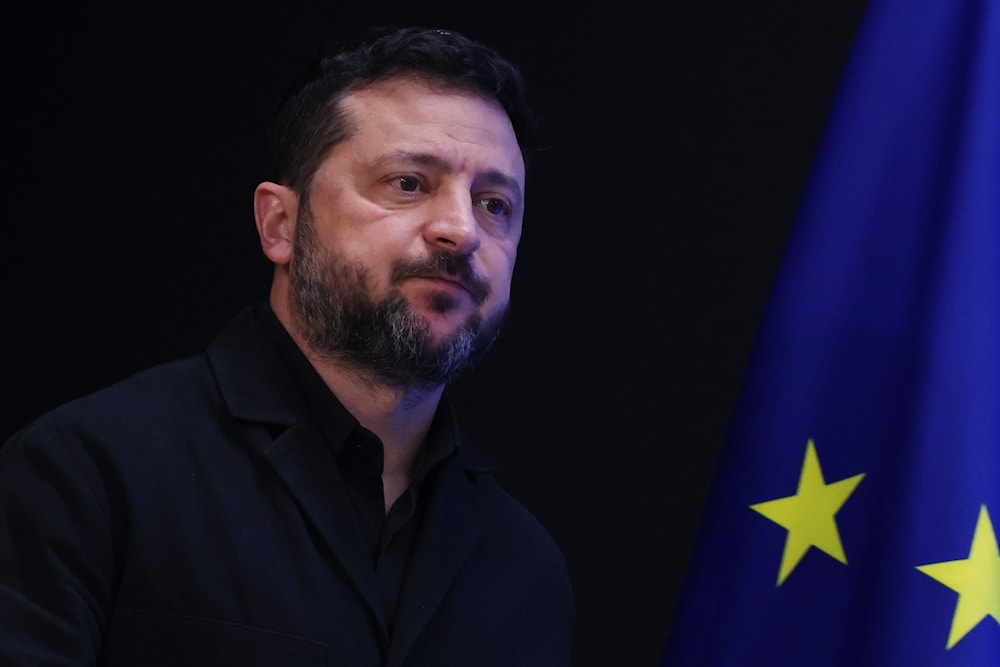
Ukraine's President Volodymyr Zelensky arrives for a media conference at the EU summit in Brussels, Friday, Oct. 16, 2026 (AP)
Ukrainian President Volodymyr Zelensky warns that Washington's decision to suspend sanctions against Russia could encourage further military escalation, as Moscow welcomes the move and expands energy cooperation with the United States.
Ukrainian President Volodymyr Zelensky criticized US President Donald Trump's decision to suspend new sanctions against Russia, arguing Saturday that Washington's policy could strengthen Moscow's position and undermine efforts to bring an end to the war in Ukraine.
According to The Guardian, Zelensky described the sanctions waiver as a financial reward for Russian President Vladimir Putin, warning that the Trump administration could introduce further economic concessions as Washington and Moscow pursue closer relations.
"Unfortunately, the lifting of sanctions will continue, and I believe that the ‘diesel deal’ is the first step," Zelensky said Saturday.
"Unfortunately, it seems to me that this cannot stop Putin; on the contrary, he feels joy and happiness that he has such support."
His remarks followed Trump's announcement Friday that Washington would suspend implementation of a sweeping package of economic restrictions targeting Russia, citing US national interests.
The decision comes amid expanding economic engagement between Moscow and Washington, particularly following an agreement concerning Russian diesel supplies intended to ease rising international fuel prices.
Zelensky criticizes suspension of Russia sanctions
Zelensky argued that Washington's decision to waive the sanctions would weaken international pressure on Moscow, particularly as Russian military operations against Ukraine continue.
The suspended legislation, championed by US Senator Lindsey Graham, would have imposed additional restrictions on Russian financial institutions, energy companies, government officials, and maritime transport networks.
It also authorized tariffs of up to 100% on major importers of Russian oil and natural gas, potentially affecting countries such as China and India.
The measures, approved by both chambers of Congress, had been scheduled to take effect on October 18 before Trump announced their suspension.
Zelensky urged American lawmakers to support implementation of the legislation, maintaining that economic restrictions remain necessary to influence Moscow's position.
Meanwhile, Russian presidential envoy Kirill Dmitriev welcomed Washington's announcement.
"The Trump administration’s suspension of the Graham Act is an important and truly historic moment," Dmitriev wrote on social media.
Russian diesel agreement draws criticism from Kiev
Zelensky also expressed concern over Washington's recent agreement to purchase Russian diesel, suggesting that the arrangement could mark the beginning of a broader relaxation of American economic restrictions against Moscow.
Trump previously announced plans for Russia to supply more than 300,000 tonnes of diesel to the United States, followed by an additional 500,000 tonnes in November and one million tonnes in a subsequent delivery.
The US president also indicated that further shipments totaling three million tonnes could follow.
The agreement comes amid disruptions to international energy markets linked to the ongoing US-Israeli war on Iran and restrictions affecting maritime traffic through the Strait of Hormuz.
Trump has argued that Ukrainian attacks on Russian oil refineries are contributing to rising fuel prices and has demanded that Kiev halt such operations.
Ukraine initially suspended strikes against Russian energy facilities following Washington's announcement of an energy ceasefire but subsequently resumed its operations, citing continued Russian attacks on Ukrainian infrastructure.
Zelensky maintained that restricting Ukraine's military operations while reducing economic pressure on Moscow would not help secure an end to the conflict.
Zelensky reports extensive damage to Ukrainian energy facilities
The Ukrainian president's criticism came as Russian forces carried out another wave of strikes against Ukraine's electricity infrastructure.
According to Zelensky, more than 15 critical power generation and transmission facilities were struck, causing extensive damage and raising concerns over electricity supplies ahead of winter.
He acknowledged that Ukraine's air-defense systems were facing mounting pressure from repeated Russian missile and drone attacks.
"Although our warriors are shooting down a significant number of them," he said, the "sheer scale and unrelenting pace of Russia’s strikes, specifically against our energy sector, are unfortunately having severe consequences."
Zelensky linked the attacks to his criticism of Washington's sanctions decision, arguing that economic pressure should be maintained while hostilities continue.
Ukraine raises concerns over US military support
Beyond the sanctions dispute, Zelensky also reported continued restrictions affecting Ukraine's access to military-grade Starlink satellite communications.
He said terminals used by Ukrainian forces were losing connectivity when traveling at speeds exceeding approximately 161 kilometers per hour, disrupting certain drone operations.
According to Zelensky, tests conducted outside Ukraine demonstrated that the same equipment could operate at higher speeds within European Union countries, leading Kiev to suspect that the restrictions were geographically targeted.
"The conclusion is clear: the restrictions are in effect within Ukraine but do not apply within the European Union," he said. "In other words, this is a planned operation."
His allegations have not been independently established, while responsibility for the restrictions remains disputed.
The Ukrainian president also called for European governments to establish independent negotiating channels with Moscow amid Washington's efforts to strengthen economic and diplomatic engagement with Russia.
Read more: Zelensky fears more US-Russia deals after diesel agreement


