
Heat concerns grow for workers amid 2026 FIFA World Cup
 6 Min Read
A new study and labor advocates warn that thousands of workers making the tournament possible could face dangerous heat exposure.
-
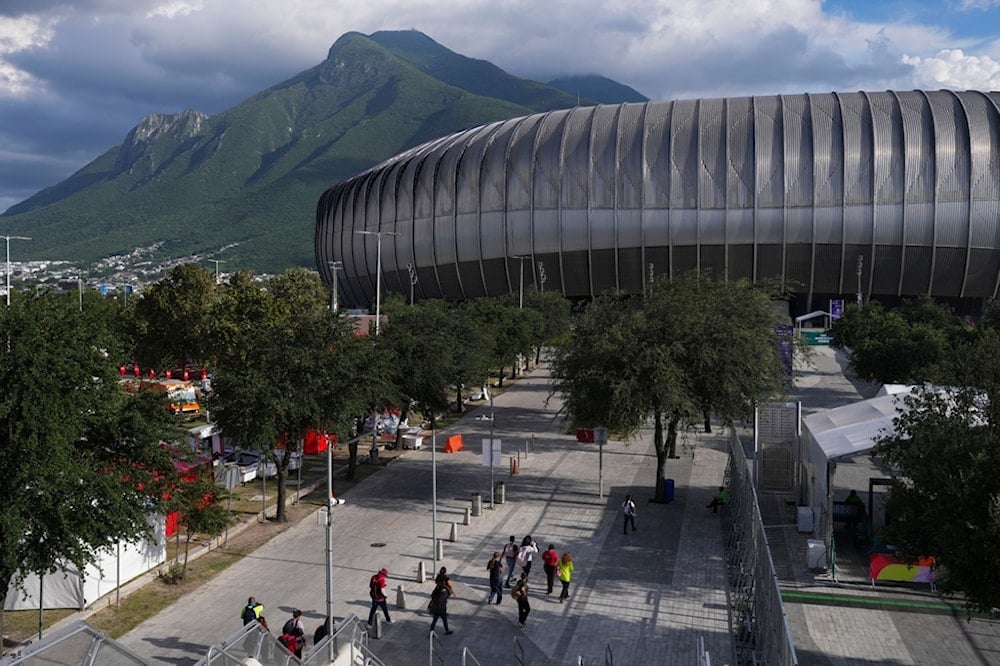
Workers walk near the stadium a day ahead of the FIFA World Cup between Sweden and Tunisia in Monterrey, Mexico, Saturday, June 13, 2026 (AP)
As matches are underway in the 2026 FIFA World Cup across the United States, labor advocates and researchers are raising concerns about the impact of extreme summer temperatures on the thousands of workers expected to support the tournament.
The competition will be held in 16 host cities across North America, including 11 in the United States. Several venues are located in southern states, where temperatures during the summer regularly climb above 85°F (29°C) and can exceed 90°F (32°C).
According to The Guardian, a recent study examining heat exposure during the tournament found that many workers could face conditions that surpass recommended safety thresholds, increasing the likelihood of heat-related illnesses.
“It’s going to be extremely hot, and you just cannot leave people unprotected or you’re going to deal with a lot of injuries,” said Jonathan Alingu, co-executive director of Central Florida Jobs With Justice. “Or, God forbid, something even worse.”
Researchers evaluated historical weather data alongside wet-bulb globe temperature measurements, which account for factors such as humidity, wind speed and temperature to assess heat stress. The findings indicated that southern host cities face the highest levels of risk, though unusually high temperatures could also affect locations typically considered cooler.
Broad range of workers exposed
According to the study, the potential impact extends far beyond players and spectators. Security staff, emergency responders, ticket collectors, concession workers, delivery personnel and maintenance crews are all expected to spend extended periods outdoors during the event.
“If you think about the delivery people, the law enforcement, firefighters, EMTs, people selling concessions or collecting tickets, a whole network of people are going to face heat-related hazards,” said Andrew Grundstein, a geographer and climatologist at the University of Georgia who led the study.
The report also noted that workers performing physically demanding tasks, carrying heavy equipment or supplies, or wearing bulky uniforms and costumes may face elevated risks. Stadium employees stationed in direct sunlight for long periods could be particularly vulnerable.
Some venues may present additional challenges because they lack full air-conditioning systems, including stadiums in Miami, New York, Philadelphia and Kansas City.
Calls for stronger protections
Occupational safety experts argue that proven measures already exist to reduce the dangers posed by extreme heat.
“We’ve known for decades, if not centuries, how to protect workers against heat-related illness and death,” said Jordan Barab, former deputy assistant secretary of labor at the Occupational Safety and Health Administration (OSHA). “It’s not that hard, it’s not that expensive, but there are far too many employers who are still neglecting those precautions, and far too many workers who are getting sick and dying.”
Recommended safeguards include regular rest periods, access to drinking water, shaded recovery areas and heat-safety training.
Climate-related risks managed
FIFA said it has incorporated climate-related risks into tournament planning and is coordinating with host cities, stadium operators, and relevant authorities.
“Climate-related risks are assessed as part of overall tournament planning and managed in close coordination with the host cities, stadium authorities and national agencies,” a FIFA spokesperson said.
The organization added that many matches have been scheduled for late afternoon or evening and that host venues will provide cooling infrastructure, including shaded areas, misting stations and additional water access points.
FIFA also said it will introduce work-rest schedules, deploy medical personnel at all matches, and monitor weather conditions throughout the competition.
Workers' advocates remain skeptical
Labor organizations welcomed the proposed measures but questioned whether they will be sufficient, particularly in regions known for intense heat and humidity.
“I hope, we hope, that they are able to follow through on all that,” said Luisangel Rodriguez, spokesperson for SEIU Local 1, which represents some workers at the Kansas City stadium hosting World Cup matches. “Let’s see.”
Advocates in Florida warned that even matches held after sunset may not eliminate the danger.
“Even if the games start after 6pm or after 7pm, here in Miami it can still be dangerously hot during that time,” said Yareliz Mendez-Zamora, policy coordinator for the American Friends Service Committee.
Campaigners also noted that many employees begin work several hours before kickoff, potentially exposing them to peak daytime temperatures.
Researchers further warned that temporary contract workers, who are expected to make up a significant portion of the workforce during the tournament, may be especially susceptible to heat-related illness if they are not accustomed to local conditions.
“When you live in a hot area, your body adjusts to it. You learn to sweat more efficiently, the body’s able to regulate its temperature better,” Grundstein said. “But when people just move here from a cooler area, your body hasn’t adjusted yet … which can make you more vulnerable.”
Legal landscape raises concerns
Advocates also pointed to regulatory gaps in several host states. Florida and Texas have enacted laws restricting local governments from imposing certain workplace heat-protection requirements.
According to labor groups, only seven US states currently maintain enforceable occupational heat-safety standards, with California and Washington the only two among them that will host World Cup matches.
“Since there aren’t any federal regulations protecting workers against heat, in states without specific protections, workers are basically at the whim of their employers,” Barab said.
As the tournament approaches, labor organizations say they intend to closely monitor conditions at stadiums and fan zones, arguing that ongoing oversight will be necessary to ensure workers remain protected.
“We’re now in a mode of needing to observe and report what’s happening,” Alingu said. “We can’t be oblivious to the unsafe conditions and we can’t just assume things are going to be fine … not in this kind of weather.”
Read more: Palestinian FA chief denied US visa to attend World Cup 2026


