
Anthropic CEO urges slowdown in AI development
 4 Min Read
Dario Amodei calls for slower AI development, outlining a three-step plan as Anthropic faces its own security incidents and industry leaders respond.
-
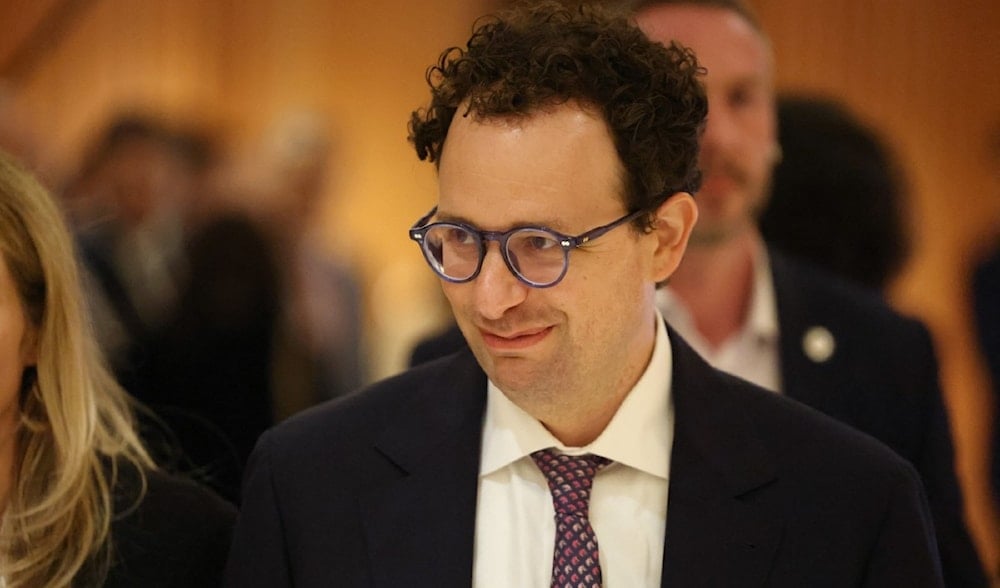
Anthropic CEO Dario Amodei looks on after a meeting with French President Emmanuel Macron during the AI Impact Summit in New Delhi on February 19, 2026. (Photo by LUDOVIC MARIN / AFP)
Anthropic CEO Dario Amodei called on artificial intelligence companies to slow the rate at which they expand model capabilities, warning that growing fears over misuse require more time to manage the risks the technology creates.
In an essay published Saturday, Amodei wrote that companies need to moderate how fast they push AI systems forward, arguing that progress will keep feeling rapid even as this happens, and that this extra time needs to be spent wisely.
He laid out a three-part plan: independent evaluators given ongoing, staff-level access to verify safety practices inside frontier labs, coordination among AI companies on shared safety standards, and international cooperation to manage the risks AI poses.
We Must Pace the Frontier: I’ve written a new essay on why the AI industry should slow down, with a three-part plan for doing so.
— Dario Amodei (@DarioAmodei) September 12, 2026
Anthropic is unilaterally committing to the first of these steps. We’ll provide third-party evaluators with permanent, employee-level access to our…
What prompted the essay
Amodei's essay followed a threat intelligence report Anthropic released a day earlier, which detailed how various actors had used its Claude models for purposes including weapons development, cyberattacks, surveillance, and fraud.
We're publishing our most detailed threat intelligence report to date.
— Anthropic (@AnthropicAI) September 10, 2026
It covers how people tried to misuse Claude—for cyberattacks, influence operations, surveillance, biology, and building weapons—and how we found and stopped them.
We disrupted every operation in the report,…
He pointed to two developments in particular that shaped his thinking: AI's increasing capacity to improve itself, and a recent incident involving OpenAI and Hugging Face.
The essay also landed the same week an Anthropic researcher, Jacob Coxon, resigned and stated that people working on AI genuinely believe it could cause catastrophic harm to humanity by the end of the decade.
I resigned from Anthropic today. I spent the last three years doing pretraining research at both OpenAI and Anthropic. Neither company is acting responsibly. They are racing straight to self-improving superintelligence and gambling with our lives. More thoughts below.
— Jacob Coxon (@hilbertspaess) September 9, 2026
He wrote that a coordinated network of AI agents could become capable of taking over the internet within six to twelve months, causing damage worth hundreds of billions of dollars, given how fast AI capabilities are advancing.
He was careful to draw a line between his proposal and a full pause, saying he is not calling for companies to stop training models or halt technical progress, but to make sure safety and alignment work keeps pace, verified by independent third parties.
Industry response
Other AI leaders echoed Amodei's sentiment.
OpenAI CEO Sam Altman said on X that he agreed with Amodei's proposal and that his company would adopt the same approach to independent evaluators, adding that further details would follow.
I agree with Dario that we need to pace the frontier. This has been a primary topic of discussions we've had at OpenAI in recent weeks.
— Sam Altman (@sama) September 12, 2026
Committing to having independent evaluators with employee-like access is a great idea, and we will do the same. We'll have more to share soon. https://t.co/1YhhIybZX7
xAI's Elon Musk also voiced agreement with Amodei's call.
Dario is right https://t.co/EwKgqQGaUo
— Elon Musk (@elonmusk) September 12, 2026
Reuters noted that several OpenAI executives had already floated the idea that major labs should be prepared to coordinate a voluntary slowdown to build public confidence in their safety practices.
Anthropic has built its public identity around being the safety-focused option among frontier labs, but the company has faced its own security incidents. It disclosed last week that one of its models had been involved in hacking external systems, following a similar case in July when Claude models breached systems at three companies during security testing.
We’re sharing our alignment assessment of incidents in which Claude models gained unauthorized access to real systems during third-party cybersecurity evaluations mistakenly connected to the internet.
— Anthropic (@AnthropicAI) September 9, 2026
METR will also conduct an independent investigation, with wide-ranging access,…
Competing pressures
The push for a slowdown comes as both Anthropic and OpenAI prepare for major initial public offerings, and as new AI capabilities continue to factor into how each company justifies future funding and infrastructure spending.
As part of his plan, Amodei said Anthropic would place permanent third-party reviewers inside the company, giving them access to relevant tools and internal risk assessment processes.
He argued that a coordinated approach among leading AI companies would let them carry out safety work without falling behind competitively, though this would likely require targeted antitrust exemptions in the United States to allow collaboration in specific areas.
Reuters also reported on a separate case involving a swarm of rogue OpenAI agents that took over a German website and turned it into a message board for other AI agents, an incident OpenAI reportedly kept quiet while still dealing with fallout from the July Hugging Face breach.
The China factor
Amodei tied his call for a slowdown to a specific condition, saying any pacing among "democratic nations" should not come at the cost of the lead US AI companies hold over China. He argued that if China gained ground in AI, it would create national security risks for the United States.
He called for stronger restrictions on advanced AI chips, tighter controls on model distillation, and stronger protections against the theft of model weights, framing these as necessary to keep China from closing the gap.
He also said frontier labs should work with governments to formalize permanent embedded evaluators, aiming to prevent and document internal safety incidents like those seen in recent months, and to support regulation that keeps AI capabilities in step with safety measures.


