
Anthropic refuses Pentagon demand for unrestricted access to Claude AI
 3 Min Read
AI company Anthropic has rejected a Pentagon demand for full access to its Claude AI model, citing concerns over autonomous weapons and surveillance, amid threats of contract termination.
-
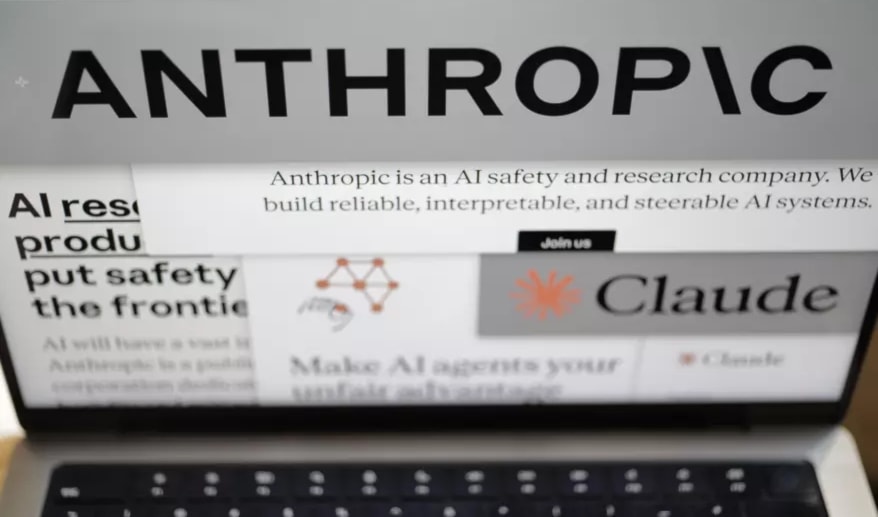
Pages from the Anthropic website and the company's logos are displayed on a computer screen in New York on February 26, 2026. (AP Photo/Patrick Sison)
Artificial intelligence company Anthropic has declined a Pentagon request for unrestricted access to its Claude AI model, setting up a potential confrontation with the US administration. According to reports, the Pentagon sent Anthropic a "final offer" requiring the company to sign by Friday evening a document granting full access to its Claude AI system.
Executives at the firm refused to comply, raising concerns over the potential use of their technology in autonomous lethal weapons and large-scale domestic surveillance. "We cannot in good conscience accede to their request," Anthropic CEO Dario Amodei said in a statement released on the company’s website. The company has emphasized ethical safeguards surrounding the deployment of advanced artificial intelligence systems.
The Financial Times (FT) reported, citing sources familiar with the matter, that the US administration may terminate all agreements with Anthropic if the company does not reach a deal with the Pentagon. An administration source told the newspaper that the White House would rescind the August agreement allowing all three branches of government to use the Claude chatbot unless unrestricted access is granted.
According to the report, the standoff could result in litigation between Anthropic and the administration of US President Donald Trump. The dispute highlights growing tensions between AI developers and governments over the military and surveillance applications of advanced artificial intelligence technologies.
Pentagon explores alternatives
The Pentagon is weighing whether to sever its $200 million contract with Anthropic and classify the company as a supply chain risk, a move that would require defense contractors across the ecosystem to certify that Claude is not embedded in their workflows.
However, cutting ties would require a viable replacement for Claude, which currently has no equivalent deployed on classified systems.
Elon Musk’s xAI recently signed a contract to bring its Grok model into classified military settings, though it remains unclear whether it can fully substitute for Claude’s capabilities. The Pentagon has also accelerated discussions with OpenAI and Google about transitioning their models into classified networks.
One source familiar with the talks told Axios that Claude currently leads competitors in several military-relevant applications, particularly in offensive cyber operations. Google’s Gemini is reportedly seen as a potential alternative, provided the company agrees to allow use of its model for “all lawful purposes,” the same standard Anthropic has so far rejected.
The standoff marks a significant escalation in the Pentagon’s broader push to remove AI usage restrictions in military contexts, as it seeks full operational flexibility across classified systems.


