
Pentagon threatens to cut off Anthropic in AI safeguards dispute
 4 Min Read
A senior US administration official reveals to Axios that the Pentagon may sever ties with Anthropic over limits on AI use in weapons and surveillance.
-
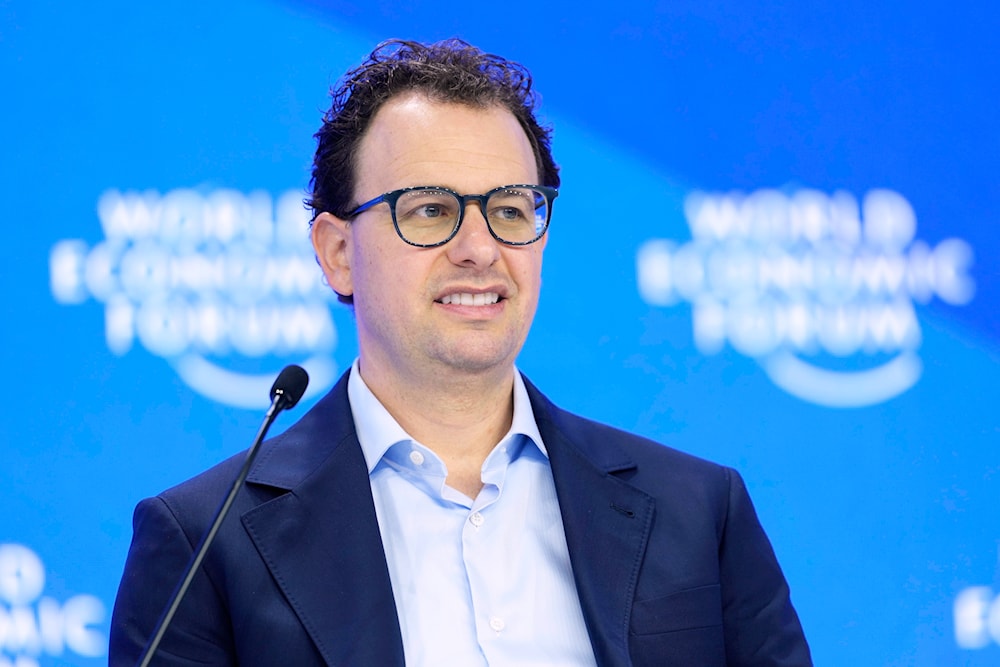
Dario Amodei, CEO and co-founder of Anthropic, attends the annual meeting of the World Economic Forum in Davos, Switzerland, on January 23, 2025. (AP Photo/Markus Schreiber, File)
The Pentagon is considering severing its relationship with AI firm Anthropic amid a growing dispute over restrictions on how the military can use its models, according to a senior administration official who spoke to Axios on Saturday.
The dispute centers on the Defense Department’s demand that leading artificial intelligence companies allow their systems to be used for “all lawful purposes,” including sensitive areas such as weapons development, intelligence collection, and battlefield operations. Anthropic has resisted those terms, leading to months of difficult negotiations and rising frustration inside the Pentagon.
According to the Axios report, Anthropic has insisted that two areas remain off limits: the mass surveillance of Americans and fully autonomous weaponry. A senior administration official argued there is a significant gray area around those categories and said it is impractical for the Pentagon to negotiate individual use cases or risk Claude unexpectedly blocking certain applications.
“Everything's on the table,” including scaling back or severing the partnership entirely, the official said. “But there'll have to be an orderly replacement [for] them, if we think that's the right answer.”
An Anthropic spokesperson said the company remains “committed to using frontier AI in support of US national security.”
Tensions over Claude’s role in Maduro operation
The Pentagon-Anthropic AI dispute escalated following the military’s use of Claude in an operation to capture Venezuela’s Nicolás Maduro, conducted through Anthropic’s partnership with AI software firm Palantir.
According to the senior official, an executive at Anthropic contacted an executive at Palantir to ask whether Claude had been used in the raid. "It was raised in such a way to imply that they might disapprove of their software being used, because obviously there was kinetic fire during that raid, people were shot," the official said.
Anthropic strongly denied the allegation. A spokesperson said the company had "not discussed the use of Claude for specific operations with the Department of War. We have also not discussed this with any industry partners outside of routine discussions on strictly technical matters."
"Claude is used for a wide variety of intelligence-related use cases across the government, including the DoW, in line with our Usage Policy."
"Anthropic's conversations with the DoW to date have focused on a specific set of Usage Policy questions, namely, our hard limits around fully autonomous weapons and mass domestic surveillance, none of which relate to current operations," the spokesperson added.
Culture clash and competitive pressures
Beyond the Maduro incident, the official described broader tensions, characterizing Anthropic as the most "ideological" among leading AI labs regarding the potential dangers of advanced artificial intelligence.
At the same time, the official acknowledged that replacing Claude would be difficult because “the other model companies are just behind” in specialized government applications. Anthropic signed a contract valued at up to $200 million with the Pentagon last summer. Claude was also the first AI model integrated into the Pentagon’s classified networks.
Meanwhile, OpenAI’s ChatGPT, Google’s Gemini, and xAI’s Grok are currently used in unclassified settings. All three companies have agreed to lift guardrails that apply to ordinary users for their Pentagon work. The Department of War is now negotiating with them about access to classified environments, insisting on the same “all lawful purposes” standard for both classified and unclassified uses.
According to the senior official, one of the three companies has agreed to those terms, while the other two have shown more flexibility than Anthropic.
In addition to CEO Dario Amodei’s publicly stated concerns about the risks of AI misuse, Anthropic reportedly faces internal unease among some engineers regarding cooperation with the Pentagon, according to a source familiar with the matter.
Despite the tensions, the Anthropic spokesperson emphasized that the company remains committed to national security work. “That's why we were the first frontier AI company to put our models on classified networks and the first to provide customized models for national security customers."


