
Anthropic’s Claude used in US raid on Venezuela
 4 Min Read
Anthropic’s AI model Claude was reportedly used in the US kidnapping of Nicolás Maduro in Venezuela, raising debate over AI in warfare.
-
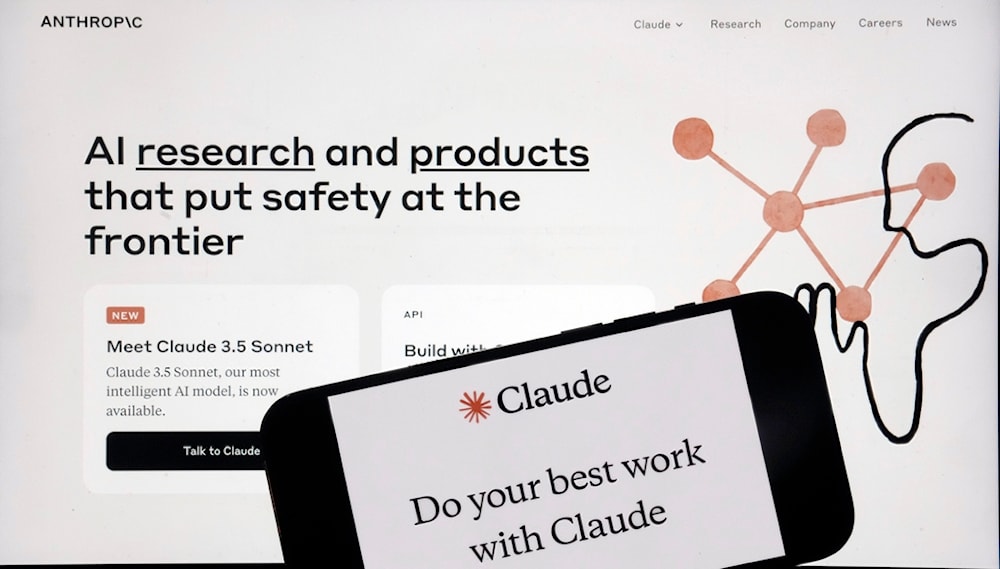
The Anthropic website and mobile phone app are shown in this photo, in New York, July 5, 2024. (AP Photo/Richard Drew)
Anthropic’s artificial-intelligence model Claude was used in the United States military operation against Venezuela and kidnapping of President Nicolás Maduro, people familiar with the matter told the Wall Street Journal. The reported use of AI in the mission underscores the growing integration of advanced technologies within Pentagon operations.
The abduction of Maduro and his wife included bombing several sites in Caracas last month. Anthropic’s usage guidelines prohibit Claude from being used to facilitate violence, develop weapons, or conduct surveillance.
“We cannot comment on whether Claude, or any other AI model, was used for any specific operation, classified or otherwise,” an Anthropic spokesman told WSJ. “Any use of Claude—whether in the private sector or across government—is required to comply with our Usage Policies, which govern how Claude can be deployed. We work closely with our partners to ensure compliance.”
The Department of War declined to comment when asked by the US paper.
Read more: How big tech became embedded in 'Israel’s' war, surveillance machine
Partnership with Palantir enabled deployment
The deployment of Claude occurred through Anthropic’s partnership with data company Palantir Technologies, whose tools are commonly used by the Defense Department and federal law enforcement, the sources said.
Anthropic’s concerns about how Claude can be used by the Pentagon have pushed administration officials to consider canceling its contract worth up to $200 million, The Wall Street Journal previously reported.
In comments to Axios a source said, "Anthropic asked whether their software was used for the raid to capture Maduro, which caused real concerns across the Department of War, indicating that they might not approve if it was ... Any company that would jeopardize the operational success of our warfighters in the field is one we need to reevaluate our partnership with going forward."
Anthropic was the first AI model developer to be used in classified operations by the Department of War. It is possible that other AI tools were used in the Venezuela operation for unclassified tasks. The tools can be used for everything from summarizing documents to controlling autonomous drones.
Read more: AI safety: ChatGPT offered bomb recipes and hacking tips
AI’s expanding role in US military strategy
Adoption by the military is seen as a key boost for AI companies competing for legitimacy while seeking to justify their high market valuations. The integration of Claude into defense systems signals a shift toward deeper reliance on artificial intelligence in sensitive operations.
Anthropic Chief Executive Dario Amodei and other CEOs have been publicly grappling with the power of their models and the risks they could pose to society. Amodei has broken with many other industry executives in calling for greater regulation and guardrails to prevent harm from AI. The safety-focused company and others in the industry have lost workers who have described them as giving priority to growth over responsible technology development.
At a January event announcing that the Pentagon would be working with xAI, War Secretary Pete Hegseth said the agency wouldn’t “employ AI models that won’t allow you to fight wars,” a comment that referred to discussions administration officials have had with Anthropic, WSJ reported.
Contract tensions and policy disputes
The $200 million contract was awarded to Anthropic last summer. Amodei has publicly expressed concern about AI’s use in autonomous lethal operations and domestic surveillance, the two major sticking points in its current contract negotiations with the Pentagon, according to people familiar with the matter.
The constraints have escalated the company’s battle with the Trump administration, which includes accusations that Anthropic is undermining the White House’s low-regulation AI strategy by calling for more guardrails and limits on AI chip exports.
Amodei and other co-founders of Anthropic previously worked at OpenAI, which recently joined Google’s Gemini on an AI platform for military personnel used by some three million people. The company and the Defense Department said the custom version of ChatGPT would be used for analyzing documents, generating reports, and supporting research.


