
China achieves first land recovery of reusable rocket stage
 2 Min Read
China successfully recovered the first stage of its Zhuque-3 rocket on land for the first time, marking a major advance in its development of reusable launch technology.
-
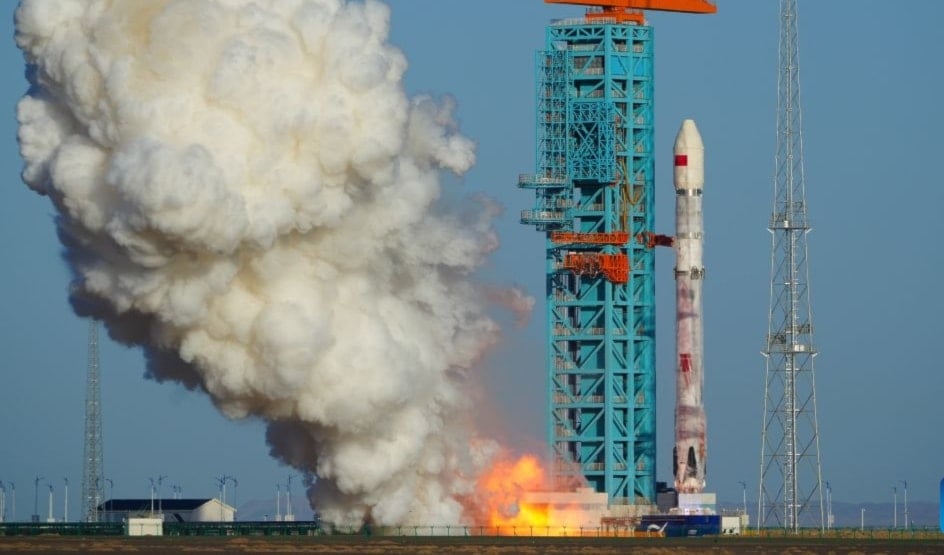
The Zhuque-3 Y2 rocket blasts off at the Dongfeng commercial space innovation pilot zone in northwest China on August 19, 2026 (Xinhua)
China has completed the country’s first successful land recovery of a rocket’s first stage, marking another step in Beijing’s efforts to develop reusable launch technology and reduce the cost of access to space.
The Zhuque-3 reusable rocket lifted off on Wednesday morning before its first stage separated and returned to Earth, where it was successfully recovered on land, according to Chinese state news agency Xinhua.
The operation represents China’s second successful rocket-stage recovery overall, but the first in which a booster was brought back on land. It also marked the country’s first successful use of deployable landing legs during such a recovery.
Xinhua described the achievement as “a major breakthrough in the country’s reusable rocket technology.”
Historic breakthrough: Zhuque-3 Y2 rocket completes China’s first land-based recovery, paving the way for reusable rockets—both on the sea and on land—and lower costs. 🚀 pic.twitter.com/ws1OLj1TpJ
— Mao Ning 毛宁 (@SpoxCHN_MaoNing) August 19, 2026
Building on earlier sea-based recovery tests
China had previously demonstrated a different recovery method in July. On July 10, the first stage of a Long March-10B rocket separated after launch and descended toward a platform at sea, where it was retrieved through a net-capture system.
The latest test brings China closer to mastering technologies already used extensively by US aerospace companies SpaceX and Blue Origin.
Both companies began recovering rocket boosters in 2015, allowing hardware that would traditionally be discarded after a single mission to be refurbished and flown again.
Global race to reduce launch costs
Reusable launch systems can significantly lower the cost of sending satellites and other payloads into space while allowing operators to increase the frequency of launches.
China has been investing heavily in reusable rocket technology as it expands its civilian, commercial and scientific space programs and seeks a larger share of the international launch market.
Other Asian countries are pursuing similar capabilities.
Japan carried out the first test flight of an experimental reusable rocket on July 11, one day after China’s earlier sea-based recovery. The Japanese vehicle successfully lifted off before returning and landing safely.
The growing push toward reusable launch systems reflects intensifying competition over technologies that could determine future costs and capabilities in the global space industry.
Read more: Landing of Chinese spacecraft with reusable technologies 'successful'


