
Developing nations demand greater say in AI governance at UN
 3 Min Read
Developing nations are demanding a greater role in AI governance, warning that rules shaped by wealthy countries could deepen global inequality.
-
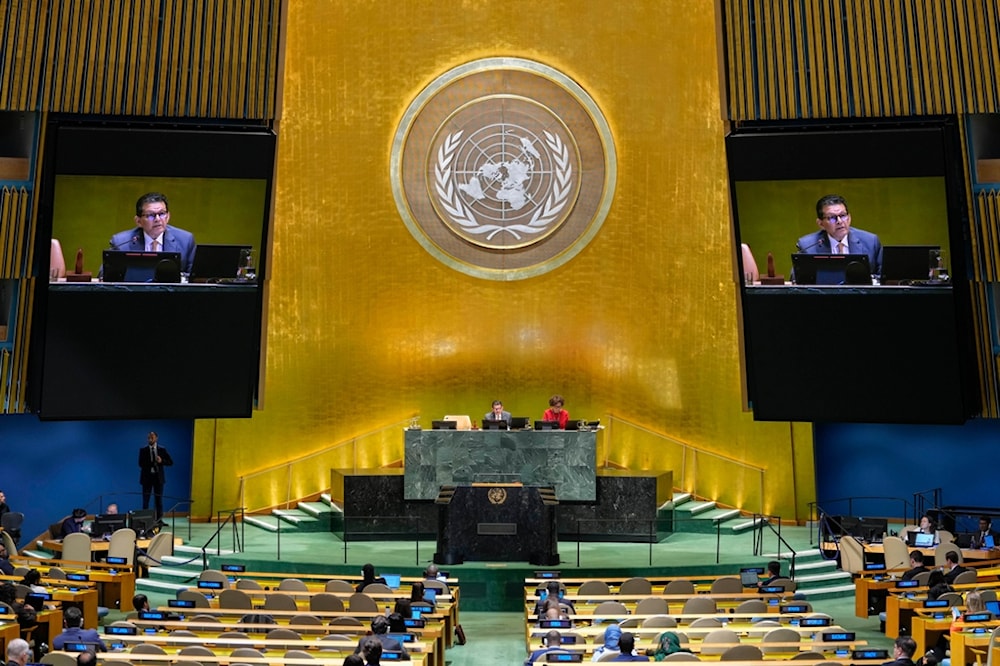
Bangladesh's Minister of Foreign Affairs and president of the 81st General Assembly, Khalilur Rahman, delivers closing remarks at the 81st session of the United Nations General Assembly at United Nations headquarters, Monday, September 28, 2026 (AP)
Developing countries are calling for a greater role in shaping the rules governing artificial intelligence, warning that leaving its development and regulation concentrated in wealthy nations could deepen existing global inequalities, Reuters reported.
The issue featured prominently during last week's UN diplomatic gathering in New York, where leaders from Africa, Asia, and Latin America raised concerns about the growing influence of AI and the risks posed by allowing a small group of countries and companies to determine how the technology is developed and governed.
Foreign Minister Thérèse Kayikwamba Wagner of the Democratic Republic of the Congo said developing countries should have a meaningful role in determining the standards governing AI rather than simply adopting rules established elsewhere.
"Developing countries cannot be reduced to the role of mere users of technologies designed elsewhere, nor should we be the mere recipients of standards and norms that they did not adequately participate in shaping," Wagner said.
"We must ensure that technological transformations of the 21st century do not reproduce the economic imbalances of previous decades," she added.
Developing countries seek role in AI rules
The scale of the UN discussion also reflected how quickly AI has moved from a specialized technological issue to a major question of international governance.
Bangladesh Foreign Minister Khalilur Rahman, who chaired this year's UN debate, said the number of delegations addressing AI had increased sharply in just four years.
"Four years ago, AI was raised in this hall by only five delegations – this year, 128 delegations addressed it," Rahman said.
He said the discussions increasingly centered on the distribution of power surrounding AI and the consequences of decisions made about its development.
The concerns are accompanied by recognition that AI could also provide developing countries with an opportunity to accelerate economic growth and development.
The World Bank said in a report last month that AI could enable developing countries to achieve a century's worth of development within a decade if they move quickly to address gaps in electricity, connectivity, and skills.
The International Monetary Fund said in July that AI could boost Sub-Saharan Africa's economy by about 4% over the next decade under the right conditions.
UN warns against unequal AI development
UN Secretary-General Antonio Guterres compared the debate over AI to the global response to climate change, arguing that developing countries should have an equal voice in shaping the response to both challenges.
"The climate crisis went from distant warning to daily reality and artificial intelligence moved at a speed that has blindsided even those who created it," Guterres said.
"These are not separate crises. They are chapters of the same story, the story of power: Who has it. Who is denied it. How it is used. And how it is changing," he told the UN.
Guterres and leaders from the Global South called for coordinated international action on AI rather than isolated national approaches to managing its risks.


