
Unchecked AI could cause 'a billion deaths': Bill Gates
 3 Min Read
Bill Gates warns that unchecked AI could pose catastrophic risks, urging US lawmakers and law enforcement to regulate AI development and safeguards.
-
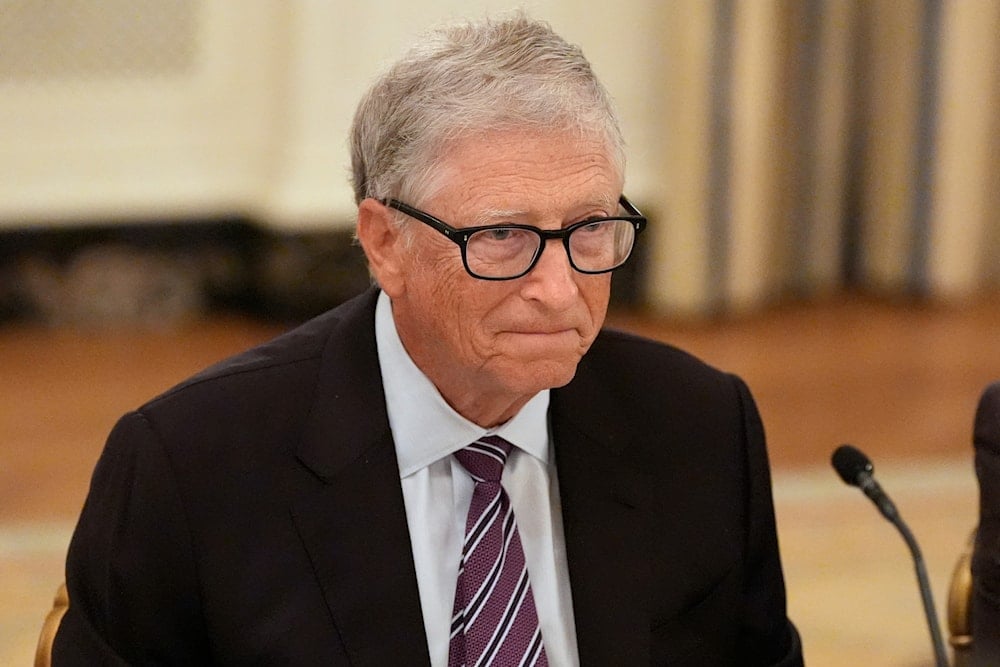
Microsoft's Bill Gates attends a dinner with US President Donald Trump in the State Dining Room of the White House, Sept. 4, 2025, in Washington (AP)
Microsoft co-founder Bill Gates has called on US federal legislators and law enforcement officials to regulate the development of artificial intelligence, warning in an interview that the technology, if left unchecked, could cause “a billion deaths.”
In the interview with NBC Meet the Press host Kristen Welker, Gates said, “You need law enforcement and the politicians to get into the discussion about what safeguards and monitoring look like.” He added, “And that has to be a required thing.” Gates also stated, “No one thinks self-regulation is enough.”
Describing the cost of oversight in business terms, Gates said, “It will be a little bit of overhead for the industry, but not a dramatic slowing of what they’re doing.”
No weapon as powerful as combination of ill intent and AI
In another portion of the interview, excerpts of which NBC circulated in advance, Gates warned that AI in the wrong hands would be “certainly powerful enough to drive events that, you know, cause a billion deaths.”
He added, “There’s never been a weapon as powerful as the combination of people with ill intent using the latest AI tools.”
Other technology executives, including Sam Altman and Elon Musk, have joined Gates in calling for a slowdown in AI development. Some experts theorize that the technology could bring about mass destruction of humans through bioweapons, nuclear war, and other means.
A researcher’s exit from Anthropic spotlights internal alarm over AI risks
Bill Gates’ call for federal regulation of artificial intelligence echoes warnings from inside the industry itself, where a researcher’s recent resignation has drawn attention to the concerns some employees hold about the technology they are building.
Jacob Coxon, who spent three years conducting pre-training research at both Anthropic and OpenAI, announced his departure from Anthropic in September 2026 in a post on X that was viewed more than 155 million times.
In his resignation statement, Coxon wrote that “neither company is acting responsibly” and that they are “racing straight to self-improving superintelligence and gambling with our lives.” He added that “the people building AI earnestly believe that it could kill us all by the end of the decade,” describing this as “not a marketing stunt.”
Coxon told CNN after his resignation that current AI models do not pose an extinction risk, but he pointed to the speed at which capabilities are improving. “Quite plausibly, within a year, we’ll no longer need humans for doing research in many areas,” he said.
'Extreme havoc'
He warned that future systems with independent volition “could cause extreme havoc,” citing potential attacks on critical infrastructure and the creation of dangerous biological weapons.
The departure has resonated beyond Anthropic. Two other researchers, Joe Benton from Anthropic and Josh Engels from Google DeepMind, left their positions and told NBC News they see an urgent need for greater transparency about incidents at the frontier of AI development.
Benton warned that advances “could speed up the pace of progress from merely blistering at the minute to uncontrollable” rates. Engels said, “There are no adults in the room. People are trying their best, but there is no one coming to save us.”


