
German rocket reaches orbit as Europe pushes space autonomy
 3 Min Read
German startup Isar Aerospace reaches orbit from Norway, marking a milestone in Europe’s push for independent satellite launch capabilities.
-
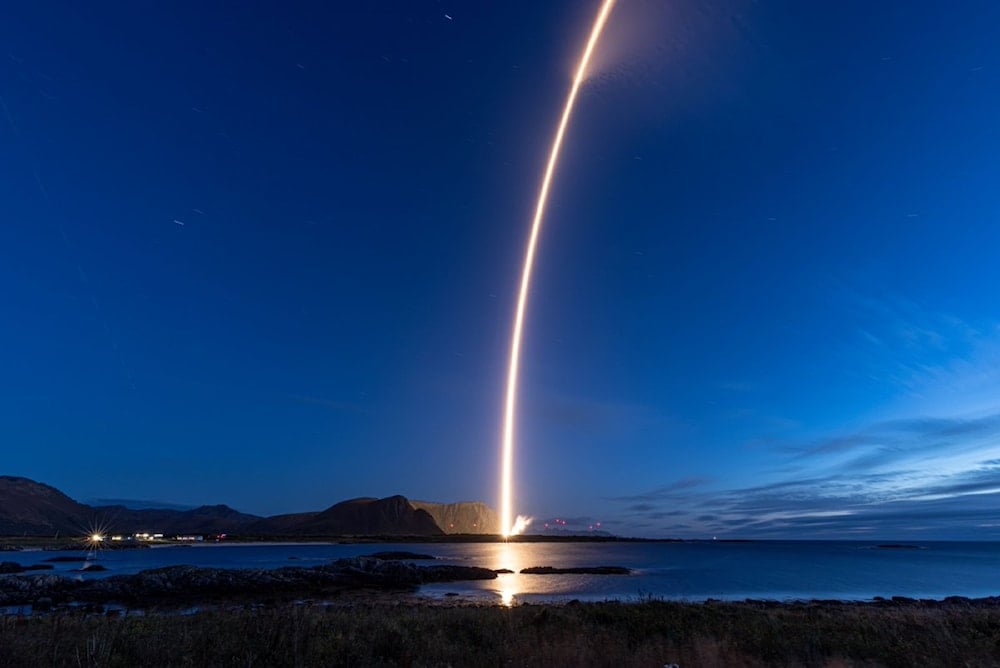
Long-exposure photo of the Isar Aerospace rocket launch on September 5, 2026. (X/@isaraerospace)
German startup Isar Aerospace successfully launched its Spectrum rocket into orbit from Arctic Norway on Saturday, marking a major step in Europe’s effort to develop independent access to space.
The uncrewed rocket became the first commercial vehicle to reach orbit from continental Europe, strengthening the continent’s position in the increasingly competitive satellite launch market.
“We're in orbit! And just made European history,” Isar said in a post on X.
We’re in orbit! And just made European history: This is the first time a privately developed rocket reached orbit from continental Europe; and a testament to the dedication, expertise, and teamwork of everyone involved.
— Isar Aerospace (@isaraerospace) September 5, 2026
Norwegian Industry and Commerce Minister Cecilie Myrseth described the launch as a breakthrough for Europe’s launch industry and said it would strengthen Norwegian and European security.
“We achieved within a few years what had taken the European space industry decades before," Daniel Metzler, CEO and Co-Founder of Isar Aerospace, said in a statement. "Europe now has sovereign access to space. We have entered into a new chapter for European spaceflight. I am incredibly proud of our team, that has made this success story from Europe possible. We will now focus on rapidly scaling launch vehicle production, deliver on our order pipeline, and meet surging global demand.”
Read more: Russia, China strengthen cooperation in space exploration
Europe pushes for greater autonomy in space
Spectrum lifted off from the Andoya Spaceport in Arctic Norway carrying five small satellites and an in-flight technological experiment.
The launch reflects growing European efforts to reduce reliance on launch infrastructure outside the continent as geopolitical tensions reshape the international order.
German Chancellor Friedrich Merz visited Isar’s launch site in March, underscoring Berlin’s support for developing independent European space capabilities.
Sweden and Britain are also developing launch infrastructure through the Esrange site and SaxaVord Spaceport respectively, as European countries seek a larger role in the global satellite launch industry.
Isar builds on previous failed launch
Saturday’s mission was Isar’s second launch attempt.
Its first Spectrum rocket lifted off from the same Norwegian site in March 2025 before plunging into the sea and exploding shortly after takeoff.
No one was injured in that incident, which Isar nevertheless described as valuable because it generated data for further development.
The latest mission was designed to serve both as a qualification flight for the Spectrum rocket and its first mission carrying payloads.
The European launch market remains dominated by established players such as SpaceX in the United States and ArianeGroup, which operates from French Guiana in South America.
Isar is seeking to establish itself as another European option for launching small and medium-sized payloads into orbit.
The company said last week that it had secured around €200 million from the European Space Agency to fund new rocket development and expand its testing and launch infrastructure.
We made history. On just our second flight, we became the first commercial space company from Europe to deliver satellites into orbit. Mission 'Onward and Upward' successfully lifted off and deployed payloads into orbit. A new chapter for European spaceflight. More:… pic.twitter.com/AWvqG2l8Mn
— Isar Aerospace (@isaraerospace) September 5, 2026
Isar is also developing a second launch site in Canada, expanding its infrastructure beyond its Norwegian base.


