
Hormuz carries more than oil: What if undersea cables are disrupted?
 4 Min Read
Damage to undersea cables in the Strait of Hormuz could disrupt Gulf internet connectivity, financial services and digital commerce, while wartime conditions could delay repairs.
-
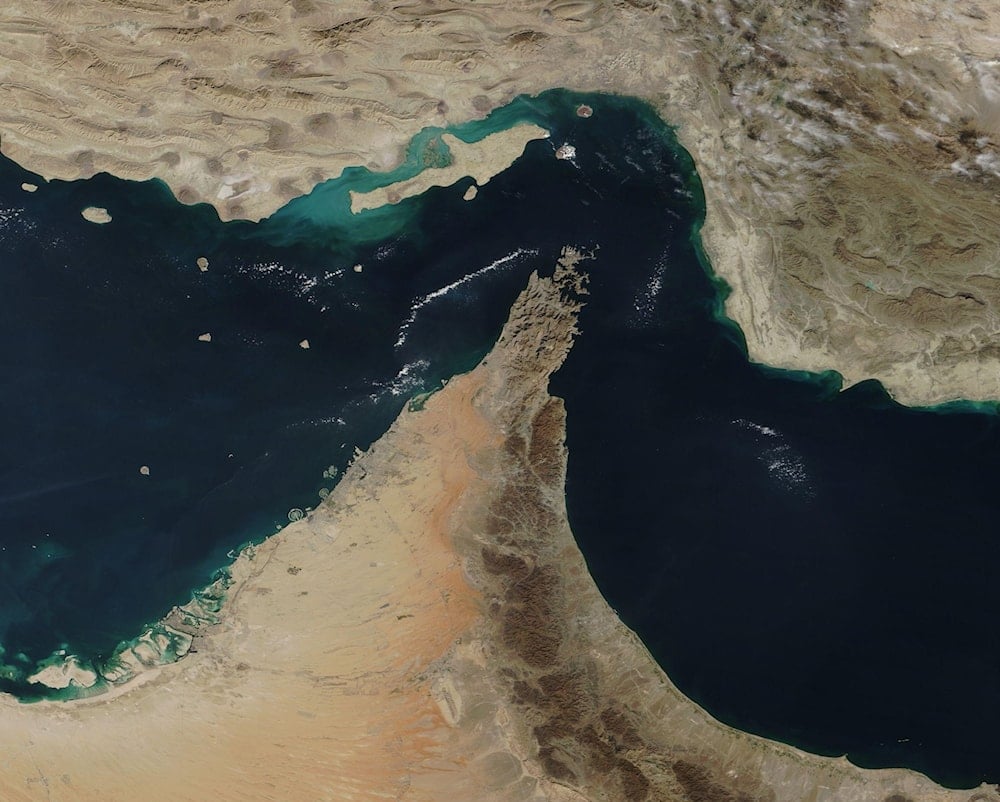
The Strait of Hormuz, linking the Gulf with the Gulf of Oman, seen in a satellite image captured on December 2, 2020 (NASA)
The risks posed by the US-Israeli war on Iran extend beyond energy supplies, with damage to undersea cables in the Strait of Hormuz potentially disrupting internet access, financial services, and digital commerce across Gulf states, the TIME reported.
In a May 19 report, the magazine examined the vulnerability of communications infrastructure beneath the strategic waterway, where submarine cables carry data supporting banking, cloud computing, and other essential services.
The vulnerability of these connections has come into renewed focus after a warning from Brigadier General Yadollah Javani, the IRGC’s deputy commander for political affairs.
“Vital cables in the Strait of Hormuz will not be safe if our infrastructure is targeted,” Javani said.
While damage to these connections would not necessarily trigger a global internet blackout, a prolonged disruption could overwhelm alternative routes and impose high costs on economies dependent on international connectivity.
Critical corridor for regional connectivity
The Strait’s importance therefore extends beyond the oil and liquefied natural gas passing through its waters. Beneath the seabed lie connections that help sustain the region’s digital economy and link Gulf countries to networks across Asia, Africa, and Europe.
The International Telecommunication Union estimates that undersea cables carry 99% of international internet traffic globally. Its deputy secretary-general, Tomas Lamanauskas, told TIME that five commercial submarine cable systems pass through Hormuz.
Telecommunications research firm TeleGeography identifies AAE-1, FALCON, and Gulf Bridge International among the active systems traversing the Strait. It distinguishes those connections from the main Europe-Asia routes through the Red Sea, underscoring that the consequences of damage would depend on the location and extent of any disruption.
Qatar, Bahrain, and Kuwait face greater exposure
Qatar, Bahrain, and Kuwait could be particularly exposed because they have fewer alternative submarine connections, according to experts cited by TIME. Interruptions could create serious bottlenecks even where land-based routes remain available.
The UAE has additional connections through neighboring countries and cables landing on its Gulf of Oman coast, while Saudi Arabia receives much of its international bandwidth through its Red Sea connections.
Bahrain, Kuwait, and Qatar also have terrestrial links through Saudi Arabia, and Kuwait connects through Iraq. However, TeleGeography cautions that these networks may lack the capacity to absorb all traffic diverted from damaged submarine cables.
Disruptions could hit banking, business, and energy
For businesses and public services, the consequences could extend well beyond slower internet speeds. Disruptions could delay international payments and financial settlements, interrupt access to cloud-hosted applications and data, and affect online commerce and communications.
The energy sector could also face difficulties if interruptions affect digital systems used to coordinate oil and LNG operations, compounding the pressures associated with disruptions to maritime trade.
Mostafa Ahmed, a senior researcher at Al Habtoor Research Center, estimated that a 24-hour internet disruption in India could cost its information technology and services economy $920 million, according to TIME. The figure describes the potential cost of a day-long internet disruption in India, rather than a confirmed consequence of damage to cables in Hormuz.
Wartime conditions could delay repairs
Moreover, repairing damaged infrastructure could prove difficult under wartime conditions. Cable repairs typically take around 40 days, the report said, but security threats can extend that period to several months.
Ahmed estimated that only around 60 specialized cable repair ships operate worldwide. Access restrictions, insurance difficulties, and the possible need for military escorts could further complicate operations in an active conflict zone.
Backup routes could come under strain
Although global networks can redirect traffic through other submarine cables and terrestrial connections, those alternatives have limits. Severe disruption could produce congestion, delays, and service interruptions if the remaining routes cannot accommodate the additional demand.
The cables crossing Hormuz account for less than 1% of global international bandwidth, according to the report. Their significance, however, lies in the economies and essential services they connect, exposing another dimension of the regional infrastructure at risk from the war.
Read more: Iran warns Hormuz undersea cables at risk if infrastructure attacked


