
Samsung targets 800 mln AI devices as tech giants battle for users
 5 Min Read
Samsung plans to double AI-enabled devices to 800 million in 2026, powered by Google's Gemini, as tech giants compete for AI market dominance.
-
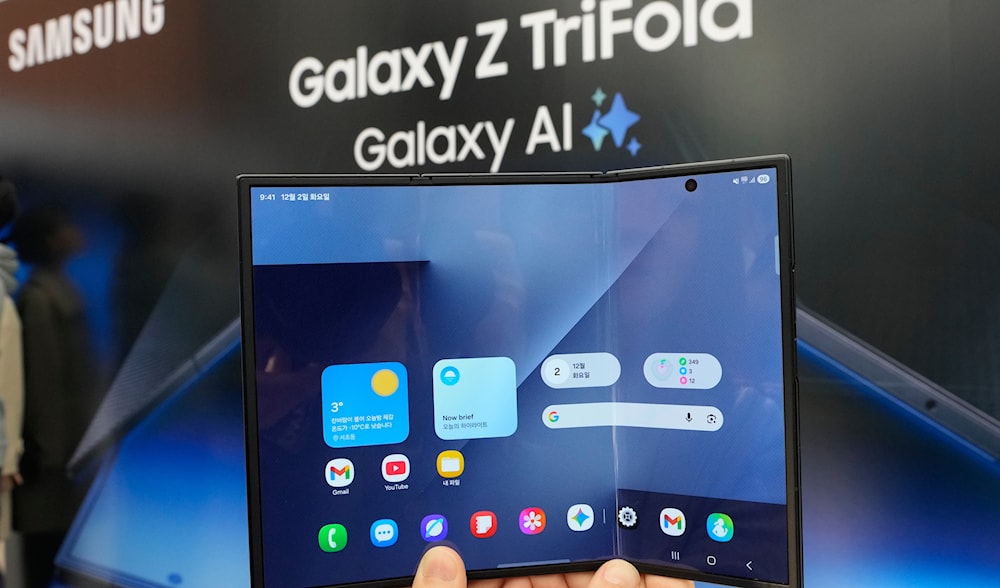
A model shows a Samsung Galaxy Z TriFold smartphone during a launch event at a Samsung store in Seoul, South Korea, Tuesday, December 2, 2025. (AP Photo/Ahn Young-joon)
Samsung Electronics is embarking on an ambitious push to integrate artificial intelligence across its product ecosystem, aiming to equip 800 million devices with AI capabilities throughout 2026, effectively doubling its current AI-enabled device footprint.
The South Korean technology giant's aggressive expansion strategy centers on Galaxy AI features, predominantly powered by Google's Gemini platform. According to Samsung co-CEO T M Roh, who recently spoke about the company's vision to Reuters, the manufacturer intends to embed AI functionality across its entire product portfolio "as quickly as possible."
This acceleration comes at a pivotal moment in the technology sector, as major players compete intensely to secure user adoption of their AI platforms. For Google, Samsung's sprawling device ecosystem represents an invaluable distribution channel, one that could help narrow the considerable gap with OpenAI's ChatGPT, which currently dominates with approximately 800 million weekly active users and commands nearly 60% of the US generative AI market.
The partnership delivers mutual benefits, whereby Samsung gains access to cutting-edge AI capabilities without shouldering the full research and development burden, while Google secures default placement on hundreds of millions of devices, a distribution advantage that traditional app downloads simply cannot match.
Industry research suggests that default positioning on devices can generate 50 to 100 times higher engagement than optional applications requiring separate downloads.
The competitive landscape intensifies
Samsung's AI push directly addresses mounting competitive pressures from multiple directions. The company faces the challenge of reclaiming smartphone market leadership from Apple, which market analysts project will surpass Samsung in annual shipments for the first time since 2011. Simultaneously, Chinese manufacturers continue applying pressure across multiple product categories, from smartphones to home appliances and televisions.
By integrating comprehensive AI services across its consumer electronics lineup, Samsung aims to differentiate itself through software capabilities rather than relying solely on hardware specifications. The strategy reflects a broader industry shift toward ecosystem thinking, where AI features become the glue binding multiple products together and increasing switching costs for consumers.
Recent consumer awareness data indicates growing receptiveness to AI features. Samsung's internal surveys show Galaxy AI brand recognition jumped from roughly 30% to 80% within a single year, a trajectory suggesting mainstream adoption may arrive sooner than many anticipated.
According to Roh, search functionality remains the most popular AI application on mobile devices, though users increasingly turn to generative AI tools for image editing, productivity assistance, translation, and content summarization. The breadth of use cases underscores why AI capabilities have become central to smartphone value propositions.
Industry challenges loom large
Despite Samsung's ambitious AI plans, a worldwide shortage of memory chips presents the company with a significant obstacle. This situation creates a mixed outcome for Samsung: while the shortage boosts profits in its chip-making business, it simultaneously drives up costs for producing smartphones, the company's second-biggest money-maker.
"As this situation is unprecedented, no company is immune to its impact," Roh told Reuters. The shortage affects Samsung's entire product lineup, from phones to televisions and kitchen appliances. When asked about potential price increases, Roh admitted some impact from rising component costs is "inevitable," though he stopped short of confirming specific price hikes.
Industry analysts warn the chip shortage could shrink the overall smartphone market in the coming year as higher prices potentially discourage buyers. This makes Samsung's AI strategy even more critical aince advanced AI features could convince customers that premium-priced devices are still worth purchasing.
Foldable ambitions meet reality
Samsung's pioneering work in foldable smartphones, a category the company launched in 2019, has progressed more slowly than initially anticipated. Roh attributed the measured growth to engineering complexities and a shortage of applications optimized for the unique form factor.
Despite controlling nearly two-thirds of the foldable smartphone segment in Q3 2025, Samsung faces intensifying competition. Chinese manufacturers like Huawei have gained ground, as Apple reportedly plans to enter the foldable market this year.
However, Roh expressed optimism that foldables will achieve mainstream status within two to three years, citing a "very high" retention rate among existing foldable users who choose similar devices for subsequent purchases.
The convergence of AI capabilities with innovative hardware formats like foldables could unlock new use cases that justify the premium pricing these devices command. As AI features become more sophisticated and foldable hardware matures, Samsung hopes the combination will create compelling differentiation in an increasingly commoditized smartphone market.
Samsung's AI expansion ultimately represents a calculated bet that software intelligence will become the primary battleground for consumer technology leadership, a shift from decades of competition centered primarily on hardware specifications and manufacturing prowess.


