The US ‘periphery policy’ falls flat in Yemen
-
 Samuel Geddes
- 17 Sep 2026 15:03
 5 Min Read
An alliance meant to offset the collapse of American hegemony in Western Asia has already failed its first test in Yemen.
-

The historical pattern of non-Arab states policing the Arab region for Washington seems to be approaching the end of its natural life. (Al Mayadeen English; Illustrated by Fatima Attieh)
Much was made in Gulf media about the announcement of the “Mecca Accord” allying Saudi Arabia to Turkey and Pakistan, such that an attack on one would be considered an attack on all. It was variously touted as a collective alliance to displace declining US influence or as a defensive alliance against Israeli aggression. It should rather have been considered a response to the immediate situation caused by the US-Israeli war on Iran and the renewed Saudi-backed war on Yemen’s Sanaa government.
Retaliation from both Tehran and Sanaa has hit vital Saudi facilities throughout the course of the wars, trapping Riyadh in a pincer that could genuinely turn into an existential threat for the kingdom and its smaller regional counterparts.
In parallel with this, it is a matter of public knowledge that much of the US’ regional basing infrastructure has been rendered exposed by Iranian bombardment, if not effectively inoperable. Tehran has made repeatedly clear that a key condition for it accepting an end to the war is the permanent withdrawal of American forces and closing of its bases in the region. Given the current stalemate between the two over whether diplomacy is in fact continuing at all, Washington presently does not have the leverage to challenge this requirement. To concede on this point would be to effectively accept the loss of the Gulf region as an essential part of the American sphere of influence, along with the incalculably valuable energy revenues whose recycling into Western economies has preserved the US dollar’s hegemony for more than half a century.
To lose such a systemically critical region to its most implacable modern adversary would collapse Washington’s international prominence in such a way that only finds analogues in the decline of the Spanish, French and British empires. To expect the American deep-state, even in a state of economic desperation, to meekly accede to this would be naïve in the extreme.
In this context, the Mecca agreement fits into a broader historical pattern of overstretched Western empires delegating the policing of dependent regions to reliable local proxies.
With respect to the Arab region, the overarching imperative has been to keep the political façade of the major energy producers in power and maintain the functioning of the global energy system with its underpinning of the dollar’s hegemony through the ‘petrodollar cycle.’
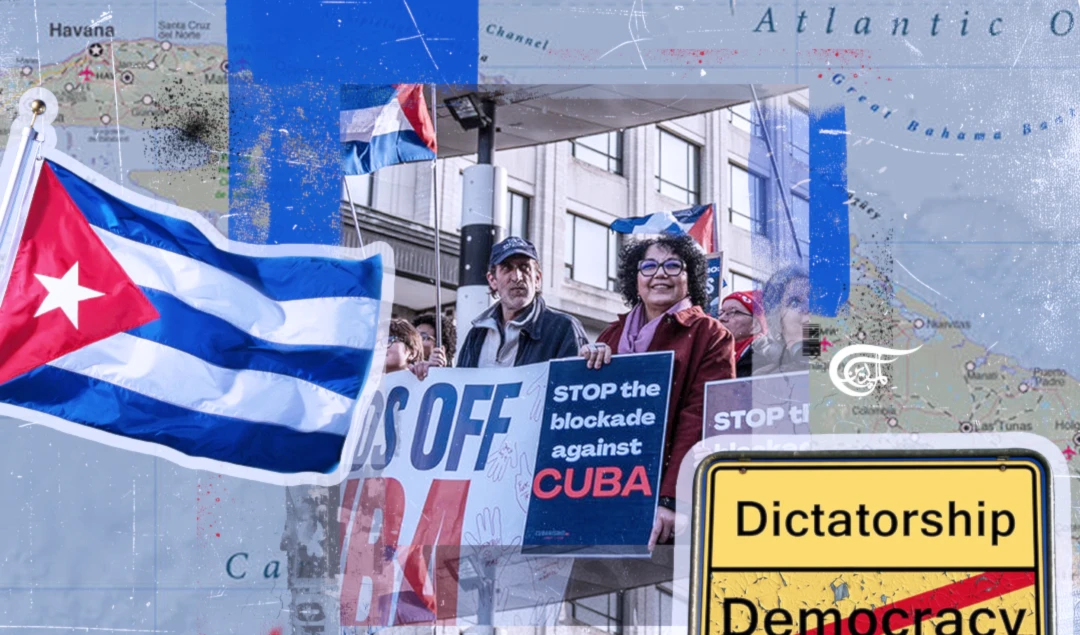

In its heyday, prior to the 1979 Islamic Revolution, this ‘periphery policy’ consisted of the Iranian Shah, the Israeli regime, Turkey and Pakistan providing the arms, intelligence and manpower to preserve the Gulf-state system. Initially, the principal threat was local Arab nationalism opposed to Western control of the region’s resources. Post-79, the strategy collapsed and post-Revolutionary Iran became the overriding opponent of US dominance, and by extension of the fragmented Western-oriented state system in the region.
Since then, the West has mobilized the regional ecosystem and the full weight of its global dominance at containing Iran (such through Saddam’s 1980 invasion), contesting its regional influence, as seen in the 14-year proxy war in Syria and, as of last year, attacking it through direct military aggression.
Far from unifying the region securely under US dominance, this slide into ever deeper dependency for the regional Arab state system has simply created fertile ground for indigenous nationalist movements to emerge with a strength that Washington and Tel-Aviv’s strategic planners in past decades could hardly have anticipated.
By far the most formidable challenge to the political survival of Western-aligned Arab regimes has been the rise of Ansar Allah in Yemen.
After sweeping into the capital Sanaa in 2015, the movement has established de-facto rule over most of the country’s population despite a decade of Western-backed bombing, blockades and direct aggression that has left hundreds of thousands of casualties.
Now, with the fall of the port of Mukha, the Sanaa-based administration has restored the entire Yemeni Red Sea coast to the capital’s authority, and with it the means of striking directly at the economies of those who have tried so hard to destroy it, be they the Saudis, Israelis or the US.
It is in this context, therefore, that we should read the statements of Pakistani officials who threatened, however hollowly, that the Mecca Alliance could be activated not against “Israel,” or in opposition to a retreating American hegemony, but against the country and popular movement that contains within it the greatest potential to transform the face and essence of the Arab world.
That Islamabad has subsequently gone out of its way to rule out the alliance’s direct involvement against Yemen demonstrates that even the historical pattern of non-Arab states policing the Arab region for Washington is similarly approaching the end of its natural life.