US Midterm Results Do Not Signal An End to War on Iran
-
 Samuel Geddes
- 10 Nov 2026 00:02
 5 Min Read
Democrats' midterm victory reflects the political and economic fallout of the US war on Iran, as bipartisan support for military intervention makes a major policy shift unlikely.
-

Democrats' sweeping midterm victory may change the balance of power in Washington, but decades of bipartisan hostility toward Iran suggest that US aggression and regime-change policies will persist regardless of who controls Congress (Al Mayadeen English)

The inevitable finally happened this week when Republicans decisively lost the US midterm elections, ceding control of both houses of Congress to the Democratic Party. GOP strongholds from Texas to the Carolinas flipped blue for the first time in many decades.
No-one is, or should be, under any illusions that this was some triumph of mobilization and activism by the Democrats. Trump himself sealed the result on February 28 when he joined Netanyahu in assassinating Iran’s former Leader. The Islamic Republic, through its survival of the US-Israeli assault and imposition of inescapable costs on the global economy, is what forced this shift in domestic American politics.
We have unfortunately been through this exact cycle before, precisely twenty years ago. Democrats swept the 2006 midterm elections against the Second Bush Administration which was by then deeply mired in its illegal occupation of Iraq. Nancy Pelosi, then about to assume the Speakership, declared the party would be a check on the president’s escalatory policies in Iraq and Afghanistan and the intensifying siege of Iran. The record speaks for itself, the US ‘surge’ of 2007 deepened its involvement in Iraq and the region remained balanced on a knife-edge until the Obama presidency substituted direct military threats for covert subversion against Iran and its regional allies.
Iran’s Leader Sayed Mojtaba Khamenei greeted the result with the clarity of prior experience, dismissing the notion that minor internal shifts in the US political system will change either American hostility to his country, or soften Iran’s seven conditions for bringing the war to a close. He is indeed correct that since 1979, regime change against the Islamic Republic has been one of the most dependably bipartisan projects in American politics. Almost every foreign war has likewise enjoyed broad support from both parties, barring the occasional dissenting voice such as Ron Paul or Rashida Tlaib.
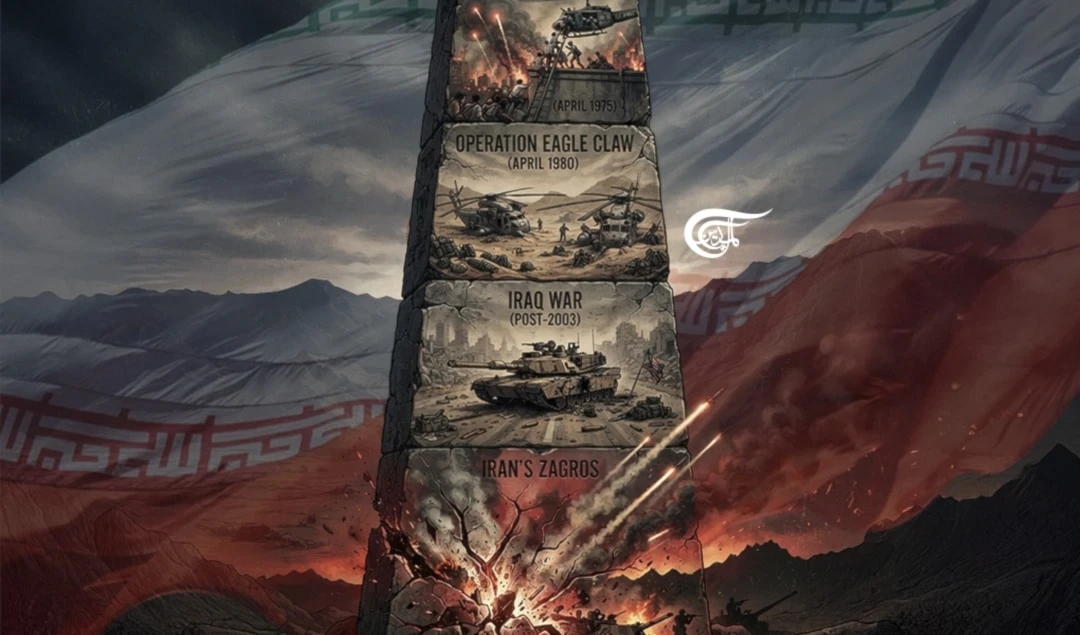

Democrats, famously including future president Biden, enthusiastically supported the Iraq invasion, only pivoting when the project began to derail. There too, the extent of the mainstream criticism largely restricted itself to the war being poorly judged, ineptly carried out and too expensive, rather than the fact it was an example of the supreme international crime, unprovoked aggression, and was predicated on a pack of lies- Saddam’s nonexistent Weapons of Mass-Destruction.
Here too, the mainstream Democratic criticism of Trump’s war on Iran is that it has failed, has no exit-strategy and is too expensive- again the notion that openly assassinating a foreign head-of-state in the middle of diplomacy makes America the guilty party of a supreme international crime, for almost every Democratic politician, is an unthinkable thought. Progressive candidates such as Abd-el Sayed, when ambushed by the media for their view on the aggression against Iran, have deflected by implicitly agreeing with it- “He (Sayed Ali Khamenei) was a terrible person” as he put it.
From the beginning of the war, Democrats have colluded with Republicans in continuing to fund the Pentagon’s operations and in providing a legal fig-leaf of approval for Trump to continue the war. The same was true with in Iraq, there is no reason to expect anything different now.
Trump’s legal powers remain largely unchecked, and he doesn’t face reelection in 2028. If he decides to resume the war on Iran- as he has all but declared that he will – the Democrats’ established practice is to claim they lack the power to override presidential authority and then sign off on his decisions, however unwilling they purport to be.
As much as figures like Abd-el Sayed and James Talarico are now the popular faces of the party, the Democrats are still fundamentally the party of Chuck Schumer, Barack Obama, Joe Biden and Hakeem Jeffries – the likely next Congressional speaker. None of these figures can be counted on to do anything but support the war’s continuation and intensification. Even in the event of a generational handover within the party, the prominent progressives remain only a single faction. Since Trump’s elevation to the top of the Republican Party in 2016, much of the ideological core of the GOP – the infamous neoconservatives – defected to the Democrats. The party is more infiltrated by “ex-Republican” operatives and Democrats who would support a Republican candidate over a progressive than it appears to be by the likes of Abd-el Sayed.
In any event, the US has long since crossed all red lines. The proverbial egg cannot be unscrambled, and Iran has had enough experience with American politicians of both complexions not to be taken in by a political changing of the guard from one wing of the military-industrial party to the other. The American public has made their displeasure known to the president- it changes few of the facts on the ground.