
Americans paid $2.2Bln more on gasoline after start of war on Iran
 3 Min Read
Americans have spent an estimated $2.2 billion more on gasoline since the US launched an aggression on Iran.
-
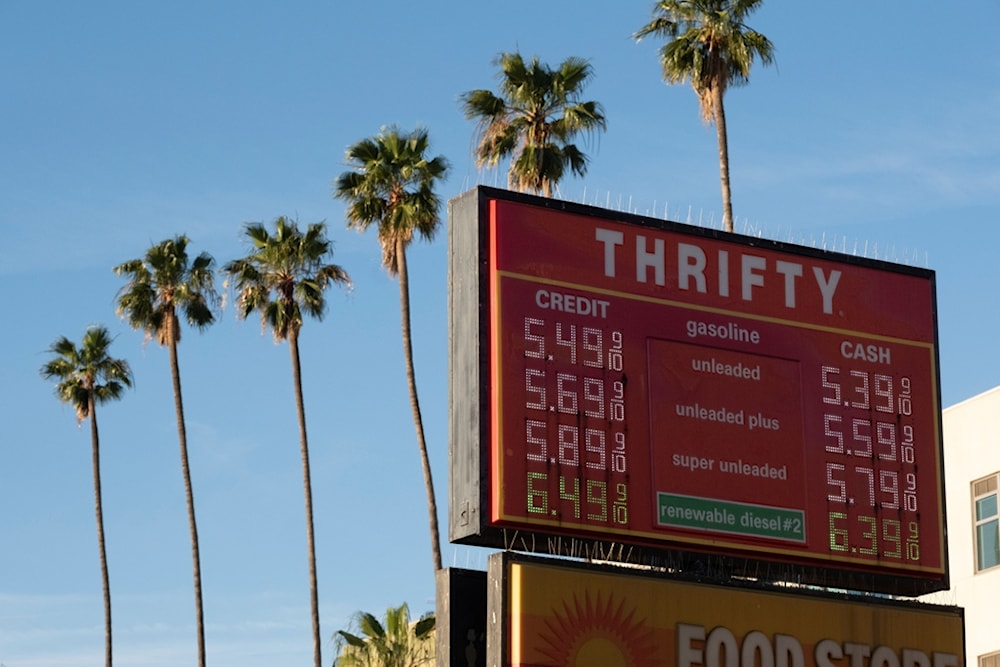
Gas prices are advertised Friday, March 13, 2026, in Los Angeles (AP Photo/Richard Vogel)
Americans have spent billions of dollars more on gasoline since Washington launched its military campaign against Iran, as energy markets react to fears of disruption across the Middle East.
Patrick De Haan, head of petroleum analysis at GasBuddy, said US consumers have already paid a significant financial price for the escalation.
“Americans have now spent $2.191 billion more on gasoline since Feb. 28, mostly due to the price of oil surging due threat of attack in the Strait. $262 million today alone,” De Haan wrote on X on Friday.
Americans have now spent $2.191 billion more on gasoline since Feb. 28, mostly due to the price of oil surging due threat of attack in the Strait. $262 million today alone. pic.twitter.com/6q84Plbzlv
— Patrick De Haan (@GasBuddyGuy) March 13, 2026
The surge in gasoline costs reflects sharp movements in global oil markets following the joint US-Israeli aggression on Iran that began on February 28. The attacks triggered widespread concern about the stability of energy flows through the Persian Gulf, particularly the Strait of Hormuz, one of the world’s most critical maritime energy corridors.
Roughly 20 percent of the world’s oil supply normally passes through the strait, which lies between Iran and Oman. Since the start of the war, shipping traffic in the waterway has sharply declined amid security risks and military tensions, leaving tankers stranded and disrupting global supply chains.
War fuels inflation
Oil markets reacted immediately. Brent crude prices surged above $100 per barrel, with analysts warning that prolonged disruptions could push prices even higher and deepen the global energy shock.
The increase in crude prices has quickly filtered through to consumers in the United States. As of March 13, the national average gasoline price reached $3.630 per gallon, compared with roughly $2.90 before the war began.
Fuel prices have climbed rapidly since the start of the war, with analysts noting that gasoline jumped more than 60 cents per gallon within days of the attacks, the fastest increase since the global energy turmoil triggered by the Ukraine war in 2022.
Economists warn that the spike in energy costs could ripple across the broader economy, raising the price of transportation, electricity, and consumer goods while increasing inflationary pressure on households.
War against Iran
The war itself began when the United States and "Israel" launched coordinated strikes on targets across Iran, including sites in Tehran. The attacks caused significant damage and civilian losses.
Iran responded by targeting Israeli territory and US military facilities across the region, signaling that it would resist the assault and defend its sovereignty.
The first day of the military operation also saw the martyrdom of Iran’s Spiritual Leader Sayyed Ali Khamenei. Iranian authorities subsequently declared 40 days of national mourning.
Meanwhile, the economic consequences of the war are becoming increasingly visible in the United States. On Thursday, Axios reported that a Morning Consult poll found that nearly half of Americans concerned about the country’s economic conditions blame US President Donald Trump’s policies for the rise in gasoline prices.
Analysts say the turmoil in global energy markets is likely to persist as long as the confrontation continues, with the war already described as one of the largest disruptions to global oil supply in decades.
Read more: Tehran oKs Turkish ship transit through Hormuz: Ankara


