
China advances Polar Silk Road ambitions in Arctic
 4 Min Read
China expands its Arctic strategy through icebreakers, research bases, and the Polar Silk Road, boosting Chinese trade via the Northern Sea Route.
-
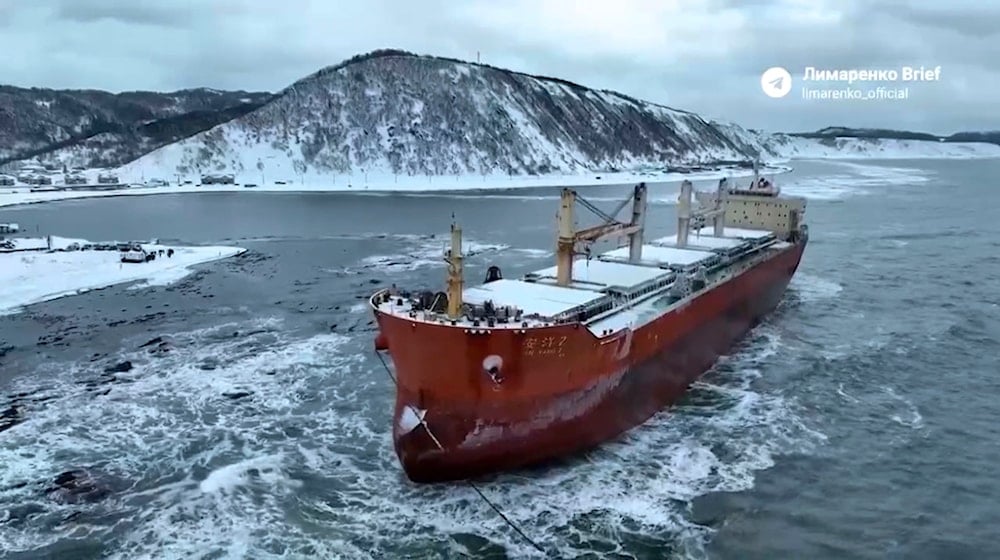
A Chinese cargo ship is seen after running aground off at the southwest coast of Sakhalin Island in Russia's far east on February 10, 2025. (Valery Limarenko, governor of the Sakhalin Region of Russia telegram channel via AP)
China is accelerating its long-term strategy in the Arctic, positioning itself to expand its trade routes and strategic influence through what it calls a “Polar Silk Road,” Joe Leahy and Richard Milne write in the Financial Times. The initiative reflects Beijing’s broader China Arctic strategy, combining shipping, energy, research, and infrastructure development in the far north.
Tensions in the region have risen amid renewed geopolitical competition, particularly involving the United States and Russia, as melting polar ice opens new maritime corridors.
China’s latest Arctic icebreaker, capable of breaking through floes up to 2.5 meters thick, represents a major step in its expanding polar capabilities. The proposed nuclear-powered vessel, unveiled as a conceptual design in December, is intended as a prototype for Beijing’s future polar fleet.
Designed by the state-run 708 Research Institute, the ship is described as a “multirole” cargo and polar tourism vessel. While Chinese officials frame Arctic engagement in terms of research and commerce, analysts have raised concerns about the potential dual civilian-military use of such assets.
Icebreakers are considered essential for maintaining year-round access in frozen waters and projecting a sustained presence in the Arctic.
Read more: US 'Golden Dome' proposal in Greenland draws scrutiny, Kremlin says
Northern sea route and Chinese trade interests
Central to China’s Arctic ambitions is the Northern Sea Route, which runs through Russian waters and offers a shorter maritime link between Asia and Europe.
Arctic routes “can cut voyage distances by 30 to 40% compared with the traditional Suez Canal route”, Yu Yun, a 708 Research Institute researcher, told China Daily.
The Financial Times writers state that in September, China reported that a container ship sailed from Ningbo via the Arctic Northern Sea Route to Britain’s Felixstowe port, marking what it described as “the official opening of the world’s first Arctic container express shipping route between China and Europe”, dubbed the “China-Europe Arctic Express”.
The development highlights the potential economic advantages of Arctic shipping for Chinese trade, though experts caution that narrow sea lanes and seasonal constraints may limit large-scale military utility, per Leahy and Milne.
Research stations and long-term presence
China’s Arctic engagement dates back decades, the Financial Times writers note. Beijing purchased its first icebreaker, Xue Long, Snow Dragon, in 1993 before developing an indigenous fleet. In 2004, it opened its first permanent Arctic research station in Norway’s Svalbard archipelago, followed by another in Iceland in 2018.
The same year, China unveiled its Arctic policy, outlining plans for “a ‘Polar Silk Road’ through developing the Arctic shipping routes”. The policy emphasized research and “hydrographic surveys” aimed at improving “security and logistical capacities in the Arctic”.
China described itself as a “near-Arctic state” in that policy paper, a characterization that drew criticism from US officials at the time.
Read more: Russia ready for Arctic route talks with South Korea
Strategic competition and regional concerns
Western capitals have reacted with concern to China’s growing activity in the Arctic, Leahy and Milne write, adding that the politicians fear a scramble for shipping lanes, energy resources, and strategic positioning as ice caps recede.
Beijing has also expanded cooperation with Russia in the region, including investments in energy and infrastructure projects in Russia’s north.
As global competition intensifies, the Arctic is emerging as a key frontier in China's Arctic strategy, blending economic opportunity, geopolitical calculation, and long-term positioning.


