
China reports record trade surplus despite Trump tariffs
 4 Min Read
China posts a record $1.189 trillion trade surplus in 2025, defying Trump tariffs as exports rise and firms expand into global markets.
-
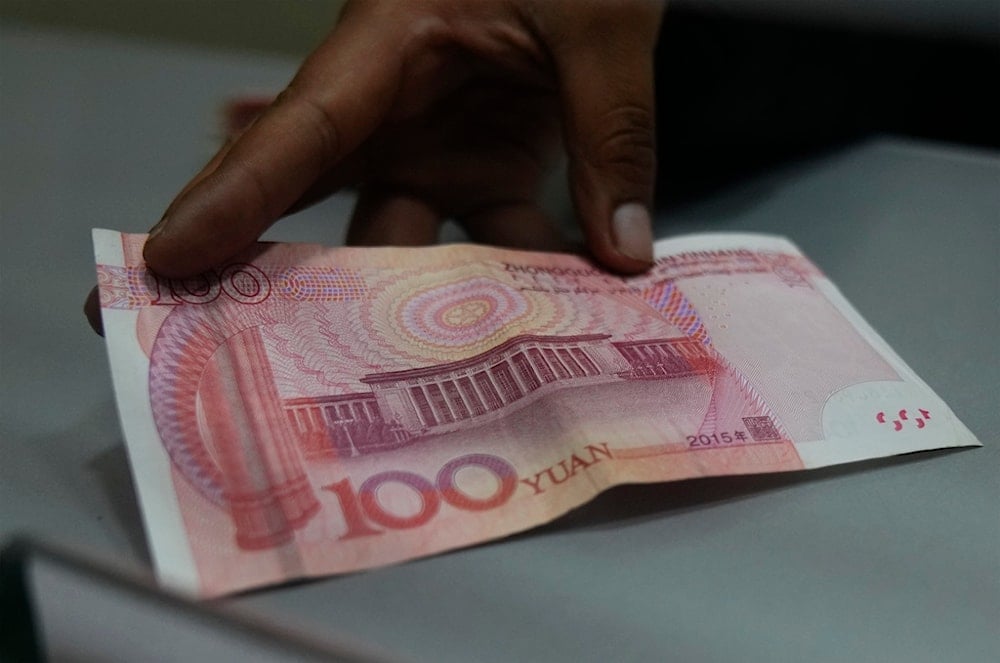
A money exchange shop worker shows a 100 Chinese yuan banknote in La Paz, Bolivia, on July 26, 2023. (AP Photo/Juan Karita)
China closed 2025 with a historic trade surplus of $1.189 trillion, customs data showed on Wednesday, marking the first time the country’s surplus has crossed the trillion-dollar threshold. The figure, comparable to the GDP of a top-20 global economy such as Saudi Arabia, comes as China leans on exports to counter a prolonged property slump and sluggish domestic consumption.
The full-year results underscore Beijing’s ability to maintain export momentum despite intensifying pressure from Trump-era tariffs. December alone saw outbound shipments rise 6.6% year-on-year in value terms, beating expectations and building on a 5.9% increase in November. Imports also outpaced forecasts, growing 5.7% after a modest 1.9% uptick the month prior.
Wang Jun, vice-minister at China’s customs administration, acknowledged at a press briefing that the external environment remains “severe and complex,” but pointed to diversification as a key strength. “With more diversified trading partners, [China’s] ability to withstand risks has been significantly enhanced,” he said, adding that “the fundamentals for China’s foreign trade remain solid.”
Read more: China has a trillion-dollar advantage in any tariff battle: WSJ
Chinese exports defy Trump tariffs with global shift
Since Donald Trump’s return to the presidency in January 2025, his administration has reinstated high tariffs aimed at slowing China’s manufacturing dominance. Despite US duties averaging 47.5% on Chinese goods, China's export engine has remained strong, largely by shifting trade toward emerging markets.
Beijing’s exporters have increasingly turned to Southeast Asia, Africa, and Latin America to offset reduced US demand. This pivot has helped China maintain global market share and stabilize its currency, with the yuan holding steady after the upbeat trade data.
Monthly export surpluses exceeded $100 billion seven times in 2025, a sharp rise from just once in 2024. This trend, aided by a weakened yuan, highlights that while Trump tariffs have curbed US-bound shipments, China’s broader trade performance remains resilient.
Southeast Asia, Africa, and Latin America see export boost
Chinese firms have ramped up activity in overseas production hubs to secure lower-tariff access to key markets like the US and EU. These shifts are part of a broader strategy to reduce vulnerability to tariff-based disruptions while continuing to meet global demand, especially for lower-grade semiconductors, consumer electronics, and automobiles.
China’s automotive sector was a major contributor to the 2025 surplus. Overall vehicle exports jumped 19.4% to 5.79 million units, with electric vehicle (EV) shipments up 48.8% year-on-year. This performance likely ensures China retains its position as the world’s top auto exporter for a third consecutive year, after surpassing Japan in 2023.
Electronics also played a key role, with steady demand for components like lower-end chips driving export volumes despite global economic uncertainty.
Read more: China lifts ban on exports of key 'dual-use items' to US
Beijing acknowledges imbalance, moves to moderate exports
While celebrating the trade achievement, Chinese leadership has also acknowledged the economic and diplomatic risks tied to its massive export volume. After November’s data confirmed the record surplus, Premier Li Qiang publicly called for “proactively expanding imports and promoting the balanced development of imports and exports.”
The move reflects growing awareness within Beijing that an overreliance on outbound shipments, especially in politically sensitive sectors, could provoke backlash or trade restrictions from key partners.
In response to international concerns over industrial overcapacity and state subsidies, China passed revisions to its foreign trade law in December after only two readings, an unusual acceleration. This legislative update was widely interpreted as a gesture toward countries within the trans-Pacific trade pact and a signal that China is prepared to move toward freer, more transparent trade practices.
Additionally, Beijing withdrew export tax rebates for the solar industry, a frequent source of tension with EU states, further suggesting an effort to improve trade relations and ease external scrutiny.
Despite a temporary truce on tariffs struck between US President Donald Trump and President Xi Jinping in late October, high US duties remain in place. At current levels, analysts say most Chinese firms are unable to profitably export to the United States, driving continued diversification across the global market.


