
Egypt secures $1.5Bln financing for food, energy security
 4 Min Read
Egypt signed a $1.5 billion financing agreement with the International Islamic Trade Finance Corporation to support food and energy security amid mounting economic pressure linked to regional instability and rising import costs.
-
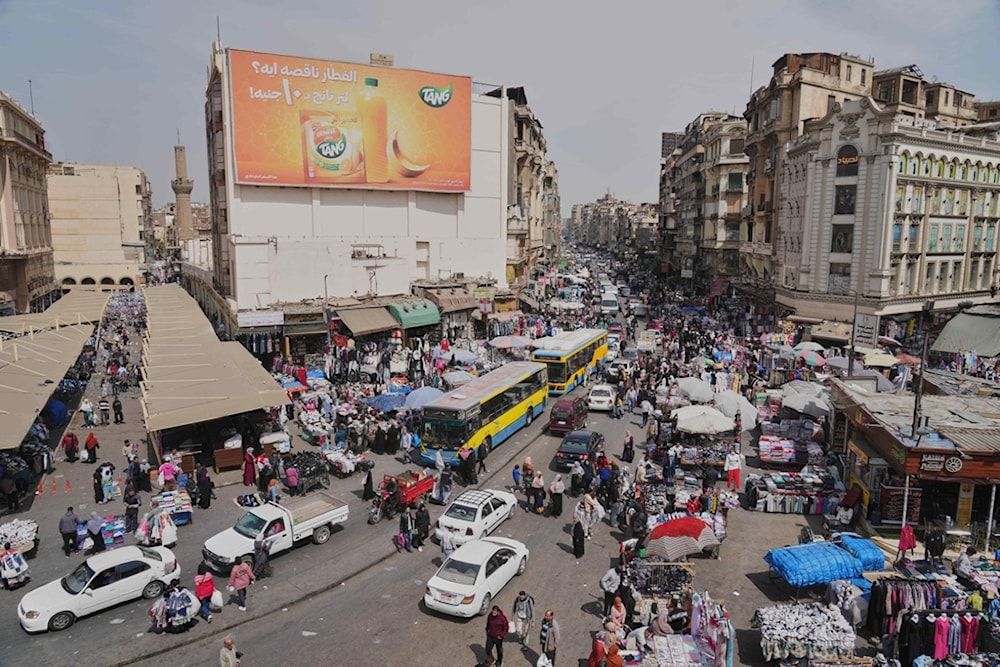
A view of people and vehicles at a popular market in Cairo, Egypt, Tuesday, March 12, 2026. (AP Photo/Amr Nabil)
Egypt signed a $1.5 billion financing agreement on Wednesday with the International Islamic Trade Finance Corporation to secure food and energy supplies as the country faces mounting economic pressure linked to regional instability, rising import costs, and growing debt burdens.
The agreement comes as Cairo struggles with the economic fallout of the war on Iran, which has intensified volatility across global oil, gas, and shipping markets while placing additional strain on import-dependent economies across the region.
During the signing ceremony, ITFC CEO Adib Youssef al Aama said the institution has approved more than $24 billion in financing for Egypt since 2008 to support sectors including energy, food imports, and small and medium-sized enterprises.
According to al Aama, the financing included $8.8 billion allocated to Egypt’s General Authority for Supply Commodities to support imports of key food products, particularly wheat purchases totaling approximately 12.6 million tons.
The ITFC also helped Egypt address outstanding arrears owed to foreign oil companies, which the Egyptian government has pledged to fully repay by the end of June.
Egypt remains one of the world’s largest wheat importers, relying heavily on external markets to sustain a nationwide bread subsidy system used by roughly 70 million people. The subsidy program costs the state more than $2.6 billion annually and has long been considered politically sensitive due to fears of social unrest linked to rising food prices.
Last week, Egyptian authorities announced they were considering replacing the current subsidy system with direct cash transfers beginning in July, part of broader economic reforms tied to the country’s $8 billion agreement with the International Monetary Fund.
Egypt’s debt legacy
The latest financing package also reflects Egypt’s broader dependence on external borrowing and foreign financial support, a trend that deepened over decades following the country’s economic liberalization policies and post-Camp David alignment with the United States.
Since the 1979 treaty with "Israel," Egypt has become one of the world’s largest recipients of US military assistance while repeatedly turning to international lenders, Gulf allies, and financial institutions to manage debt pressures, currency shortages, and rising import bills.
Analysts have argued that Egypt’s economic model became increasingly reliant on imported food, foreign capital inflows, and external financing, leaving the country vulnerable to global crises, regional wars, and disruptions in energy and maritime trade routes.
Egypt’s external debt has risen to more than $160 billion in recent years, while debt servicing costs consume a significant share of government spending amid persistent inflation and foreign currency shortages.
Egypt’s fragile dependence
The country’s economy is also highly exposed to fluctuations in investor confidence due to its dependence on short-term foreign capital inflows, tourism revenues, Suez Canal income, and imported energy supplies.
The war on Iran has added further pressure on these sectors by fueling uncertainty across energy markets and threatening critical shipping routes, including the Strait of Hormuz, through which a substantial portion of global oil and gas supplies passes.
Critics have argued that decades of reliance on foreign financing and Western-backed economic reforms weakened Egypt’s productive sectors and increased its dependence on emergency loans and external support to secure essential commodities and maintain economic stability.
Read more: Egypt inflation eases to 14.9% despite war-driven pressures


