
EU 20th sanctions package targets Russia's energy, media, banks
 4 Min Read
The EU adopted its 20th sanctions package against Russia, targeting banks, crypto, LNG, media mirror sites, cybersecurity, and raw material imports.
-
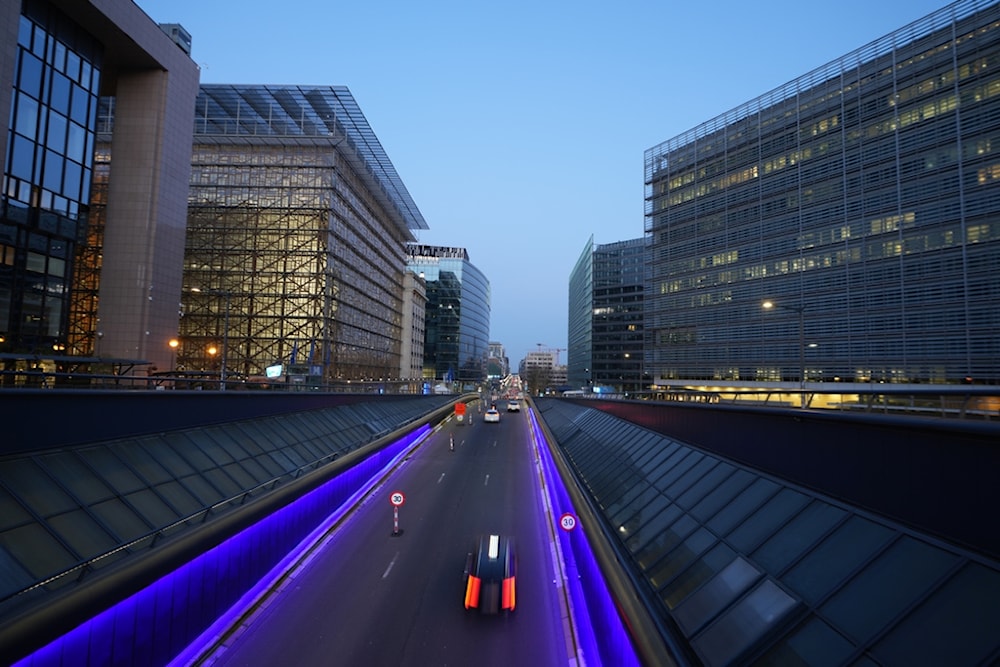
Early morning traffic drives between EU headquarters, right, and the European Council building, left, during the EU summit in Brussels, Thursday, March 19, 2026. (AP Photo/Virginia Mayo)
The European Union formally adopted its 20th package of sanctions against Russia on Thursday, introducing sweeping measures across energy, finance, trade, media, cybersecurity, and digital assets.
The Council adopted the package on April 23, comprising 120 further individual listings, the biggest such package in two years, alongside multi-layered economic sanctions targeting key sectors that contribute to Russia's economy.
Individual sanctions target Russian businessmen, officials, and media figures. Among those newly listed are four Russian journalists, who will, however, retain the right to continue working within the EU.
Banking and finance
The EU imposed a transaction ban on 20 Russian banks, in addition to targeting four financial institutions in third countries with transaction bans for circumventing EU sanctions or for connections with the Russian System for Transfer of Financial Messages (SPFS), Moscow's alternative to SWIFT.
The new bans bring the total number of Russian banks subject to EU transaction restrictions to 70, up from 50 following the 19th package adopted in October 2025.
Energy and maritime
The 20th package bans transactions with two Russian ports, Murmansk and Tuapse, as well as with the oil terminal of the Karimun port in Indonesia, which Brussels claims are used to circumvent the G7 oil price cap.
The package also introduces mandatory due diligence checks for the sale of tankers, in an attempt to make it more difficult for Russia to expand its shadow fleet, and bans the provision of maintenance and other services for Russian LNG tankers and icebreakers.
Furthermore, as of January 2027, the EU will make it illegal to provide LNG terminal services to Russian entities or entities owned or controlled by Russian nationals.
The package adds 46 vessels to Russia's shadow fleet list, bringing the total count of sanctioned tankers to over 632 vessels.
Notably, however, the package stops short of a full ban on maritime transportation of Russian energy resources, though the EU Council described the measures as forming a basis for future action in this area.
Export controls, third-country circumvention
The package introduces strict export controls targeting 58 companies and associated individuals involved in the development and manufacturing of military goods, including drones, with 17 of those designations falling on entities in third countries, including China, the UAE, Belarus, and Central Asia.
Brussels also expanded export restrictions to cover laboratory glass, lubricants, chemicals, and rubber.
For the first time, the EU activated its Anti-Circumvention Tool, prohibiting the export of computer numerical control machines and radios to jurisdictions considered high-risk for re-export to Russia. Kyrgyzstan became the first country to be targeted under this mechanism.
Digital assets, cybersecurity, media
The EU introduced a total sectoral ban on providers and platforms established in Russia that allow for the transfer and exchange of crypto assets. The package also bans transactions in the RUBx cryptocurrency and all EU support for the development of the digital rouble.
The package tightens the EU's existing broadcasting restrictions, extending them to mirror sites used to circumvent bans on prohibited outlets. The Commission confirmed the new mirroring restrictions specifically concern Sputnik and RT.
The EU also imposed a new ban on the provision of cybersecurity services in Russia.
Belarus
The package also includes measures against Belarus.
EU sanctions against Minsk were extended until February 28, 2027, with new restrictions introduced covering trade, crypto operations, cybersecurity services, and tourism.
In a notable first, a Chinese company was sanctioned under the EU's Belarus sanctions regime.
Breaking the deadlock
The package had been blocked for months by Hungary and Slovakia, with both countries tying their opposition to the status of the Druzhba oil pipeline. A breakthrough came after Ukraine repaired the pipeline, paving the way for the deadlock to be broken.
The adoption came alongside the approval of a €90 billion loan to Ukraine for 2026–2027. European Commission President Ursula von der Leyen welcomed both decisions, saying the EU had moved "on two fronts at once" by doubling aid to Kiev and increasing pressure on Moscow.
READ MORE: Sanctions losing impact? EU measures barely dent Russia: Analysis


