
Fuel shock drives global airline profits toward sharp decline
 3 Min Read
US airlines report a steep rise in jet fuel spending as global energy disruptions push costs higher, forcing carriers to raise fares, cut routes, and slash profit forecasts for 2026.
-
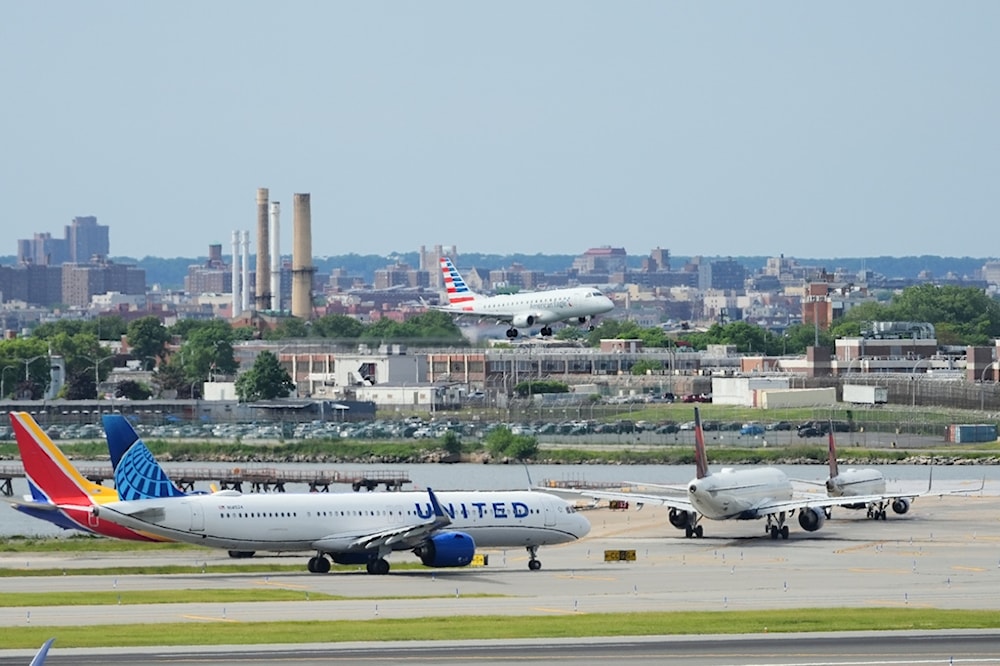
Planes navigate LaGuardia Airport Friday, May 22, 2026, in New York. (AP Photo/Frank Franklin II)
US airlines recorded a sharp escalation in operating costs in April, spending nearly $6.5 billion on jet fuel compared to about $3.6 billion a year earlier, according to data from the US Bureau of Transportation Statistics.
The increase, amounting to roughly 78%, came despite only a marginal change in total fuel consumption, indicating that price inflation rather than demand growth is driving the surge.
Fuel consumption in April stood at 1.573 billion gallons, only slightly below the 1.575 billion gallons recorded in the same month last year. The average price per gallon rose to $4.11, compared to $2.31 the previous year, underscoring the scale of cost pressure facing carriers.
Industry-wide, the increase has been linked to broader energy market instability, including disruptions to global oil shipping routes through the Strait of Hormuz after Iran utilized its geographic leverage against US-Israeli attacks facilitated by Gulf countries against it. These disruptions have contributed to volatility in oil prices, with direct effects on jet fuel costs across international aviation markets.
Read more: American Airlines suspends flights to Israeli airports until 2027
Profit forecasts slashed as costs outpace recovery
The International Air Transport Association (IATA) has significantly revised down its global airline profit outlook for 2026, cutting projected net earnings from $41 billion to $23 billion. The downgrade reflects sustained pressure from elevated fuel prices and wider operational cost inflation.
The group also forecast that jet fuel could average $152 per barrel in 2026, nearly 70% higher than previous estimates. This would push the global airline fuel bill to approximately $350 billion, up from $252 billion in the previous year, with fuel expected to account for more than 31% of total operating expenses.
Willie Walsh, director general of IATA, stated: “Airlines are bearing the brunt of the fuel price shock. While airfares are rising, airlines are still absorbing part of the hike in their bottom lines.”
Operational responses across the sector
Airlines globally have begun adjusting operations in response to rising costs. Measures include higher ticket prices, increased passenger fees, reduced in-flight services, and the cancellation or restructuring of routes.
Several carriers have already implemented capacity reductions. American Airlines has suspended select routes during the summer season, while Lufthansa Group has moved to reduce tens of thousands of short-haul flights over the coming months. Air Canada has also suspended service to New York’s John F. Kennedy International Airport for part of the peak travel period.
Other major operators, including United Airlines, Delta Air Lines, Air France-KLM, Cathay Pacific, and Philippine Airlines, have either scaled back expansion plans or adjusted schedules to manage fuel-driven cost pressures.
US market data reflects sharp input cost inflation
US aviation data reflects the same structural trend. Despite stable fuel consumption levels, spending on jet fuel has nearly doubled year-on-year, highlighting the extent to which price increases are reshaping airline balance sheets.
This divergence between consumption and expenditure suggests that operational efficiency gains have been outweighed by external energy market pressures, leaving carriers increasingly exposed to global price volatility.


