
Two million airline seats cut as jet fuel prices soar amid war on Iran
 4 Min Read
Jet fuel prices have more than doubled following the US‑Israeli war on Iran, with British officials warning that rationing may be necessary if the crisis persists.
-
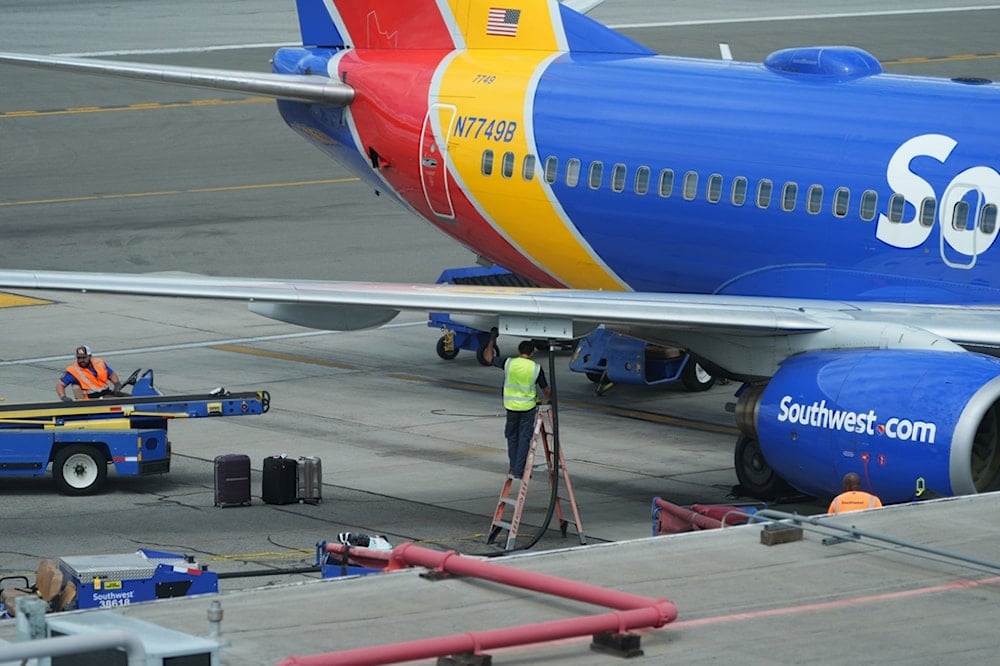
[For illustration purposes] Southwest Airlines grounds crews refuel an aircraft at Hollywood Burbank Airport in Burbank, Calif., Friday, April 10, 2026 (AP)
Airlines across the world are redrawing their operational plans in response to the unprecedented energy shock triggered by the US-Israeli war on Iran, The Guardian reported. According to data from the aviation analytics firm Cirium, around 13,000 fewer flights will operate this month compared to previous plans, representing a net reduction of two million seats.
While the cuts amount to less than two percent of global aviation capacity, industry observers warn that the situation could deteriorate further over the summer. European and UK airlines have been warned that long‑term jet fuel supply disruptions may force additional cancellations, with governments now considering extraordinary measures to minimize chaos for travellers.
Turkish Airlines, Lufthansa among hardest hit
Istanbul and Munich have recorded the sharpest declines in flight numbers. Turkish Airlines and Germany's flag carrier Lufthansa have made particularly deep cuts, with Lufthansa cancelling 20,000 short‑haul flights operated by its CityLine subsidiary.
The price of jet fuel has more than doubled since the US‑Israeli attack on Iran and the effective closure of the Strait of Hormuz, a vital waterway for global energy shipments.
Most large short‑haul carriers operating from the United Kingdom have hedged a substantial portion of their fuel needs, shielding them from immediate price spikes. EasyJet and Wizz Air have publicly committed to flying their full summer schedules, despite continued pressure from the unhedged share of their fuel bills.
Read more: Lufthansa and KLM canceling flights because of rising fuel costs
Europe faces imminent jet fuel shortages
The aviation industry reports no current shortages, as it typically maintains about six weeks of supply visibility. However, international energy agencies have predicted that Europe will face severe jet fuel shortages if the war on Iran continues to block shipments through the Gulf.
A research note from Goldman Sachs on Monday identified the United Kingdom as Europe's most vulnerable major economy. Britain is the largest net importer of jet fuel on the continent, with low domestic stockpiles, heavy reliance on foreign supplies, and reduced local refining capacity.
The bank warned that UK inventories could fall to "critically low levels, increasing the likelihood of rationing measures."
UK government prepares emergency measures
Over the weekend, British authorities announced that they may take unusual steps to prevent last‑minute disruption for summer holidaymakers. These measures could include allowing airlines to consolidate schedules on routes where multiple flights operate to the same destination on the same day.
The government will relax "use‑it‑or‑lose‑it" slot rules, permitting carriers to cancel underperforming flights without forfeiting their valuable rights for the following season. Ministers said flights with low ticket sales might also be cancelled to avoid wasting fuel on nearly empty planes.
Transport Secretary Heidi Alexander, who negotiated the package with industry representatives, insisted that there were no immediate supply issues. She said the government was "preparing now to give families long‑term certainty and avoid unnecessary disruption at the departure gate this summer."
UK refineries have been asked to maximize jet fuel production as part of contingency planning. However, ministers have so far rejected industry demands for tax cuts and the relaxation of environmental and noise regulations.
The disruption to global air travel is yet another consequence of the US-Israeli war on Iran, which has upended energy markets and supply chains worldwide. With the Strait of Hormuz remaining under Iranian control and Western sanctions failing to break Tehran's resolve, airlines and passengers alike are being forced to adapt to a new, more expensive, and less predictable era of travel.
Read more: Global airlines face crisis as war on Iran disrupts energy, routes


