
The war on Iran is making cheap flights expensive to operate
 4 Min Read
The airline industry is facing its most serious fuel crisis since 2008, and this time, the war in Iran is the catalyst.
-
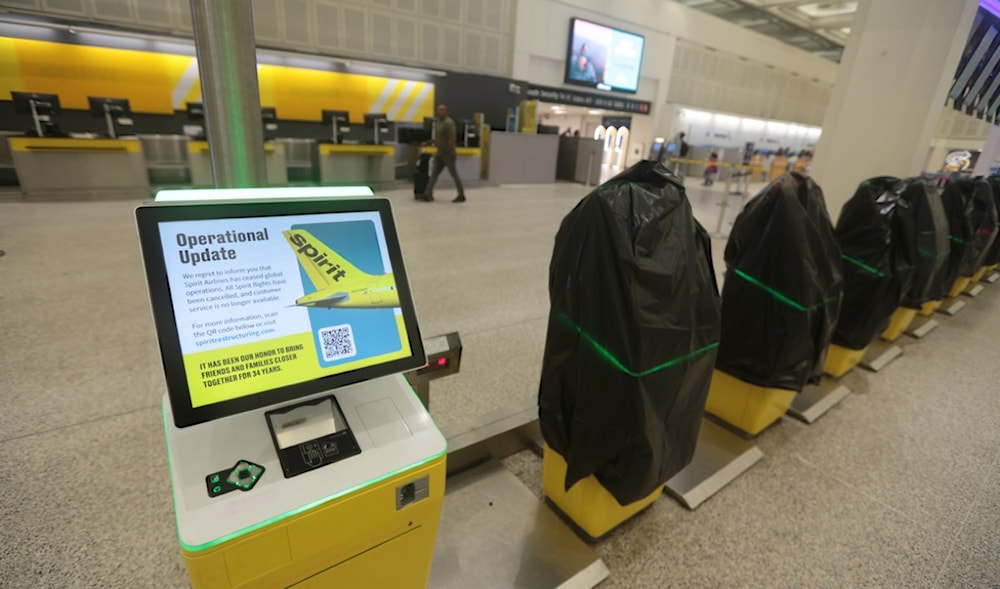
A sign announces Spirit Airlines' shutdown, Saturday, May 2, 2026, at George Bush Intercontinental Airport in Houston, Texas. (AP Photo/Lekan Oyekanmi)
A sharp and sustained rise in jet fuel prices, directly linked to the US-Israeli war on Iran, has tipped the global airline industry into crisis, grounding budget carrier Spirit Airlines and forcing major carriers worldwide to slash routes, raise fares, and brace for mounting financial losses.
Spirit Airlines has officially ceased operations, becoming the first major US carrier to fall victim to the fuel price shock that has rippled through the aviation sector since the war began.
The Florida-based budget airline had already been navigating its second bankruptcy in under two years when soaring fuel costs derailed its restructuring plans entirely.
In a last-ditch effort, Spirit executives appealed to the Trump administration for emergency relief, but the bid collapsed amid internal disagreements between officials over the terms and structure of a potential bailout, while some bondholders resisted any deal that would diminish their returns.
In a statement announcing the wind-down, Davis said the outcome was "tremendously disappointing and not the outcome any of us wanted," adding in a separate interview with the Wall Street Journal that the company had believed it would "get the liquidity we needed."
An industry under pressure
Spirit's closure is one part of a broader crisis reshaping the airline industry. American Airlines warned in April that its fuel bill is set to surge by $4 billion this year, reversing earlier projections of per-share earnings of up to $2.70.
United Airlines has similarly slashed its profit outlook, while international heavyweights including Air France, Lufthansa, and Cathay Pacific have trimmed their route networks to contain costs.
Airfares in the United States have increased five times since the war on Iran began, with a sixth round of hikes already underway. Airlines say they expect to recover most of the additional fuel costs through fare increases by year's end, but that calculus depends on whether passengers continue absorbing the burden.
Budget carriers hit hardest
The pressure is falling disproportionately on low-cost carriers, whose business models are built around thin margins and price-sensitive customers. For a budget airline, fare hikes are a much harder sell than they are for legacy carriers.
Avelo Airlines CEO Andrew Levy, who said he is drawing on lessons from the 2008 fuel crisis, described the challenge. With Avelo's average base fare sitting around $115, adding $30 to cover fuel is a meaningful shock to its core customer base. "You can't just pass on a fare increase of that magnitude overnight," he told the Wall Street Journal, while acknowledging airlines have no alternative.
Recognizing the systemic threat, executives from several US budget carriers met last month with Transportation Secretary Sean Duffy and Federal Aviation Administration chief Bryan Bedford. The carriers collectively requested $2.5 billion in federal aid to offset the fuel cost surge, a request that remains unresolved.
Market shake-up ahead
Analysts are already raising questions about potential mergers as the financial strain exposes fault lines between larger carriers capable of absorbing higher costs and smaller ones being pushed toward the edge.
Spirit's exit, while damaging, is expected to remove unprofitable capacity from the market, giving surviving carriers greater pricing power.
JetBlue, which competed directly with Spirit on multiple routes, wasted little time, announcing 11 new destinations from Fort Lauderdale immediately after Spirit's closure.
Whether the crisis triggers a wider consolidation wave will depend largely on how high fuel prices climb and how long consumers remain willing to pay.


