
Spirit Airlines shuts down after 34 years amid financial crisis
 4 Min Read
Spirit Airlines shuts down after being in service for over three decades as financial struggles, rising fuel costs caused by the war on Iran, and failed rescue efforts force immediate liquidation.
-
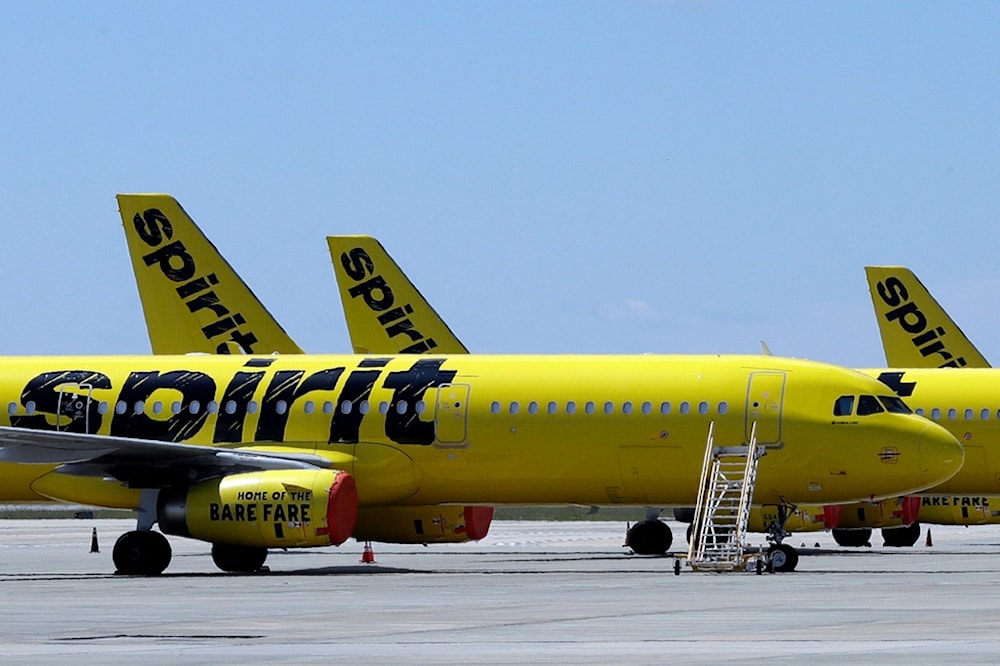
A line of Spirit Airlines jets sits on the tarmac at the Orlando International Airport on May 20, 2020, in Orlando, Fla. (AP Photo/Chris O'Meara)
Spirit Airlines has announced the immediate shutdown of its operations after 34 years in service, citing severe financial difficulties and an inability to secure funding.
The airline confirmed it had “started an orderly wind-down of our operations, effective immediately,” with all flights canceled and customer service suspended. The company, known for its ultra-low-cost model and bright yellow aircraft, had employed approximately 17,000 people and operated hundreds of daily flights.
“We are proud of the impact of our ultra-low-cost model on the industry over the last 34 years and had hoped to serve our guests for many years to come,” the airline said in its final statement.
Failed rescue efforts and government response
Efforts to prevent the airline’s collapse ultimately failed despite last-minute intervention attempts. US President Donald Trump had indicated that the government was exploring options, including a potential $500 million federal loan.
“We gave them a final proposal,” Trump said, adding that saving jobs had been a priority. However, negotiations with creditors stalled, and no viable agreement was reached.
A creditor involved in discussions stated, “The Trump administration made an extraordinary effort to try and save Spirit, but you can’t breathe life into a corpse,” reflecting the severity of the airline’s financial position.
Financial pressures and industry challenges
Spirit’s collapse comes amid mounting pressure on the aviation sector, particularly from rising oil prices due to the US-Israeli war on Iran, which has significantly increased jet fuel costs.
The main driver of the crisis in the global airline industry is due to the aggressions on Iran, which has led to a blockade on the Strait of Hormuz, significantly crippling the transfer of oil through the key waterway.
However, the airline’s financial struggles predated the current energy crisis. Spirit had faced difficulties recovering demand following the COVID-19 pandemic and encountered structural challenges in maintaining profitability within the competitive low-cost segment.
In 2024, a federal judge blocked a proposed $3.8 billion merger between JetBlue and Spirit on antitrust grounds, arguing that the deal would reduce competition and harm consumers. The decision eliminated a potential lifeline for the struggling carrier.
Impact on passengers and market competition
The abrupt shutdown has left passengers uncertain about refunds and future travel plans. While bookings remained temporarily available online, customers quickly turned to social media seeking clarification and compensation.
Several US airlines have indicated they may step in to accommodate stranded passengers, though details remain limited.
Industry experts warn that Spirit’s exit could reduce competition within the already consolidated US airline market, potentially leading to higher ticket prices. Low-cost carriers like Spirit have historically played a key role in keeping fares down by offering basic pricing structures with optional add-ons.
Broader implications for US aviation sector
The collapse highlights broader vulnerabilities within the US aviation industry, particularly among budget carriers. Other low-cost airlines, including Frontier Airlines and Avelo Airlines, reportedly sought a $2.5 billion bailout, citing disproportionate exposure to rising fuel costs.
Meanwhile, major carriers such as American Airlines, Delta Air Lines, and United Airlines have demonstrated greater resilience, supported by stronger demand and pricing flexibility.
The shutdown of Spirit underscores a widening gap between major airlines and smaller budget operators struggling to remain viable under current economic conditions.


