
Global bond sell-off deepens as oil prices fuel inflation fears
 5 Min Read
Global bond yields climb to yearly and multiyear highs as surging oil prices revive inflation fears and reshape expectations for interest rates.
-
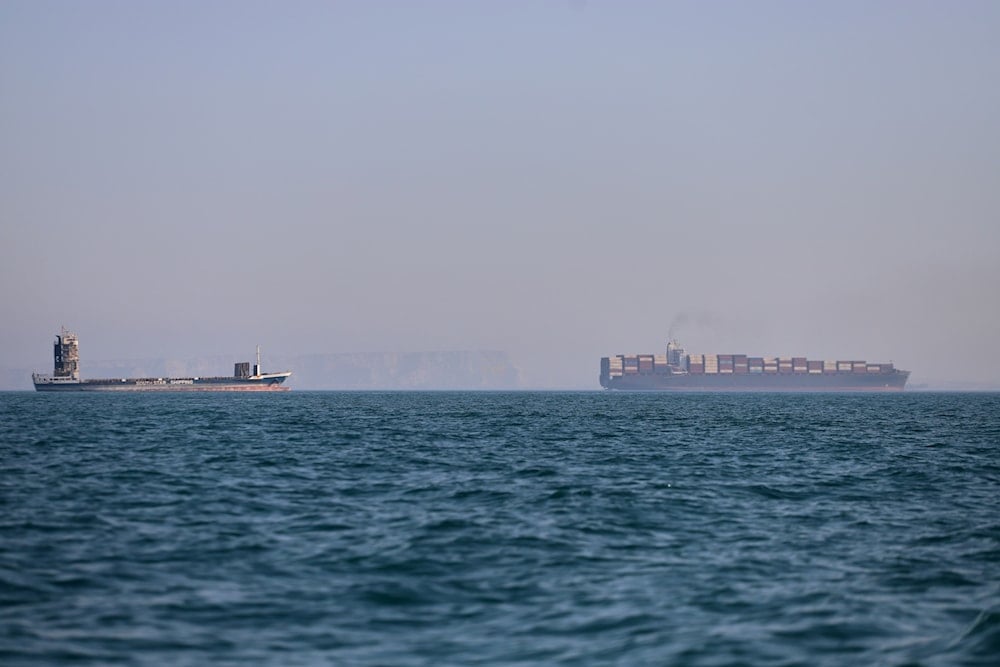
A container ship, right, and a cargo vessel are seen in the Strait of Hormuz off Bandar Abbas, Iran, Wednesday, June 17, 2026 (AP)
A global bond sell-off deepened on Thursday, sending borrowing costs in major economies to their highest levels of the year as surging oil prices toward $100 a barrel reignited fears of an inflation shock, according to the Financial Times.
The 10-year German yield rose as much as 0.03 percentage points to 3.21 per cent, its highest level since 2011. US Treasury yields also advanced close to their peak during the Iran war, as the prospect of a prolonged increase in oil prices reshaped expectations for central bank interest rates.
The escalating US aggression against Iran has dashed investors’ hopes that the Strait of Hormuz can be fully reopened to seaborne crude and that the global economy can avoid a prolonged energy crisis. Ansar Allah has also this week announced a blockade of Saudi Arabia, sending crude prices to a seven-week high on Thursday.
“Investors just wanted to move on and forget about Hormuz but that always felt like wishful thinking,” said Mike Bell, head of market strategy at RBC BlueBay Asset Management. “Sticking one’s head in the sand isn’t a strategy for dealing with political risk.”
Rising oil prices drive bond yields higher
Bond yields have ratcheted higher as oil prices climbed, with Brent crude rising from just above $70 a barrel in early July to as much as $98.80 a barrel on Thursday.
The benchmark 10-year Treasury yield, which sets a reference borrowing rate for global debt markets, rose to as high as 4.68 per cent in early trading, taking it within touching distance of the 4.69 per cent reached in May.
Other global bond yields set multiyear highs this week, with the 10-year French bond yield touching 4 per cent for the first time since 2009. The equivalent yield on gilts climbed 0.04 percentage points on Thursday to 5.08 per cent, still below its May high. Bond yields rise when prices fall.
While oil prices remain some way short of the $126 a barrel reached in May, investors said the rise in yields showed the market bracing for a longer-lasting energy-driven inflation surge, as the price of diesel, petrol and natural gas jumps.
War on Iran fuels fears of a prolonged energy crisis
The march higher in borrowing costs during the war, adding to a big jump in recent years as central bank policy has normalised since the coronavirus pandemic, has piled pressure on indebted governments.
Countries including Italy, the UK and Canada are expected to spend about 8 per cent of government revenues this year on debt interest, and the US almost 12 per cent, according to a Fitch Ratings report this week. It warned the war would “have an adverse impact on [developed markets’] public finances this year through weaker GDP growth, higher interest costs and, in some cases, moderate energy subsidies”.
Investors will be keenly watching a series of central bank meetings for signs of rate-setters’ responses to the latest surge in energy prices.
Oil inventories that were called upon in the first march higher in oil prices also offer less protection this time, investors worry. The Bank of England warned last month in its yearly financial stability report that in the event of a re-escalation there might be “limited scope for previous partial mitigants”, such as the release of countries’ strategic oil reserves, to put downward pressure on prices.
Central banks face renewed inflation challenge
The ECB, which has already raised rates since the oil price surge, is expected to hold rates steady at its meeting on Thursday. But traders are expecting at least two further quarter-point rate increases by next April, according to derivatives markets. And the Federal Reserve is expected to raise interest rates by a quarter point at least twice by March.
This represents a big turnaround from the expectations before the war on Iran, when traders were expecting the Fed and other central banks to cut interest rates.
Bets on higher rates have also been encouraged by a hawkish shift at the Fed. New Fed chair Kevin Warsh, at his first policy meeting last month, indicated he was prepared to raise interest rates if necessary and signalled his independence from US President Donald Trump, who has long pressured the central bank to cut interest rates.
Short-term inflation expectations have climbed: the one-year, one-year US inflation swap, an estimate of inflation in the year starting in 12 months from now, on Thursday rose to 2.62 per cent.
“Even though interest rate hike expectations are rising, inflation expectations are not dropping,” said Jon Hill, head of US inflation strategy at Barclays. “That suggests this is an inflation problem that the Fed can’t necessarily fix.”
Read more: US refineries run at nearly full capacity as global oil supply falters


