
Hormuz, Bab al-Mandab shipping traffic remains stable amid talks stall
 3 Min Read
Kpler showed that eight vessels crossed the Strait of Hormuz, including five oil tankers and three bulk carriers, matching the number recorded the previous day.
-
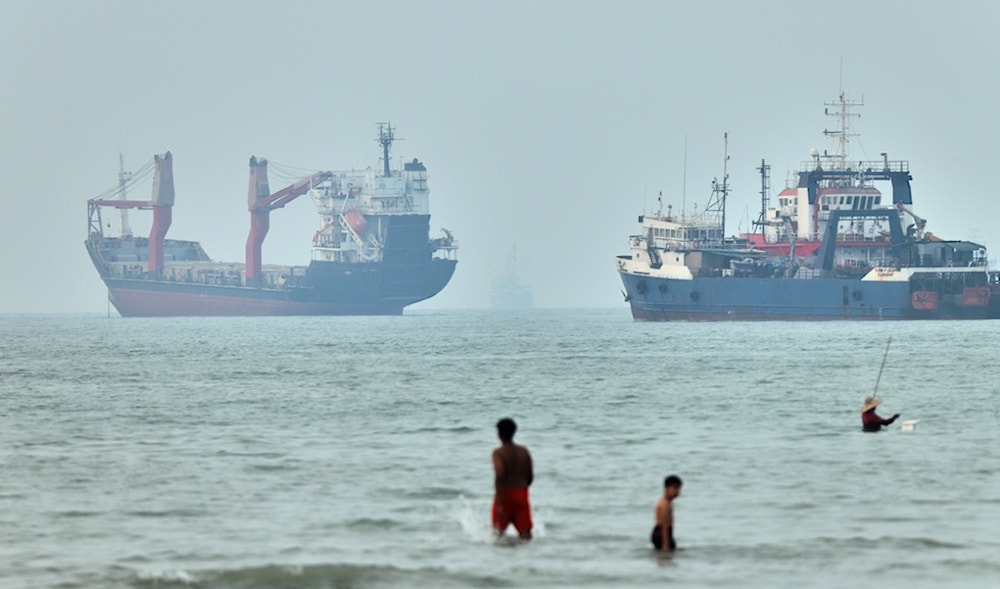
Children wade in the water with cargo ships at anchor in the background and a fisherman nearby, in the Strait of Hormuz off Bandar Abbas, Iran, Tuesday, June 30, 2026 (ISNA via AP)
Maritime traffic through the Strait of Hormuz and the Bab al-Mandab Strait showed little change on Tuesday compared with the previous day, according to vessel tracking data, as uncertainty continues to surround efforts to end the war.
Data from shipping intelligence company Kpler showed that eight vessels crossed the Strait of Hormuz, including five oil tankers and three bulk carriers, matching the number recorded the previous day.
Of the vessels recorded, six entered the strait: three oil tankers and three bulk carriers, while two vessels, a gas carrier and an oil tanker, exited the waterway.
Before the start of the US-Israeli aggression on Iran on February 28, around 130 to 140 vessels passed through the Strait of Hormuz on a daily average.
LNG tanker resumes route through Hormuz
Data from the London Stock Exchange Group (LSEG) and Kpler showed that an LNG tanker operated by the Abu Dhabi National Oil Company (ADNOC) reappeared outside the Strait of Hormuz on Tuesday after loading a cargo from Das Island in the UAE.
The tanker, named "Mubarez", departed Das Island on July 14 after receiving its shipment. According to tracking data, it was last seen inside the strait on July 16.
The vessel is currently located off the western coast of India, with LSEG data indicating that its destination is the Dahej terminal in India's Gujarat state. The expected arrival date is August 5.
This marks the third time the LNG tanker has exited the Strait of Hormuz carrying cargoes from Das Island since the start of the war. Previous shipments were delivered to China and India.
ADNOC responded to requests for comment by saying it maintains a policy of not commenting on vessel locations, movements, or routes.
Twenty vessels cross Bab al-Mandab
Meanwhile, Kpler data showed that 20 vessels crossed the Bab al-Mandab Strait on Tuesday, with 10 ships entering and 10 exiting the strategic waterway, the same number recorded the previous day.
The vessels entering Bab al-Mandab included six oil tankers, three dry bulk carriers, and one gas carrier. Those leaving the strait included seven oil tankers and three bulk carriers.
Meanwhile, developments surrounding a potential agreement on maritime security arrangements in the Strait of Hormuz remain unclear.
Iran-Oman agreement delayed over US intervention
A source familiar with the matter told Iran's Sepah News that US interference was the main reason behind delays in reaching an agreement between Iran and Oman regarding the strait.
On Tuesday, a source close to Iran's negotiating team denied reports of direct negotiations between Tehran and Washington over Hormuz, saying the only ongoing negotiations concerning the waterway are between Iran and Oman.
Iran's Press TV also quoted a source as saying that if US and other regional interventions stop, "the agreement between Iran and Oman is within reach."
The fifth clause of the Islamabad Memorandum of Understanding states that Iran would take measures to provide safe passage for commercial vessels between the Gulf and the Gulf of Oman, and in the opposite direction, for a period of 60 days. The movement of vessels would be coordinated with Oman and Gulf states.


