
Iran war adds $16bln to Europe's energy bills as Hormuz remains shut
 4 Min Read
Natural gas prices are up 70 percent, and oil is up 60 percent, even as Washington quietly concedes defeat on reopening the Strait of Hormuz.
-
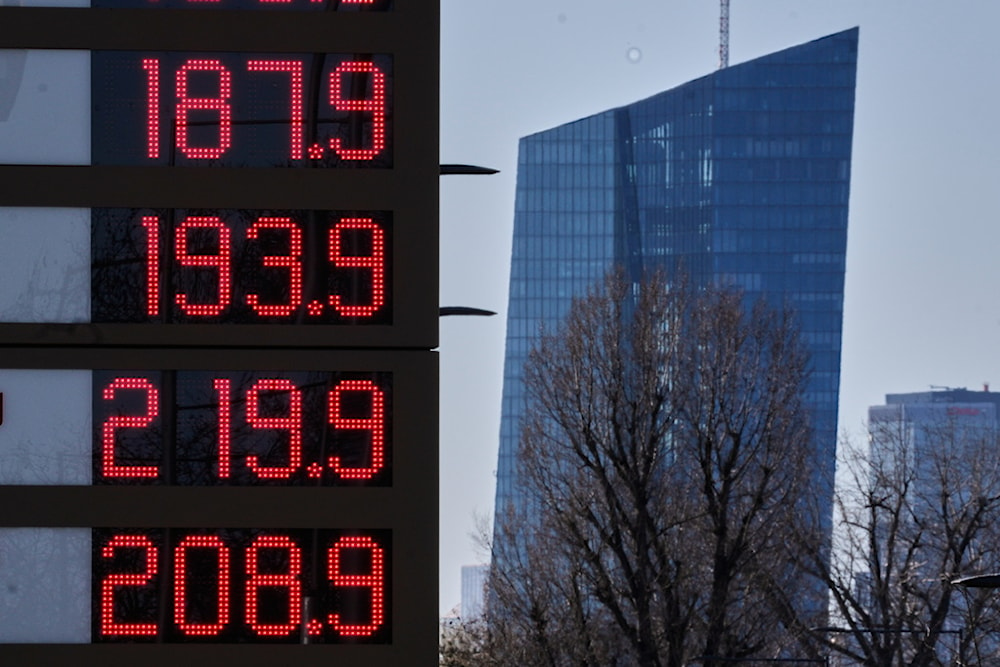
Gas prices are displayed at a gas station with the European Central Bank in the background in Frankfurt, Germany, Monday, March 2, 2026 (AP)
The energy shock caused by the US-Israeli war on Iran has added approximately $16 billion to the European Union's fossil fuel import costs since the war began, EU Energy Commissioner Dan Jørgensen said on Tuesday, as reported by the Wall Street Journal.
Speaking as the war entered its fifth week, Jørgensen warned that the economic fallout is far from over. Natural gas prices in the bloc have risen by around 70 percent since the US and "Israel" launched their aggression on Iranian territory on February 28, followed by Iran's retaliatory campaign, while oil prices are up about 60 percent.
The EU is working on a set of measures that governments can use to shield households and businesses from rising prices, Jørgensen said, adding that costs could rise even more.
A crisis that will linger
"We should be under no illusion that the consequences of this crisis for the energy markets will be short-lived. Because they won't," Jørgensen said.
His warning reflects the growing economic toll of a war that the US and "Israel" launched with promises of a quick victory. Instead, the war has resulted in the blockade of the Strait of Hormuz, through which a significant portion of the world's oil and gas once flowed, sending shockwaves through global energy markets.
For European households already grappling with inflation, the war has translated directly into higher heating bills, more expensive fuel, and increased costs for goods across the economy. The $16 billion figure represents only the additional import costs incurred so far, a number that will rise each week the war continues.
A war Europeans did not choose
The energy crisis now gripping Europe is a direct consequence of the US-Israeli war on Iran, a war launched without international mandate and against the wishes of many European governments. While Washington has called on its allies to join its campaign, European nations have largely declined, wary of being drawn into a war their publics oppose.
Yet even in standing back, the war has disrupted global energy markets, driven up inflation, and strained household budgets across Europe. The burden on European households is compounded by a stark reality: the Strait of Hormuz, a central objective of the war, remains firmly closed to hostile and aggressor actors, and the United States has effectively conceded defeat on reopening it.
US President Donald Trump and senior White House officials are privately acknowledging that reopening the strait may not be possible within the president's self-imposed timeline for ending the war, sources familiar with internal discussions told CNN. Top officials and intelligence sources have estimated that restoring full operations could take weeks, if not months.
Rather than confront the Strait directly, the administration has turned to the international community to pick up the slack. Trump has publicly urged European and Gulf allies to step in and reopen the waterway themselves. "Build up some delayed courage, go to the Strait, and just TAKE IT," he wrote on Truth Social, singling out the United Kingdom.
But European leaders, who were not consulted before the US war on Iran, have expressed reluctance to intervene mid-war. None has committed naval assets to escort tankers while the war continues.
Read more: Trump lashes out at France, 'The U.S.A. will REMEMBER'


