
Japan to release strategic oil reserves amid war-driven price surge
 2 Min Read
Japan is set to release strategic oil reserves starting March 26 as war-driven tensions in West Asia push global energy markets into crisis.
-
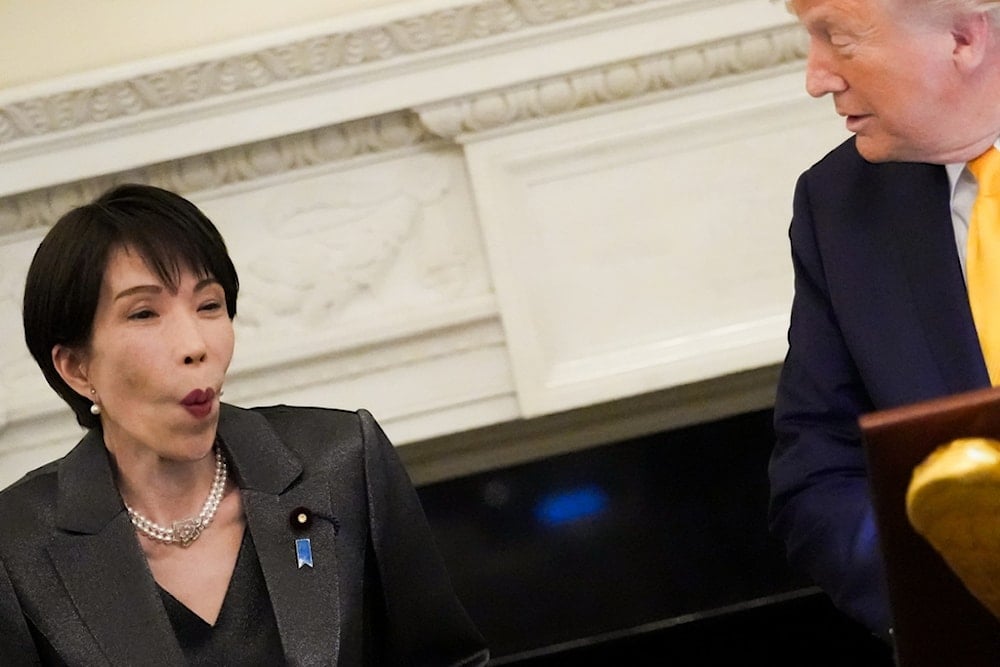
Japan's Prime Minister Sanae Takaichi reacts as President Donald Trump speaks during a dinner in the State Dining Room of the White House on March 19, 2026, in Washington. (AP)
Japan will release additional volumes from its national oil reserves starting Thursday, Prime Minister Sanae Takaichi announced, as Tokyo moves to stabilize energy supplies amid the escalating war in West Asia.
Takaichi said the government would begin releasing state oil reserves on March 26 to ensure “the necessary amount for the whole of Japan,” according to a statement published on X.
The move follows an earlier decision last week to release 15 days’ worth of privately held petroleum reserves. The prime minister had also previously confirmed plans to tap into roughly one month’s worth of government-controlled stockpiles.
Japan remains highly dependent on West Asia, with approximately 95% of its oil imports sourced from the region, making it particularly vulnerable to supply disruptions linked to the ongoing war. As of December, Japan’s strategic reserves exceeded 400 million barrels, placing them among the largest in the world.
IEA warns of 'severe' triple energy crisis
In a related context, International Energy Agency (IEA) Executive Director Fatih Birol warned on Sunday that the world could face its most severe energy crisis yet, as the US-Israeli war on Iran continues to disrupt global energy markets.
Speaking at the National Press Club in Canberra, Birol said the agency is in talks with governments across Asia and Europe over the possible release of additional oil from strategic reserves “if necessary,” and is closely monitoring market conditions and coordinating with member countries before taking further action.
“If it is necessary, of course, we will do it,” he said, adding that decisions would depend on evolving supply and demand dynamics.
Earlier this month, IEA member nations agreed to release 400 million barrels of oil from strategic reserves in an effort to stabilize prices amid the escalating crisis. Birol emphasized that there is no fixed oil price threshold that would automatically trigger another coordinated release, noting that decisions will be guided by market conditions.


