
More Americans going hungry than during Covid-19 pandemic: Study
 4 Min Read
A Federal Reserve Bank of New York study reveals that around 10% of households are reporting skipped meals amid rising costs and financial strain.
-
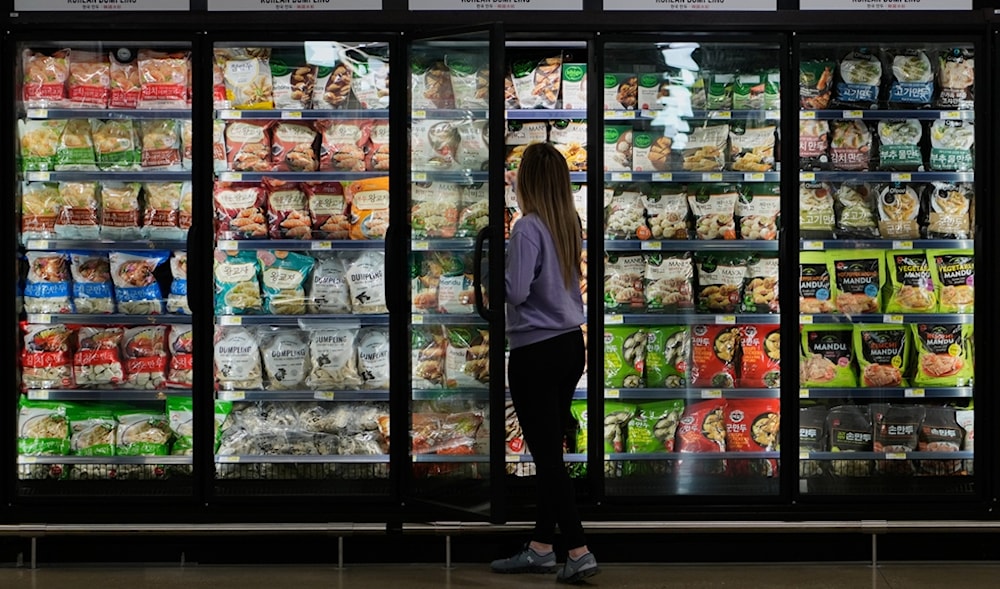
A shopper shops at a grocery store in Schaumburg, Ill., Thursday, May 14, 2026 (AP)
More Americans are going hungry today than at the height of the COVID-19 pandemic, according to new research from the Federal Reserve Bank of New York, which points to a sharp rise in food insecurity driven by persistent cost-of-living pressures.
The study, published in Liberty Street Economics and based on the bank’s Survey of Consumer Expectations, found that around 10% of households reported missing meals due to a lack of food in a recent February survey, more than double the 4% recorded in 2020.
The report draws on multiple survey waves from 2020 through October 2025 to assess trends in household financial stress and food insecurity and suggests that pressures have intensified in recent years despite the formal end of the pandemic period.
Low-income households most impacted
According to the analysis, nearly 16% of respondents said they had relied on food donations, while among households earning under $50,000, close to 20% reported skipping meals or going without food.
The Federal Reserve Bank of New York said this was a “remarkable increase in food insecurity,” particularly concentrated among lower-income and less-educated households, as well as families with young children.
Similarly, an analysis by NPR found that food insecurity levels in 2025 were higher than during the summer of 2020, underscoring the depth of ongoing financial strain.
Rising costs and household pressure
The report comes amid continued inflationary pressures and higher living costs, including fuel prices. The survey period predates a sharp spike in gas prices in late February and March as a result of the US-Israeli war on Iran and the subsequent halt in maritime traffic in the Strait of Hormuz, which has further increased household strain.
At the beginning of February, average US gas prices stood at $2.92 per gallon, according to GasBuddy, before rising to $3.70 by early March and reaching around $4.50 per gallon by early May.
Food bank operators across the country say they are seeing increased demand as households struggle to absorb higher transportation and living costs.
“We have some distributions where people are sitting in a 2-to-3-mile line the night before a distribution starts. They're sleeping in their cars,” Amy Breitmann, who runs the Golden Harvest Food Bank in Georgia, told NPR.
Nicole Williams, CEO of the Community Food Bank of Central Alabama, said demand has forced her organization to expand into a larger facility to serve 12 counties.
SNAP reliance increases among lower-income families
The New York Fed report also found a growing reliance on Supplemental Nutrition Assistance Program (SNAP) benefits.
Nearly 18% of surveyed households reported receiving SNAP assistance, up from 10.6% in 2020. Among lower-income families, more than 38% were receiving benefits, compared with about 22 percent six years ago.
Researchers said the findings support the idea of a “K-shaped economy", in which higher-income households benefit from rising asset values while lower-income groups face stagnating or worsening financial conditions.
While wealth at the top has been supported by rising stock markets, strong home equity, and lower debt servicing costs, the report found that a significant share of middle- and lower-income households continue to experience elevated financial stress and uncertainty.
Read more: The war on Iran is hurting the US economy more than Trump admits


