
Russia extends diesel export ban through September 30
 3 Min Read
Moscow prolongs restrictions on diesel, marine fuel, and gas oil shipments as refinery disruptions and domestic supply pressures continue to weigh on Russia’s fuel market.
-
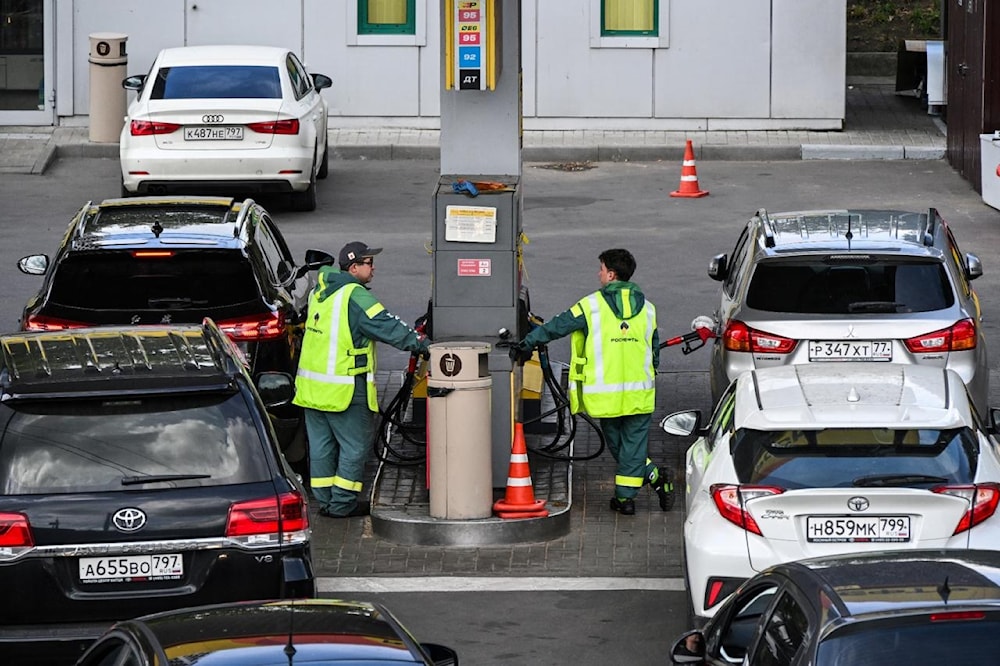
Rosneft petrol station employees fuel cars at a Rosneft petrol station in Moscow on August 21, 2026 (AFP)
Russia has extended its ban on diesel exports until September 30 as Moscow moves to shore up domestic fuel supplies amid continuing pressure on the country’s refining sector, Reuters reported.
The restriction also applies to marine fuel and gas oils exported by Russian producers, the Russian government said in a statement, adding that the measures were introduced to stabilize the domestic fuel market.
The decision extends restrictions first imposed in July as Russia faced growing fuel-market pressures.
Read more: Multipolar world is a definitive reality: Lavrov
Multiple extensions
Russia initially introduced the diesel export ban on July 8, with the restriction originally scheduled to remain in place until July 31.
The government subsequently extended the measure for fuel producers through August 31. The latest decision keeps the ban on producer exports in place for another month, through September 30.
The move comes as Russia continues to deal with disruptions affecting its domestic fuel market.
According to sources cited by Reuters, the extension had been expected as fuel shortages persisted and several Russian refineries remained offline following repeated Ukrainian drone attacks.
Russia is a major player in global fuel markets and is typically the world’s second-largest diesel exporter after the United States. Restrictions on its exports can therefore affect supplies beyond the domestic market.
Read more: Russia says strikes hit Ukrainian military logistics, drone facilities
Refinery disruptions pressure domestic fuel supplies
The export restrictions come amid sustained pressure on Russia’s refining capacity.
Repeated Ukrainian drone attacks have targeted Russian energy infrastructure, disrupting refinery operations and contributing to domestic fuel shortages. With some facilities remaining offline, Moscow has prioritized maintaining adequate supplies within the country.
The government said the latest restrictions were intended specifically to stabilize the domestic fuel market, underscoring the role of energy security in the policy.
Russian diesel exports had already slowed before the ban was introduced as domestic supply pressures increased.
The latest extension therefore represents a continuation of Moscow’s effort to redirect available fuel toward domestic consumption rather than overseas markets.
Moscow expands restrictions on fuel exports
The diesel restrictions form part of a broader package of measures governing Russian petroleum exports.
Russia has separately banned diesel exports by non-producers and imposed restrictions on motor gasoline through January 31, 2027.
Exports of jet fuel have also been restricted through the end of November 2026.
Taken together, the measures indicate that Moscow is prioritizing domestic fuel availability while its energy infrastructure remains under pressure.
The restrictions also demonstrate how attacks on Russia’s energy infrastructure can have consequences beyond the immediate damage to individual facilities, affecting refinery output, domestic fuel availability, and Russia’s position in international energy markets.
Read more: Russia sees Washington weakened by Iran war: US intel


