
Seoul's Incheon overtakes Dubai as US war on Iran reshapes air travel
 4 Min Read
Incheon recorded 38.4 million international passengers in six months as Dubai's traffic plunged following the outbreak of the US war on Iran.
-
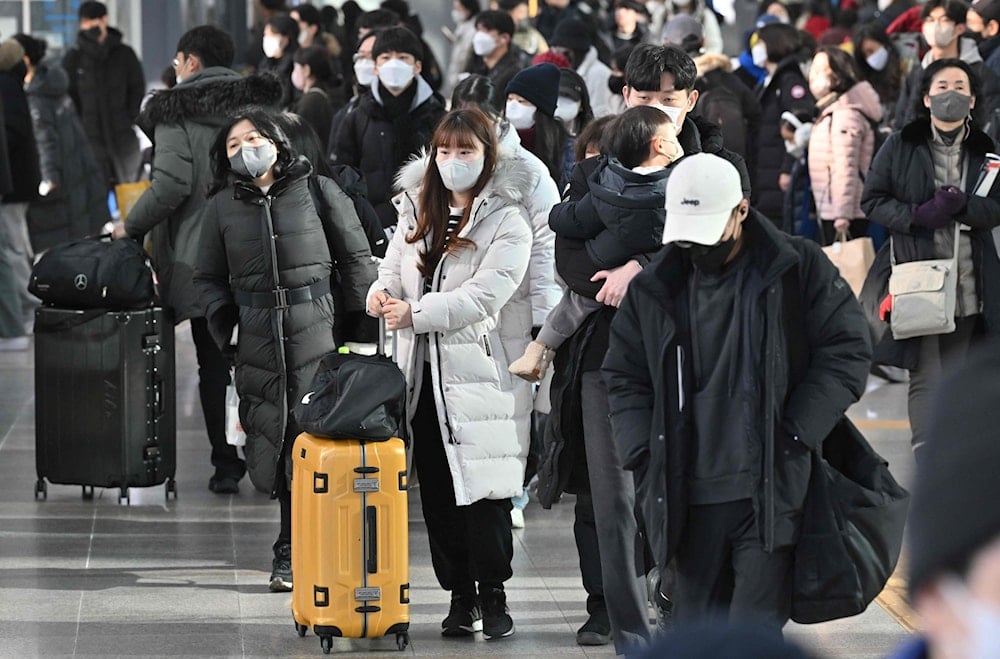
Passengers walk through a Seoul railway station ahead of the Lunar New Year holidays, Seoul, South Korea, on January 20, 2023. (AFP Photo)
Seoul's Incheon International Airport has overtaken Dubai International Airport to become the world's busiest airport for international passengers in the first half of 2026, as the US war on Iran disrupts air travel through the Gulf.
Incheon recorded 38.4 million international passengers during the first six months of the year, according to preliminary figures from Airports Council International (ACI) released by the South Korean airport.
The figures place Incheon ahead of London's Heathrow and Singapore's Changi airports. ACI said the preliminary data remain subject to final validation and that its full figures will be published next month.
Dubai, which ranked first in international passenger traffic last year, has suffered a sharp decline in passenger numbers since the war began in late February.
Read more: DPRK warns US-led drills are driving nuclear tensions
Incheon overtakes Dubai amid regional disruption
Dubai International had been the world's leading airport for international passenger traffic, but the US war on Iran severely disrupted aviation through the Gulf. The airport was effectively shut down in the days following the start of the war. Although Emirates resumed flights within days, passenger traffic has remained below pre-war levels.
ACI figures show the scale of the disruption. Dubai recorded 7.4 million international passengers in February, before the conflict, but that number fell to 2.5 million in March.
Traffic subsequently recovered to approximately 4.7 million passengers in June, but remained significantly below the levels recorded before the war. The decline has affected Dubai's position as a major global transfer hub, particularly for passengers traveling between Europe and Asia.
Last year, Incheon ranked third in international passenger traffic behind Dubai and Heathrow, followed by Changi, Amsterdam's Schiphol Airport, and Istanbul Airport. Atlanta's Hartsfield-Jackson remained the world's busiest airport overall, although its ranking is largely driven by domestic US traffic.
US-Iran war reshapes Europe-Asia air routes
The disruption to West Asia aviation has also altered the routes used by international passengers as European and Asian airlines have recorded increased passenger traffic on direct routes between the two regions, reducing reliance on West Asia's airports for connections.
Incheon has benefited from this shift, with more passengers using the South Korean hub as a transfer point before continuing to destinations across East Asia.
The airport said the number of passengers flying from Europe to Incheon to connect to other flights increased by two-thirds during the first half of 2026 compared with the same period last year.
"As the transfer function of Middle Eastern airports such as Dubai was weakened by the US-Iran conflict, existing air travel demand centred on Dubai — including routes between Dubai and Europe — shifted toward direct and connecting services through Incheon Airport," the airport said, per the Financial Times.
South Korea benefits from tourism boom
Incheon has also benefited from a broader increase in tourism to South Korea, particularly from China and Japan.
The country's growing popularity has been supported by the global reach of South Korean cultural products, including the K-pop Demon Hunters film, as well as the expansion of its technology and beauty industries.
Virgin Atlantic also launched a new service between London's Heathrow Airport and Incheon this year, further strengthening the airport's position as a Europe-Asia connection point.
Opened in 2001, Incheon has expanded its facilities and services to attract passengers using it as a transfer hub. The airport includes an in-terminal hotel, a 24-hour sauna, free sleeping areas, a museum, and robots designed to assist travelers.


