
SpaceX targets $1.75 trillion IPO with unusual fixed price plan
 4 Min Read
SpaceX reportedly plans a $135 fixed IPO price, aiming to raise $75 billion at a $1.75 trillion valuation, in one of the largest listings in market history.
-
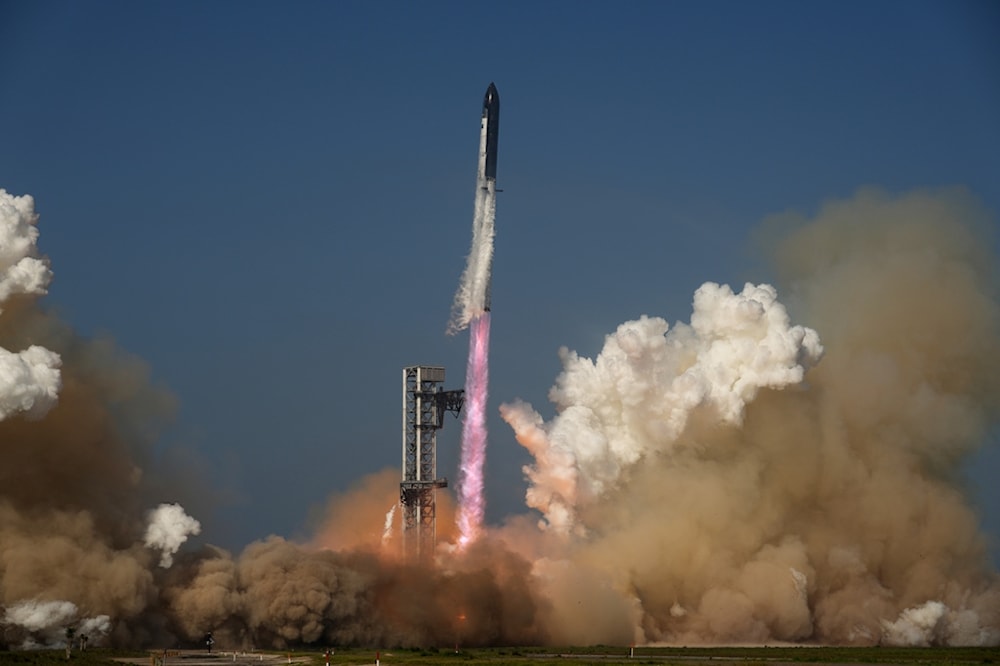
SpaceX's mega rocket Starship makes a test flight from Starbase, Texas, Friday, May 22, 2026. (AP Photo/Eric Gay)
SpaceX is preparing to set its initial public offering price at $135 per share in an unconventional move ahead of its investor roadshow, to raise approximately $75 billion, according to sources familiar with the matter, Reuters reported.
The rocket and satellite communications company plans to sell around 555.6 million shares, targeting a valuation of roughly $1.75 trillion. If completed at that scale, the listing would rank among the largest IPOs in global financial history.
The offering is expected to mark a major turning point for public markets, which have seen relatively subdued large-cap listings in recent years before a renewed wave of high-profile private companies preparing for market entry.
Unconventional fixed pricing strategy breaks IPO norms
Unlike standard IPO procedures, which typically involve a price range that is adjusted based on investor demand during bookbuilding, SpaceX is reportedly opting for a fixed-price structure.
Market participants note that such a move is highly unusual, as it removes the traditional price discovery mechanism that allows institutional demand to shape final valuation.
The company’s roadshow is set to begin Thursday, with earlier “testing the waters” discussions already held with selected investors. Sources also told Reuters that final terms, including deal size and structure, remain subject to change as investor engagement progresses.
Weiheng Chen, a senior partner in Hong Kong at U.S. law firm Wilson Sonsini Goodrich & Rosati, told Reuters that there is no regulatory prohibition on a fixed-price IPO structure. However, it remains rare in large-cap listings.
"Musk is simply taking a 'take-it-or-leave-it' approach which works for his followers and is also sensible given the market conditions and the lack of comparables," Chen said.
Elon Musk’s IPO model extends beyond conventional market practice
The planned listing reflects a broader pattern in SpaceX’s approach to capital markets, including efforts to expand retail investor participation and maintain strong founder control.
Reports indicate the company is considering allocating up to 30% of shares to individual investors, an unusually high retail component designed to leverage strong public interest in Elon Musk’s ventures.
The structure is expected to be an all-primary offering, meaning all proceeds would go directly to the company rather than allowing existing shareholders to cash out during the IPO.
Musk is also expected to retain his shares for 366 days post-listing, a move framed as a signal of long-term commitment to investors.
Valuation debate anchored in future technologies
SpaceX’s projected valuation of $1.75 trillion is driven largely by expectations of dominance in emerging markets that remain under development, including satellite networks, space-based computing infrastructure, and future Mars-related missions.
A significant portion of projected long-term revenue is linked to still-developing technologies, including space-based data center concepts and expanded satellite connectivity systems.
Analysts remain divided over valuation benchmarks. Morningstar, for example, previously estimated SpaceX’s value at approximately $780 billion, significantly below private market estimates, citing reliance on Starlink as the primary revenue driver.
At the same time, comparisons with other high-growth technology firms highlight extreme valuation multiples. Based on the projected 2025 revenue of $18.67 billion, SpaceX would trade at a price-to-revenue ratio of nearly 94 times if priced at $1.75 trillion.
Financial performance and structural risks
Recent financial disclosures indicate continued volatility in earnings performance. SpaceX reported revenue growth to $4.69 billion in the first quarter, up from $4.07 billion a year earlier, but also recorded widening losses.
The company posted a net loss of $4.94 billion in 2025 after a profit of $791 million the previous year, underscoring the capital-intensive nature of its expansion strategy.
Analysts also point to governance considerations, including dual-class share structures that concentrate voting power among Musk and select insiders, limiting shareholder influence despite public listing.


