
UK faces 2027 recession risk if Hormuz stays closed: Independent
 3 Min Read
The UK could enter a recession in 2027 if the Strait of Hormuz remains closed, with EY warning of weaker growth, higher inflation, and surging energy costs.
-
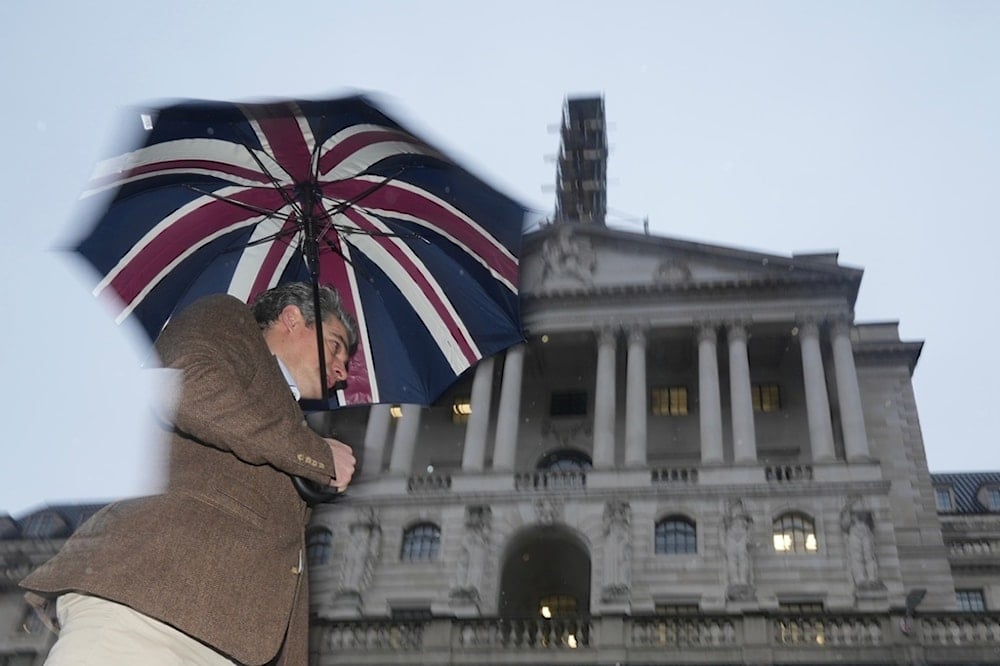
A man walks in front of the Bank of England, London, Feb. 5, 2026, as the Bank holds its first interest rate meeting in 2026 at a time when inflation remains above target and economic growth is stubbornly low. (AP/Kin Cheung)
The United Kingdom could enter a recession in 2027 if the Strait of Hormuz remains closed until early or mid-2027, according to projections cited by The Independent from consultancy firm EY.
The report warns that prolonged disruption to one of the world's most important energy shipping routes would significantly weaken Britain's economic outlook, largely due to higher energy costs and inflationary pressures.
EY warns of weaker growth, rising inflation
According to the report, if the Strait of Hormuz does not reopen by early or at least mid-2027, the UK economy would grow by only 0.5% in 2026 before contracting by 0.2% in 2027, pushing the country into recession.
EY also warned that inflation could climb to 6.4% by the end of 2026 under such a scenario, driven by a sharp increase in global oil and energy prices stemming from the continued closure of the strategic waterway.
The consultancy said the prolonged disruption would place additional pressure on businesses and consumers already grappling with elevated costs.
Strait of Hormuz closure follows US-Iran escalation
The warning comes amid continued tensions in West Asia following the collapse of the ceasefire between the US and Iran.
On July 8, US President Donald Trump declared that the ceasefire reached with Iran on the night of June 18 was no longer in effect. Since then, the US military has launched multiple attacks on Iran, with US Central Command claiming the operations were carried out in response to Iranian actions against commercial vessels transiting the Strait of Hormuz.
In response, Tehran launched retaliation strikes on US military bases in several West Asian countries, closed the Strait of Hormuz, and accused Washington of violating the ceasefire agreement.
Eurozone inflation rises to 2.9% as energy prices climb
The closure of the strait has affected the European continent significantly. Annual inflation across the euro area is expected to reach 2.9% in July 2026, up from 2.8% in June, according to a flash estimate released by the European Union's statistical office, Eurostat.
The increase was primarily driven by higher energy prices, with the energy component projected to record the highest annual inflation rate at 10.0% in July, compared with 8.5% the previous month.
Services are expected to post annual inflation of 3.3%, up slightly from 3.2% in June. Meanwhile, inflation for food, alcohol, and tobacco is forecast to ease to 1.2% from 1.5%, while non-energy industrial goods are expected to rise to 0.9%, compared with 0.7% in the previous month.
Core inflation, which excludes the more volatile food and energy categories, also edged higher to 2.5% in July from 2.4% in June.
The latest figures come amid renewed tensions in West Asia following US attacks on Iran, which contributed to a surge in global energy prices after Tehran closed the Strait of Hormuz. The Iranian Maritime Navigation Authority in the Gulf stated on Friday that navigation through the strategic waterway is currently impossible due to ongoing US military hostilities, raising concerns over global oil supplies and fueling inflationary pressures across Europe.


